Every AI story that matters — and the intelligence behind it.
TLDRocket reads all relevant sources, removes duplicate coverage, and publishes a short neutral
summary of every story, linking back to the original. Free, no spam, unsubscribe anytime.
Anthropic has filed for an initial public offering with the SEC after raising $65 billion in Series H funding, which elevated its valuation to $965 billion and surpassed OpenAI's $852 billion valuation. The company reported it may achieve operating profit in its next quarter, though details remain confidential and the company's actual financial position is unclear. The IPO filing will eventually provide public scrutiny of Anthropic's finances, potentially revealing whether AI startup valuations are justified or inflated.
Anthropic outlined its approach to AI policy and political advocacy, emphasizing transparency and independence from external political groups. The company stated it supports thoughtful regulation and prioritizes AI safety research in its policy positions. This clarifies that Anthropic's policy stances represent only its own views and not those of any outside political organization.
JetBrains released Mellum2, a 12-billion-parameter Mixture-of-Experts model trained on natural language and code under the Apache 2.0 license. The model activates only 2.5 billion parameters per token while delivering more than twice the inference speed of similarly sized competitors. Mellum2 is designed for latency-sensitive tasks like routing, retrieval-augmented generation, summarization, and agent subtasks within larger AI systems.
IBM implemented agent logic—software primitives like knowledge graphs and program analysis libraries—to guide large language models through enterprise workflows in four domains: legacy code understanding, test generation, incident response, and compliance automation. The approach achieved up to 30× lower token consumption in legacy code analysis, 20-45% improvements in test coverage with 15× fewer tokens, 4.0× better incident investigation performance, and 1.3-2.0× better compliance outcomes compared to baseline LLM-only or competing agent approaches. By constraining LLM reasoning through structured task decomposition and domain-specific logic, enterprises can reduce costs while improving accuracy and adoption of AI systems in mission-critical workflows.
Economists estimate the US AI economy grew at 2,600 percent per year in quality-adjusted terms in 2025, but this growth remains largely invisible in conventional GDP statistics because falling per-unit prices mask the underlying expansion. US AI compute spending rose from $37 billion in 2023 to $219 billion in 2025, while quality-adjusted output grew at roughly 2,290 percent in 2024. Policymakers relying on traditional economic data may be unprepared for labor-market disruptions and may need to implement tax reforms or sovereign wealth funds to manage potential wage-base shocks.
An analysis tracking AI market conditions against five empirical bubble indicators from 300 years of investment history found continued boom conditions rather than bubble signs, with only one indicator in red despite dramatic increases in capex to $157.7 billion quarterly and sector revenues reaching $25 billion in Q1. The assessment noted that AI capex as a share of US GDP exceeded 1% for the first time, entering the amber zone, while revenue growth accelerated unexpectedly to doubling every 0.73 years rather than decelerating as predicted. If capex growth continues at current rates without revenue acceleration slowing significantly, economic strain could enter the red zone toward the end of 2027, though current trends suggest the sector remains in a sustainable expansion phase.
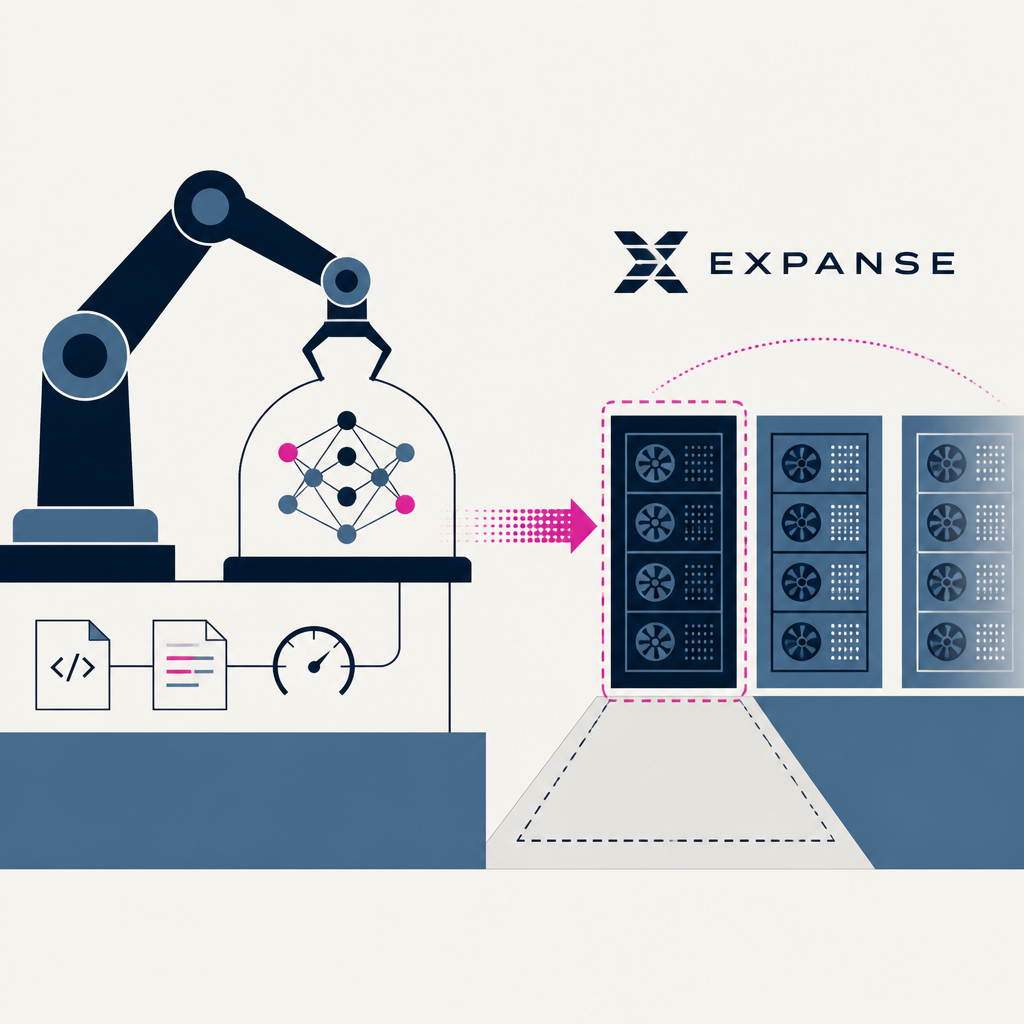
Expanse uses deep learning models that analyze source code, submission scripts, and hardware telemetry to predict actual GPU and compute resource needs before jobs run on HPC clusters, addressing the problem that datacenters waste 59% of compute due to users over-requesting resources by 2-3x to avoid job failures. The company measured a national-scale HPC cluster and found roughly $8.5 million in wasted compute monthly, and their multimodal predictor outperforms frontier LLMs by 8x on resource prediction tasks. Customers can recover wasted capacity and reduce over-provisioning, with Expanse offering paid pilot deployments starting with a two-week measurement window.
Closed AI models like Claude and GPT are achieving premium pricing through coding agents that demonstrate substantially higher output than open alternatives, establishing separate economic trajectories for closed and open model ecosystems. Users performing complex knowledge work are willing to pay $2,000 per month or more for frontier closed models, while open models will capture broader value through commodity pricing across diverse enterprise deployments over 5-10 years. Closed labs will consolidate into an oligopoly resembling cloud markets today, while open model builders will proliferate across a wider stack, ultimately capturing greater total market value but with lower per-unit margins.
OpenAI is building a 1-gigawatt data center in Michigan as part of its Stargate infrastructure initiative. The facility will consume 1 gigawatt of power, marking a significant commitment to compute capacity in the state. The project aims to create jobs and expand AI infrastructure availability across the region.
OpenAI's frontier models and Codex are now generally available through AWS, allowing enterprises to access them within existing AWS infrastructure and procurement systems. Customers can use AWS's native tools and workflows rather than managing separate OpenAI integrations. This integration reduces friction for organizations evaluating and deploying OpenAI models in production environments.
OpenAI discovered and banned a cluster of accounts originating from China that used AI to generate social media content criticizing US data centers and AI infrastructure. The operation targeted US audiences with coordinated posts designed to spread skepticism about American AI development. This represents an example of state-sponsored AI-enabled information operations attempting to influence US technology policy and public opinion.
OpenAI banned accounts of likely Chinese origin that used AI to generate comments and cartoons advocating positions on US tech policy and tariffs. The accounts were discovered through OpenAI's influence operation detection systems. The removals represent an effort to prevent foreign AI-assisted influence campaigns targeting US policy debates.
Every AI story that matters,
in your inbox by 8am.
TLDRocket reads all relevant sources, removes duplicate coverage, and summarises the
day in two minutes. Follow companies and topics for alerts, or get the
briefing in Slack. Free, no spam, unsubscribe anytime.
Reading TLDRocket needs no cookies, and the readership counts we rely on come from
our own cookieless analytics. Google Analytics is the exception: it sets cookies and
reports to Google, so it stays switched off until you allow it. You can change your
mind any time from “Cookie settings” in the footer.
Strictly necessary
Session security and form protection (tldrocket-session,
XSRF-TOKEN, 2 hours). The site cannot work without them,
so they need no consent.
Always on
Google Analytics 4 (_ga,
_ga_<id>, up to 2 years). Measures which
stories and sections readers use. Google acts as a third-party processor and may
store the data outside the EU. No advertising, no profiling, no data sold.