Every AI story that matters — and the intelligence behind it.
TLDRocket reads all relevant sources, removes duplicate coverage, and publishes a short neutral
summary of every story, linking back to the original. Free, no spam, unsubscribe anytime.
Google open-sourced its hydrology framework on GitHub to enable meteorological services and forecasters to build AI-powered flood prediction models using LSTM neural networks and PyTorch. The upgraded model extends the reliable prediction horizon by six days in gauged basins and one day in ungauged basins compared to the previous version. National and local flood forecasting agencies can now integrate the framework into their workflows, incorporate local data, and improve flood preparedness without requiring expensive traditional forecasting infrastructure.
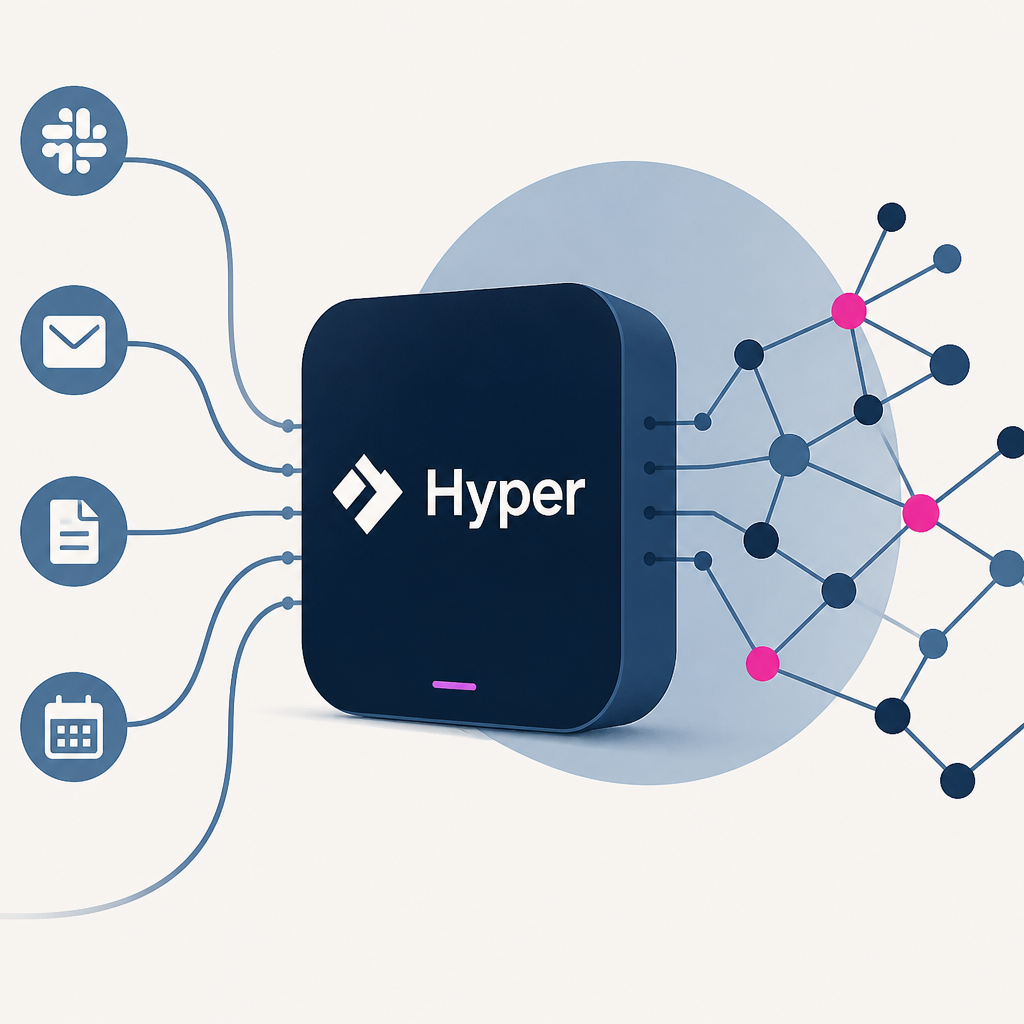
Hyper, a startup from Y Combinator's latest batch, launches a "company brain" platform that ingests internal documents, Slack, email, and calendars to build a knowledge graph that AI agents can query for better context and decision-making. The system stores facts as subject-predicate-object records with relationships and semantic embeddings, updating them when information changes, and integrates with tools like Claude Code and Cursor through lifecycle hooks. Early users report time savings—one CEO reduced email drafting from hours to minutes, and another completed a launch script in one attempt by leveraging accumulated company knowledge.
AI companies are shifting from bundled subscription pricing to usage-based metered pricing, particularly for coding tools, as some users consume extremely high volumes of tokens that create substantial variable costs for providers. Uber has implemented a $1,500 per month or $18,000 per year cap on agentic coding tools for its 5,000 developers, which represents less than 1% of the company's projected free cash flow. The shift follows historical precedent from internet advertising's transition from bundled impression-based pricing to metered cost-per-action models, which ultimately expanded market size and profitability rather than contracting it.
Microsoft introduced Autopilot, a new category of autonomous AI agents starting with Scout, which continuously monitors user activities across Teams, Outlook, OneDrive, and SharePoint to take actions without explicit prompts. Scout can schedule meetings, identify deadlines, block calendar time, and flag risks across multiple applications and systems. The service is powered by OpenClaw and currently available only to a select group of customers and GitHub Copilot subscribers, with concerns raised about security vulnerabilities in autonomous AI agents.
Amazon's AGI group developed a new evaluation method for AI-generated research reports, discovering that traditional static benchmarks fail when assessing complex factuality claims that require cross-document synthesis. Expert evaluators achieved only 60.8% accuracy on known answers using standard labeling, but improved to 90.9% accuracy when placed in an auditing role that compared competing evidence. The audit-then-score protocol treats ground truth as a dynamic process where models can challenge benchmark answers with evidence, fundamentally changing how AI evaluation works and enabling DeepFact-Eval to reach 83.4% accuracy on their benchmark.
GPT-Rosalind has been updated with enhanced capabilities for biological reasoning, medicinal chemistry, genomics analysis, and experimental workflows. The announcement does not specify benchmarks, dates, or measurable performance improvements. The upgrade aims to support life sciences researchers with more specialized tools for their work.
Researchers applied Direct Preference Optimization (DPO) to reduce text degeneration in a specialized OCR model, using the model's own failure outputs as rejection training signals rather than discarding them as noise. DPO reduced degeneration rates across five model families by an average of 59.4%, with peak improvement of 87.6%, compared to supervised fine-tuning alone. The technique demonstrates that DPO can address specific failure modes in structured generation tasks without requiring human preference annotations, expanding its application beyond chat alignment.
Wasmer used OpenAI's Codex to build a Node.js runtime for edge computing environments. The development process accelerated by 10 to 20 times, reducing the timeline from months to weeks. This approach enabled faster shipping of edge-based Node.js infrastructure by leveraging AI-assisted code generation.
Suno, an AI music generation platform, raised over $400 million at a $5.4 billion valuation, with average user session length reaching 55 minutes. The platform has grown to rank #11 globally in the App Store and #1 in music, driven by viral trends and a song that trended as the "song of the summer." The funding reflects belief that AI is shifting user behavior from passive consumption toward active creation as entertainment.
OpenAI published a proposal for how the U.S. federal government should regulate advanced AI systems, focusing on safety standards and national security considerations. The proposal recommends establishing dedicated federal oversight agencies with authority to evaluate and monitor frontier AI models before deployment. This framework would shift AI governance from largely self-regulated industry standards to mandatory government review and compliance requirements.
OpenAI published a public policy agenda covering safety standards, youth protection, workforce support, and international coordination for AI development. The statement does not specify numerical targets, timelines, or funding commitments for any of the proposed initiatives. If adopted, these policies would shape regulatory frameworks that other AI developers and governments use to govern the technology.
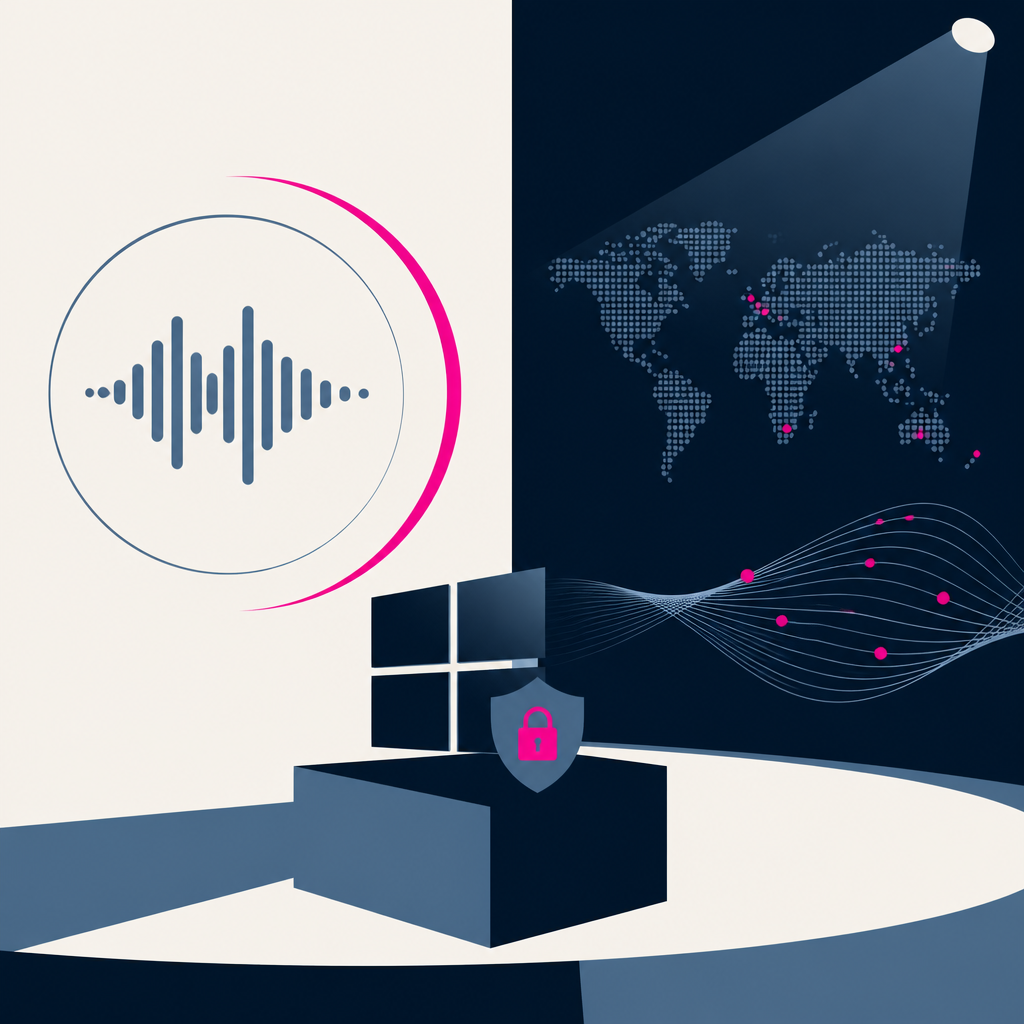
Whisperstream is a Windows application that enables local speech-to-text transcription using OpenAI's Whisper model without sending audio to cloud servers. The tool processes audio locally on the user's machine, with support for multiple languages and a reported accuracy rate comparable to cloud-based solutions. Users can transcribe audio files or live speech directly on their device, reducing latency and keeping voice data private.
Labor economist Kathryn Anne Edwards argues that while AI will likely displace some workers, the widespread panic about permanent technological unemployment is overblown and reflects classist assumptions by tech leaders hawking their products. She notes that productivity gains from AI remain unproven in actual economic data, citing a May 2024 Bureau of Labor Statistics report showing occupations exposed to AI experienced only 0.2% employment decline versus 0.8% growth elsewhere. Rather than obsessing over precise job loss numbers, Edwards contends the U.S. should focus on preparing its broken safety net—overhauling unemployment insurance, healthcare systems, and moving subsidies—to handle inevitable disruption regardless of scale.
Reachy Mini's conversation app can now call tools hosted on public Hugging Face Spaces via MCP, allowing the robot to perform tasks like weather checks and web searches without downloading code locally. Users can add a tool with a single command like `reachy-mini-conversation-app tool-spaces add pollen-robotics/reachy-mini-weather-tool`, and the robot gains new abilities that run remotely rather than on the device itself. This enables easier sharing and iteration of capabilities outside the app while keeping the robot's core local tools trusted and hardware-focused.
Every AI story that matters,
in your inbox by 8am.
TLDRocket reads all relevant sources, removes duplicate coverage, and summarises the
day in two minutes. Follow companies and topics for alerts, or get the
briefing in Slack. Free, no spam, unsubscribe anytime.
Reading TLDRocket needs no cookies, and the readership counts we rely on come from
our own cookieless analytics. Google Analytics is the exception: it sets cookies and
reports to Google, so it stays switched off until you allow it. You can change your
mind any time from “Cookie settings” in the footer.
Strictly necessary
Session security and form protection (tldrocket-session,
XSRF-TOKEN, 2 hours). The site cannot work without them,
so they need no consent.
Always on
Google Analytics 4 (_ga,
_ga_<id>, up to 2 years). Measures which
stories and sections readers use. Google acts as a third-party processor and may
store the data outside the EU. No advertising, no profiling, no data sold.