Every AI story that matters — and the intelligence behind it.
TLDRocket reads all relevant sources, removes duplicate coverage, and publishes a short neutral
summary of every story, linking back to the original. Free, no spam, unsubscribe anytime.
An article argues that workers can become irreplaceable in the AI era by developing skills that cannot be easily measured or described, such as intuition and unique human qualities, rather than focusing on systematized tasks that AI can more readily learn. The author notes that AI has achieved superhuman performance in coding and math but struggles with tasks requiring lived experience, such as creative writing, citing that no significant breakthrough in AI writing has occurred in six years since GPT-3. By developing undescribable skills rooted in personal experience and intuition, workers can maintain value in a world where AI increasingly automates explicit, measurable tasks.
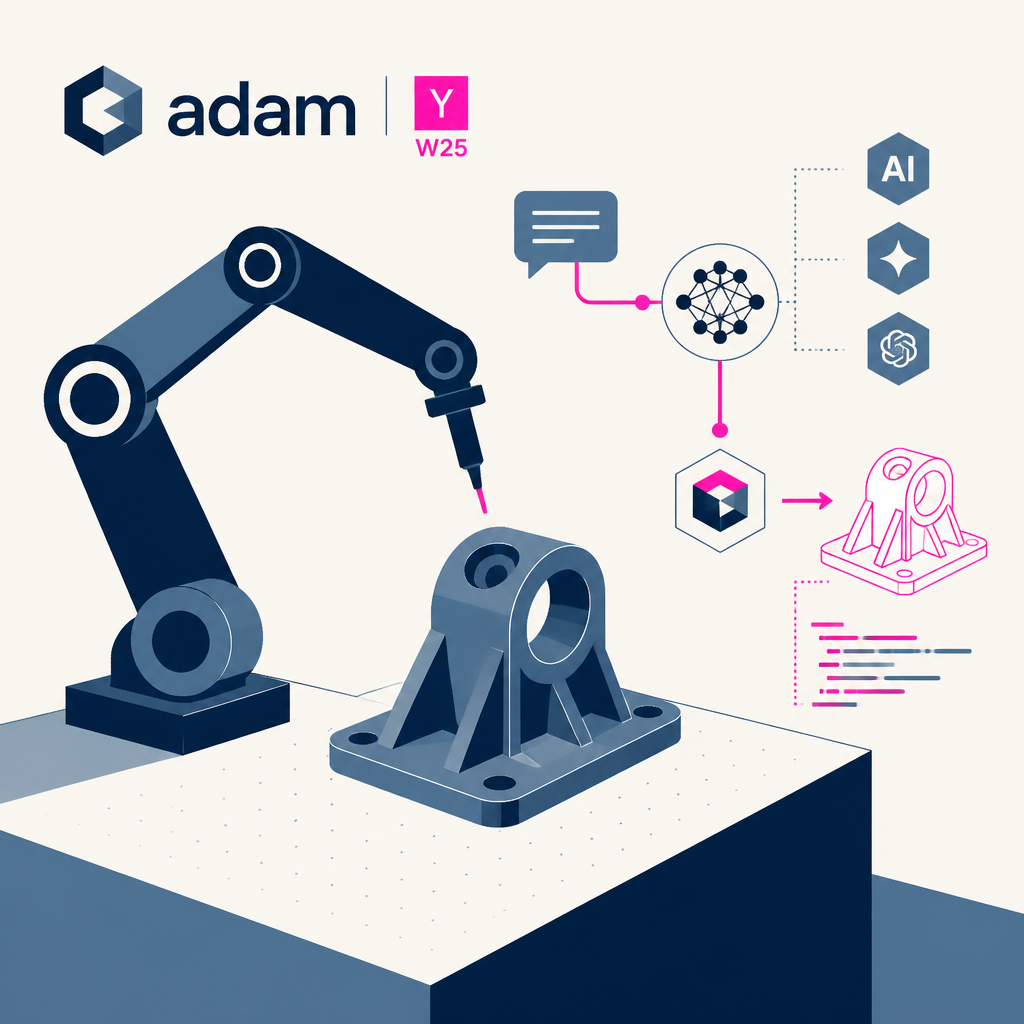
Adam, a Y Combinator W25 startup, launched CADAM, an open-source AI platform that generates 3D CAD models from natural language prompts and converts them to parametric OpenSCAD code. The system supports multiple AI models (Claude, Gemini, GPT) with in-browser WebAssembly compilation and exports to .STL, .SCAD, and other formats. Users can now generate mechanical designs through text descriptions and adjust dimensions with interactive sliders without requiring new LLM calls.
Sureel and SoundVerse are developing systems to pay musicians when their work is used to train generative AI models, with Sureel partnering with Swedish copyright agency STIM to track training data usage and set licensing fees. Sureel's software labels music files with owner instructions and tracks how AI companies use them, while SoundVerse advocates for ongoing royalties based on how much each training piece influences each AI-generated output. The success of these attribution approaches depends on solving complex technical challenges and establishing transparent policies that fairly reward creators without creating new incentives for gaming the system.
The author of Interconnects, a technical AI newsletter, is pursuing a full-time career in the non-profit sector while maintaining the blog as a side project focused on frontier AI ecosystem development and open science. The publication has 70,000 subscribers with approximately 900 paying subscribers, and the author has set a goal of reaching 1,000 paid subscribers by summer 2026. Going forward, the blog will paywall all comments to prevent AI-generated spam, increase the proportion of paywalled articles to improve financial sustainability, and expand in-person events for its core technical audience.
General Motors is cutting vehicle development cycles in half by deploying AI and simulation tools that enable engineers to test designs virtually before building physical prototypes. The GMC Hummer EQ achieved a two-year development timeline versus the typical four-to-five-year cycle, with crash simulations reduced from 15 hours of computing to under one minute using AI-based probability methods. This acceleration allows GM to compete with Chinese automakers like BYD while producing more thoroughly tested vehicles with fewer design iterations.
A researcher tested whether LLM councils (multiple models deliberating together) avoid groupthink by comparing their outputs to individual model answers across 16 open-ended prompts. LLM councils kept only about 22-25% of good ideas that appeared in just one model's answer, while ideas from multiple models survived at roughly the same rate but received an 11% uplift in peer-review settings. The findings suggest that LLM councils risk losing novel ideas through consensus bias similar to human committees, requiring more explicit protocols to preserve valuable unique insights rather than relying on automatic blending or peer review.
Google DeepMind released DiffusionGemma, a text-diffusion model that generates text differently from transformer-based language models by not sequentially predicting one token at a time. The model uses diffusion-based generation to challenge the conventional left-to-right, next-token prediction approach that has dominated the modern LLM era. This alternative architecture potentially offers a different pathway for text generation beyond the sequential token-by-token method used in GPT-style models and other transformer-based systems.
OpenAI's leaked financial documents reveal the company generated $13.07 billion in revenue during 2025 but faced even larger expenses, with R&D costs alone reaching $19.18 billion. The company posted an operating loss of $20.92 billion in 2025, more than three times its total revenues. Despite growing revenues, OpenAI remains deeply unprofitable and faces significant pressure to reach profitability by 2030 as it prepares for a potential IPO.
Meta has forcibly reassigned 30-50% of core engineering staff to AI data labeling and training tasks, tracking their keystrokes without opt-out, dismantling a 20-year culture where engineers chose their own work. The company acquired a 49% stake in Scale AI for $14.8 billion in June 2024 and brought in Scale's CEO to rebuild Meta's AI capabilities from scratch after Llama 4 disappointed. Engineers report feeling demoted from a respected profit center to a disdained cost center, with menial labeling work threatening their career prospects and morale at what was Silicon Valley's most prestigious engineering organization.
Amazon announced S3 annotations, a new metadata feature allowing users to attach up to 1 GB of rich context per object in flexible formats like JSON and XML, which can be modified without rewriting objects and automatically indexed into queryable tables. Each object can store up to 1,000 named annotations of 1 MB each, with queries executable through Amazon Athena without retrieval costs even for archived data in S3 Glacier. Organizations can now build AI agents and autonomous workflows that discover and act on data at scale without maintaining separate metadata databases or complex synchronization systems.
Snap unveiled Specs, its first augmented reality glasses for consumers, priced at $2,195 with a $200 refundable deposit, as CEO Evan Spiegel argues people are ready to move beyond smartphones to shared digital experiences through see-through lenses. The device is expected to ship later in 2026 in the U.S., U.K., and France, and features nearly four hours of battery life with integration for AI agent-like experiences using Claude, Codex, and other coding tools. The launch positions Snap to compete with Meta's Ray-Ban Meta glasses and Google's upcoming AI glasses, though analysts note the premium price and weak consumer confidence present significant market challenges.
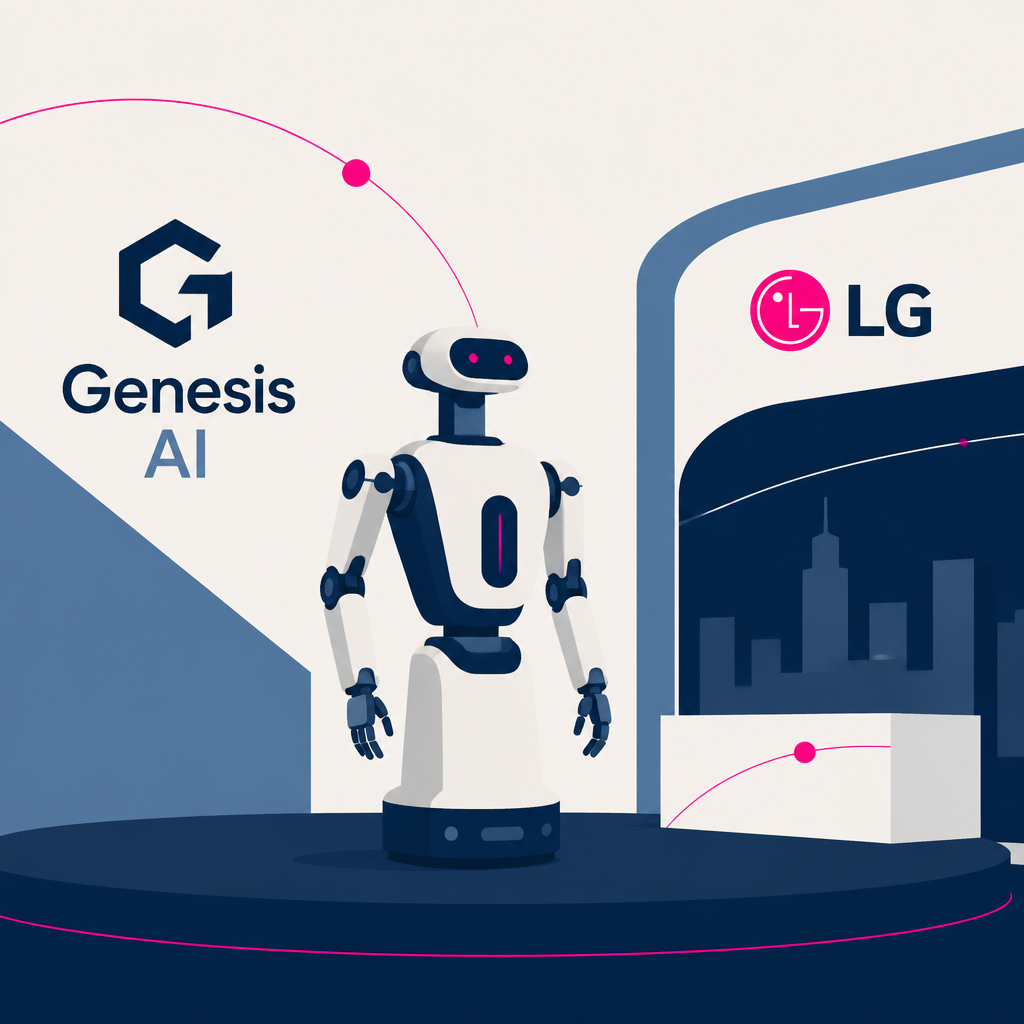
Genesis AI, backed by ex-Google CEO Eric Schmidt, unveiled Eno, a general-purpose robot designed to reason and adapt to tasks beyond its initial programming. The robot integrates with an LG partnership to enable real-world deployment in commercial settings. The development represents an approach to building robots that can operate more independently rather than relying on rigid task-specific instructions.
SpaceX announced a $60 billion acquisition of Cursor, an AI coding tool startup founded in 2022, using stock from its recent IPO. The deal values Cursor at $60 billion in SpaceX class A shares, representing a 3.4% dilution to the aerospace company's IPO valuation, with closure expected in Q3 2024. The acquisition aims to strengthen SpaceX's AI capabilities to compete with rivals like Anthropic and OpenAI, though Cursor's market share has declined from 41% to 26% in recent months.
Strands Robots, an open-source AWS SDK, integrates LeRobot datasets and policies into a single agent that orchestrates robot tasks from recording demonstrations through hardware deployment. The integration uses a shared LeRobotDataset format across simulation and physical hardware, allowing identical on-disk data structures whether captured in MuJoCo or on a physical SO-101 robot. A single agent workflow can record demonstrations, train policies, test in simulation, and deploy to physical robots or coordinate multiple robots through a mesh network with only keyword argument changes between modes.
OpenAI and Molecule.one deployed an AI system based on GPT-5.4 to optimize a difficult chemical reaction used in drug manufacturing. The AI chemist improved yield or efficiency metrics for a key medicinal chemistry reaction, though specific performance gains are not quantified in the available details. This demonstrates potential for AI systems to accelerate chemical synthesis optimization without constant human supervision.
Zhipu released GLM-5.2, a language model designed for long-horizon coding tasks with a stable 1M-token context window. The model achieves 81.0 on Terminal-Bench 2.1 (compared to 63.5 for GLM-5.1) and ranks as the highest open-source model on three long-horizon coding benchmarks. The architecture introduces IndexShare, which reduces per-token computation by 2.9× at 1M context length, and users can now select effort levels to balance performance against latency and computational cost.
Researchers released MolmoMotion, a model that predicts how 3D points on objects will move in the future based on video frames and language instructions describing actions. The model achieved 0.109 meters average displacement error on the PointMotionBench benchmark, outperforming existing forecasting methods. The model and accompanying datasets enable applications in robot manipulation planning and controllable video generation.
Eugenia Kuyda, founder of Replika and now Wabi, stated that AI has made hiring junior engineers unsustainable for startups because they compete with what she calls a "1,000x engineer," and believes job loss concerns are justified rather than fantasy. Wabi, which launches publicly before month's end, is designed with a soccer-team model of 10 to 15 superstar employees with sizable equity, supported by contractors, reflecting Kuyda's belief that this structure is sufficient to build billion-dollar companies. Kuyda argues the industry is in the "Microsoft DOS era of AI interfaces" and that as AI tools mature and enable rapid app creation, long-tail subscription software and traditional hiring models will be disrupted.
Researchers compared Kimi K2.7 Code and Claude Fable 5 for generating landing pages, finding that Kimi cost 94% less while producing similar-quality output when provided with design references through a custom MCP server. Kimi averaged 16 times cheaper than Fable 5 and 8 times cheaper than Claude Opus, with a single B2B SaaS landing page costing 4 cents versus $1.09 for Fable. The results suggest open-source models are now competitive alternatives for code generation workflows when given adequate context and visual references.
A draft open specification called Agentic Resource Discovery (ARD) was developed by Microsoft, Google, GoDaddy, Hugging Face, and others to let AI agents dynamically search for tools and capabilities at runtime rather than requiring pre-installation. Hugging Face implemented ARD in its Discover Tool, which provides search access to thousands of skills, ML applications, and MCP servers through a REST API endpoint. Agents can now find the right capability through natural language search across federated registries instead of relying on manually configured, static catalogs or dumping all tool descriptions into the language model's context window.
Researchers released LifeSciBench, a benchmark dataset created and reviewed by life science experts to assess AI system performance on real-world research tasks. The benchmark contains expert-authored test cases covering practical decision-making scenarios in life sciences. This provides a standardized way to measure whether AI systems can handle actual research workflows rather than generic benchmarks.
Every AI story that matters,
in your inbox by 8am.
TLDRocket reads all relevant sources, removes duplicate coverage, and summarises the
day in two minutes. Follow companies and topics for alerts, or get the
briefing in Slack. Free, no spam, unsubscribe anytime.
Reading TLDRocket needs no cookies, and the readership counts we rely on come from
our own cookieless analytics. Google Analytics is the exception: it sets cookies and
reports to Google, so it stays switched off until you allow it. You can change your
mind any time from “Cookie settings” in the footer.
Strictly necessary
Session security and form protection (tldrocket-session,
XSRF-TOKEN, 2 hours). The site cannot work without them,
so they need no consent.
Always on
Google Analytics 4 (_ga,
_ga_<id>, up to 2 years). Measures which
stories and sections readers use. Google acts as a third-party processor and may
store the data outside the EU. No advertising, no profiling, no data sold.