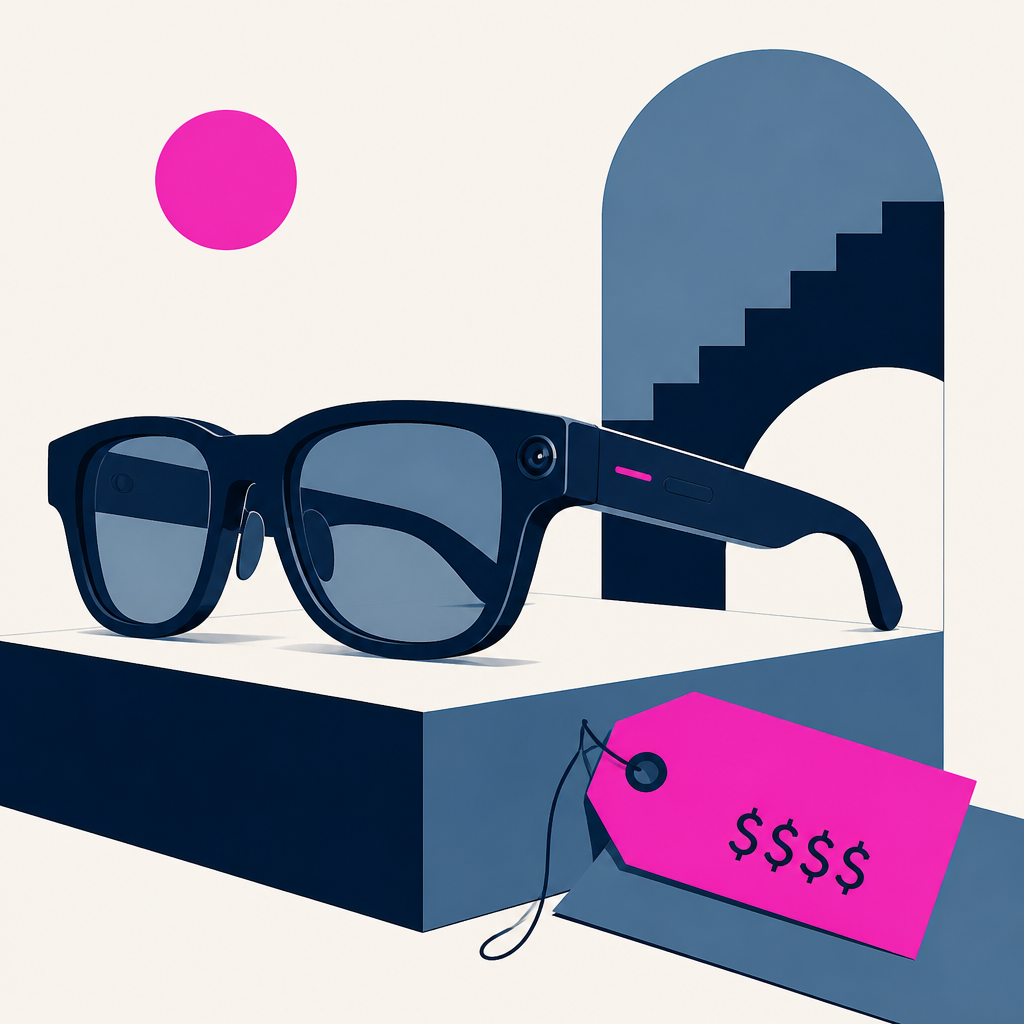
Snap unveils $2,195 AR glasses as CEO Evan Spiegel bets on post-smartphone future
CNBC
Snap just launched Specs, AR glasses that cost $2,195 and let you see digital stuff layered over the real world. CEO Evan Spiegel thinks people are done staring at phones — but Snap's never turned a profit, so this is a huge bet.
Based on reporting by CNBC — read the original for the full story.
Summary, retelling and take written by AI under human oversight; images are AI-generated illustrations. How we work · Report an error
Snap doesn't have Meta's ad empire or Google's cash pile, and it's never posted a profitable year as a public company. Yet on Tuesday its CEO Evan Spiegel stood up and unveiled Specs, a $2,195 pair of see-through AR glasses aimed squarely at regular consumers, not developers. That's more than fifteen times what Snap charged for its camera-only Spectacles back in 2016, a product that quietly came and went without much fanfare.
Spiegel's pitch is less about the hardware spec sheet and more about a mood shift he says he's noticing: people are sick of hunching over small screens, sick of the neck strain, sick of missing what's happening around them. Nearly two decades after the iPhone, he argues, the public is finally open to a different relationship with computing — one where you look through a lens at the world instead of down into a rectangle. Whether that's true or just a founder's convenient narrative is the real question hanging over this launch.
He's not alone in the space, and that's the tricky part. Meta already has real traction with its Ray-Ban Meta glasses, built in partnership with EssilorLuxottica, after VR headsets like Quest failed to go mainstream. Google, working with Samsung, Warby Parker and Gentle Monster, showed off its own AI glasses in May, leaning heavily on audio features. Spiegel waved those off as glorified headphones with lenses attached, insisting Specs offers actual spatial computing rather than a phone accessory. But Meta and Google can bankroll years of hardware losses with their ad businesses. Snap can't, not easily.
The timing raises eyebrows too. IDC's Jitesh Ubrani flatly called this one of the worst possible moments to launch a premium gadget, given rising inflation and a Snap user base that's historically been young and cash-strapped. Investors seemed to agree — shares dipped about 4% the day of the announcement. Snap spun up a dedicated subsidiary, Specs Inc., back in January to house this effort, and Spiegel is framing the whole thing as a long-term bet rather than a quarterly win.
On the actual device: it's lighter than the earlier developer version, has a bigger display, roughly four hours of battery, and Bluetooth. Snap is also opening the door to AI-agent style experiences built on top of it, tying in Anthropic's Claude Code, OpenAI's Codex and Cursor's tools for developers. Shipping is slated for later this year in the US, UK and France. Spiegel, who's testing the glasses at home with his four sons, described swapping screen time for laser tag and dinosaur lessons — and says parental controls limiting which AR effects kids can access are coming before launch, alongside broader safety features baked into the operating system.
My take — AI-written commentary, not fact-checked reporting
I'll believe the post-smartphone pivot when I see actual retention numbers, not founder mood-boarding. Snap picking a fight with Meta and Google on hardware, while it's never turned a profit, feels less like conviction and more like desperation dressed up as vision — and launching a $2,195 luxury gadget into an inflation squeeze, aimed at a famously broke younger user base, is the kind of decision that only makes sense if you're already out of better options.
Read more about this at: CNBC