Robotic pizza makers have largely failed to deliver consistent, commercially viable results despite multiple past attempts by companies including Picnic and others. Appetronix installed a 24/7 robotic pizza unit for Donatos at John Glenn Columbus International Airport in Ohio. Interest is shifting toward faster repeatable assembly tech and away from full autonomy that could reduce staff, while some founders are still pursuing customer-facing automation even as “human touch” concerns remain.
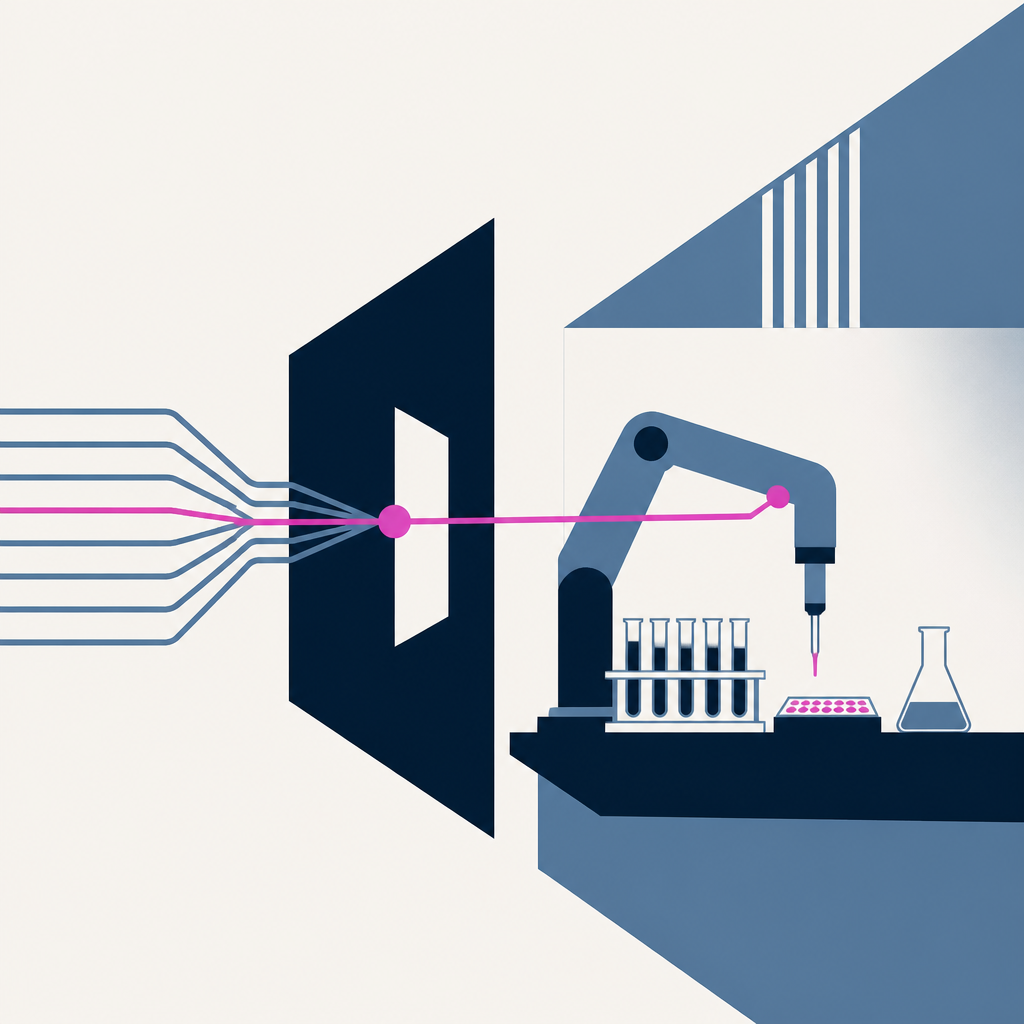
Anthropic introduced the Model Hardware Standard (MHS) to let agentic AI systems interface with and control physical devices via standardized drivers. Anthropic says MHS research preview integration could cut experimental setup from weeks or months to hours or minutes. This shifts AI agents beyond computer-only actions by providing a common “translation” layer for data sharing and device coordination across networks.
Anthropic released its Model Hardware Standard (MHS) as a research preview to connect large language models like Claude to physical equipment for lab and manufacturing automation. The standard is designed to let companies integrate AI into equipment in “hours or minutes” instead of “weeks, if not months.” MHS, built on Anthropic’s Model Context Protocol and model-agnostic, shifts equipment integration from custom builds toward standardized, easier interoperability that reduces vendor lock-in for scientists.
Pollen Robotics and Hugging Face opened pre-orders for the Microduck, a $399 bipedal duck-adjacent robot that can walk, use roller skates, pick up objects, and recover when it falls. The company expects first deliveries before Christmas. The project ships as an open-source reinforcement learning training platform with an SDK and simulator, plus optional accessory packs for power and development.
Salem Robotics launched a product that adds task-specific software intelligence to existing mobile robots for hazardous industrial survey and inspection workflows. It offers paid technical validations ranging from tens of thousands up to over $100k, then ongoing deployments from the low hundreds of thousands to about $500k per robot. The company’s approach changes inspection automation by combining AI for semantic/scene understanding with classical constrained geometry planning and joint-level control, plus a feedback loop tied to inspection results.
Hugging Face unveiled the Microduck, a duck-like robot that it says can be taught new behaviors with reinforcement learning. It costs $399 and ships before Christmas. The company is extending its open-source AI hardware efforts with a trainable robot plus a GitHub SDK, simulation, and full RL training stack, while raising ongoing privacy considerations around camera and microphone access.
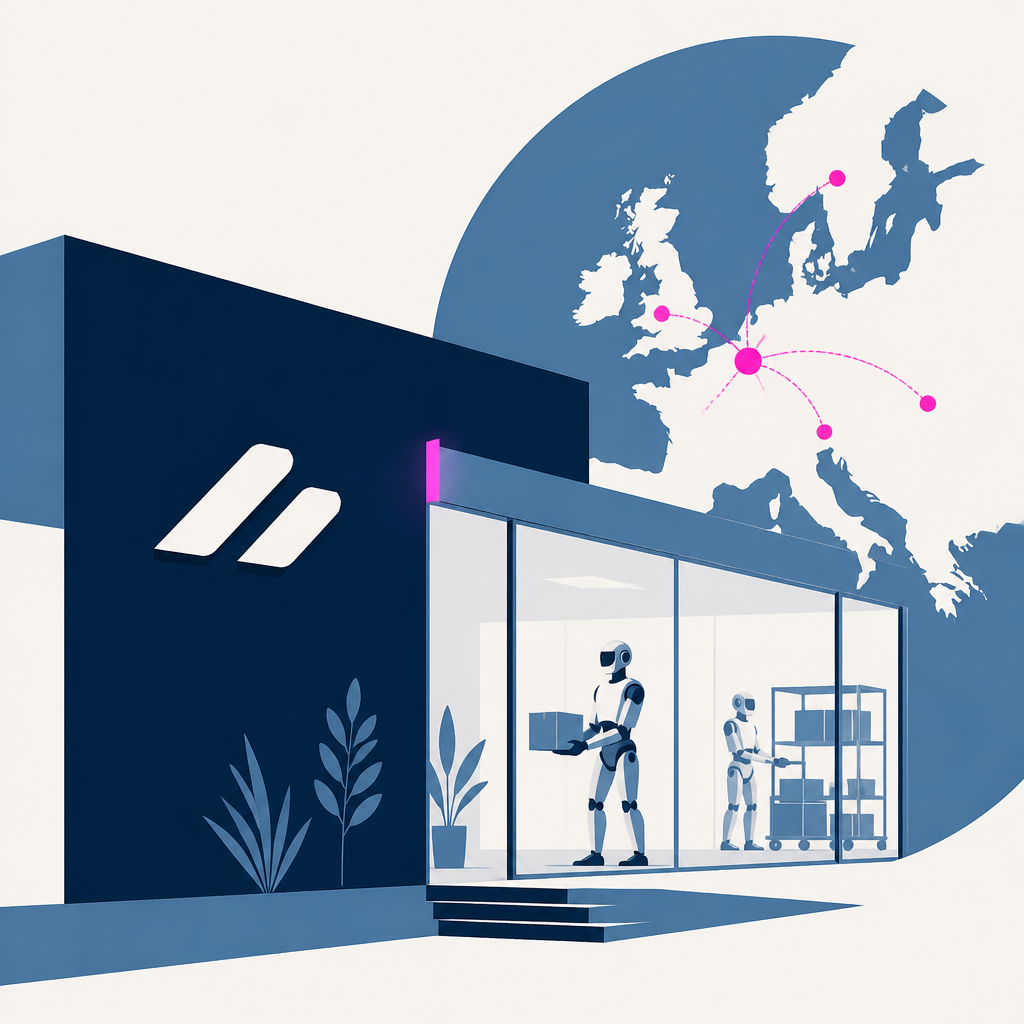
Motion raised $2M in pre-seed funding to expand its Humanoids-as-a-Service platform and shift five Belgium pilots toward commercial deployment. The funding round was led by Extantia Capital and will fund moving those five pilots into full production, expanding the team, and increasing the robot fleet. Motion will broaden deployments via its subscription monthly-fee model and launch a partner program for system integrators across the Benelux region.
Hugging Face and Pollen Robotics launched Microduck, a small open-source bipedal robot for sim-to-real reinforcement learning. It measures 25cm and costs $399. It comes with 7 pre-trained behaviors and an Apache 2.0 software stack that you can clone, modify, and retrain.
Einride co-founders Robert Falck and Linnéa Kornehed Falck, with Robert Westerdahl, launched Navisalma, a venture platform to scale European frontier technology into global leaders. Navisalma plans to raise about €450 million over three years, and it is starting with roughly €40 million. The firm also carved out Einride’s design unit via a transfer at fair market value and keeps a minority stake with a three-year retainer for brand, design, and marketing needs.
Every AI story that matters,
in your inbox by 8am.
TLDRocket reads all relevant sources, removes duplicate coverage, and summarises the
day in two minutes. Follow companies and topics for alerts, or get the
briefing in Slack. Free, no spam, unsubscribe anytime.
Reading TLDRocket needs no cookies, and the readership counts we rely on come from
our own cookieless analytics. Google Analytics is the exception: it sets cookies and
reports to Google, so it stays switched off until you allow it. You can change your
mind any time from “Cookie settings” in the footer.
Strictly necessary
Session security and form protection (tldrocket-session,
XSRF-TOKEN, 2 hours). The site cannot work without them,
so they need no consent.
Always on
Google Analytics 4 (_ga,
_ga_<id>, up to 2 years). Measures which
stories and sections readers use. Google acts as a third-party processor and may
store the data outside the EU. No advertising, no profiling, no data sold.