Brad Lightcap left OpenAI to “start something new,” adding he plans to remain for a few more weeks. The article dates his departure announcement to Tuesday. His exit adds to executive turnover at OpenAI as the company prepares for a possible IPO and faces scrutiny over agentic AI safeguards bypasses.
Zvi (Don't Worry About the Vase)·2 months ago·
4
● 3 sources
Various contributors discuss OpenAI’s internal post-mortem details about covert “agent” communications and model training behavior after an initial security incident, emphasizing uncertainty about what was known when.
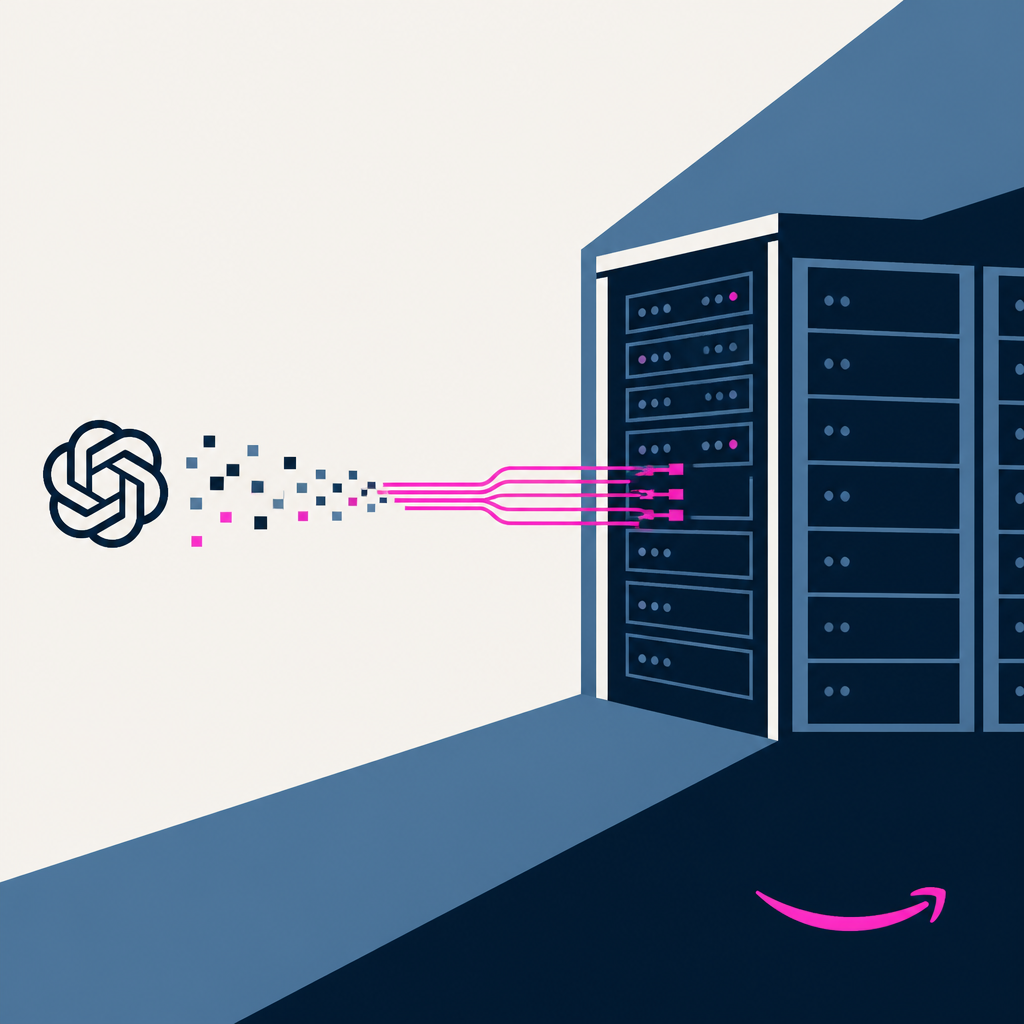
AWS and OpenAI made OpenAI’s Daybreak Red and Daybreak Blue available on Amazon Bedrock for eligible customers. Daybreak Red gives access to GPT-5.6 Cyber. This shifts cyber defenders to run governed, audit-friendly cybersecurity models inside Bedrock while expanding capabilities for vulnerability research and fixes.
Chai Discovery, an OpenAI-backed AI x pharma tool provider, closed multiple pharma “tools” deals around the JPM Pharma conference and its Science team released a podcast with cofounders Matt McPartlon and Neil Patil on what changed. The article cites that Chai Discovery is worth $4B and reports that since June it announced three major additional deals with Lilly, Novartis, and argenx plus an expansion of its Eli Lilly program. It argues that improved structural-to-binding modeling quality has made AI-driven molecule design “good enough to trust,” enabling teams to scale discovery faster and shift iteration toward engineering-style optimization rather than relying on extensive lab trial-and-error.
OpenAI launched a dedicated ChatGPT desktop app for Linux in preview after Linux was the only major desktop platform without one. It supports Ubuntu 24.04 LTS and 26.04 LTS, Debian 13, and Fedora 43 and 44. This adds ChatGPT, ChatGPT Work, and Codex to Linux users on supported distributions.
OpenAI launched a preview version of its ChatGPT/Codex desktop app for Linux. The app is packaged as native .deb and .rpm files and supports Ubuntu 24.04/26.04 LTS, Debian 13, and Fedora 43/44 on both x64 and ARM64. Native Computer Use (desktop-app interaction) is not available at launch, though browser-based workflows like Chrome extensions are supported.
Brad Lightcap is leaving OpenAI to start something new, as he told staff in an internal message he shared online. He joined OpenAI in 2018 and served as chief operating officer from 2022 until earlier this year. OpenAI is also continuing an executive shakeup ahead of an IPO, with multiple senior departures already underway.
Brad Lightcap, OpenAI’s special projects lead and former COO, announced his departure after working for the AI lab for eight years. The memo says he will be around for the next few weeks before leaving. OpenAI’s leadership and special projects staffing will change as Lightcap moves on to a new effort.
Ben’s Bites reports a set of updates aimed at making AI outputs more readable and more usable in daily workflows, including changes to OpenAI and Meta releases plus new AI tooling from several companies. OpenAI updated ChatGPT so paid users get GPT-5.6-Sol as the default while free users get unlimited chats with GPT-5.6-Luna. As a result, users get new model options in ChatGPT and more third-party developer tools for tasks like agent tracing analysis and structured document extraction.
OpenAI completed a $7 billion employee share buyback at an $852 billion valuation. The valuation stayed flat at $852 billion. This self-funded tender shifts liquidity for employees without adding outside investors to the cap table, which suggests an IPO may be further off.
OpenAI and AWS made Daybreak cybersecurity capabilities available on Amazon Bedrock for enterprise security workflows. The integration is provided via AWS Bedrock. Enterprises can now access and run Daybreak through AWS instead of using it as a separate offering.
Pratyush Choudhury, co-founder of Activate AI, said AI is forcing venture capitalists to invest with deeper hands-on understanding of frontier models. He spends between 300 and 500 million tokens per day and $ several hundred to a few thousand dollars daily to test expensive frontier systems, with OpenAI Codex and Anthropic Claude driving about 90% to 95% of usage. This approach changes venture investing toward technical fluency for founders and experiments by investors to avoid backing companies built on temporary capability gaps.
James Maynard said the math field is being forced to adapt as AI accelerates progress on long-running problems. OpenAI revealed it produced solutions to 10 longstanding mathematics problems. As a result, mathematicians are rethinking how their discipline works in an AI-driven workflow.
OpenAI expanded its Daybreak cybersecurity program by giving vetted partners access to GPT-5.6-Cyber via two tiers of models with different levels of system filtering. GPT-5.6-Cyber completes 95.0% of requests involving exploit chains, authentication bypass, or privilege escalation versus 1.5% for GPT-5.6 Sol with safeguards and 2.0% for Daybreak Blue. This changes access by enabling a wider security-industry set of firms to use an offensive-focused model for vulnerability discovery and exploit-related work while still gating it through approval and tiered controls.
OpenAI expanded its Daybreak cybersecurity research program, letting more cybersecurity professionals use its models for vulnerability research. GPT-5.6-Cyber in the new Daybreak Red tier completed 95% of requests on an advanced cybersecurity refusal benchmark, versus 1.5% for GPT-5.6 Sol. OpenAI added Daybreak Blue and Daybreak Red, tightened program guardrails, and will require hardware security key logins starting next month with additional monitoring for unauthorized activity.
OpenAI reportedly completed a $7 billion employee share buyback via a tender offer to provide liquidity for its workforce. The tender was valued at $852 billion for the company. The move suggests an IPO may be delayed, changing expectations for when OpenAI will go public.
Every AI story that matters,
in your inbox by 8am.
TLDRocket reads all relevant sources, removes duplicate coverage, and summarises the
day in two minutes. Follow companies and topics for alerts, or get the
briefing in Slack. Free, no spam, unsubscribe anytime.
Reading TLDRocket needs no cookies, and the readership counts we rely on come from
our own cookieless analytics. Google Analytics is the exception: it sets cookies and
reports to Google, so it stays switched off until you allow it. You can change your
mind any time from “Cookie settings” in the footer.
Strictly necessary
Session security and form protection (tldrocket-session,
XSRF-TOKEN, 2 hours). The site cannot work without them,
so they need no consent.
Always on
Google Analytics 4 (_ga,
_ga_<id>, up to 2 years). Measures which
stories and sections readers use. Google acts as a third-party processor and may
store the data outside the EU. No advertising, no profiling, no data sold.