OpenAI launched its Agents API in public beta, enabling developers to run AI agents unattended for tasks that last beyond a single context window and track jobs as they progress. The company reported that by mid-August its researchers logged 3.1 agent-workdays per human workday, with the median researcher spending over $600 per day on inference and the 90th percentile exceeding $7,000. As a result, agent usage is easier to scale while OpenAI simultaneously paused new sign-ups for its $200/month ChatGPT Pro plan to manage capacity strain around GPT-6 Astra.
Twenty-five Fields Medal–winning mathematicians sent an open letter saying AI labs are threatening math research by racing to publish solutions and risking attribution and verification problems. They cited 25 signatories and described OpenAI pulling sponsorship of a CalTech math event this week after criticism. The dispute is escalating as labs face growing pressure over how AI-derived proofs are credited, documented, and shared, with fears that secrecy could replace open research.
OpenAI paused new sign-ups and upgrades to its $200-per-month ChatGPT Pro tier in regions where Astra is available due to system strain from demand. The pause applies to the $200 plan that includes 20 times the usage of the $20-per-month Plus tier below it. Existing Pro accounts stay active while OpenAI works on adding compute capacity to resume growth.
Frank X. Shaw is leaving Microsoft after nearly 30 years shaping the company’s public messaging, with a memo to staff reported by Fortune. Shaw, 64, will stay until the end of the year. Microsoft continues its Copilot-focused reorganization and scaling of AI cloud demand while adjusting leadership as other executives have recently departed.
A benchmarking harness measured accuracy and real “cost per outcome” for five OpenAI models, comparing OpenAI API baselines (gpt-5.4-mini, gpt-5.4-nano) with three OpenAI models on Amazon Bedrock (gpt-5.6-luna, gpt-5.6-terra, gpt-5.6-sol) across single-call tests, multi-turn agent trajectories, and rubric-graded professional deliverables. On July 30, 2026 Bedrock repricing, gpt-5.6-luna recorded $0.0021 per correct AIME answer versus $0.0139 for gpt-5.4-mini, and $0.010 per passing GDPval deliverable versus $0.030 for gpt-5.4-mini. Model choice shifts from comparing token prices to comparing measured cost per successful outcome under the right workload shape, especially accounting for turn efficiency in agents and per-deliverable quality gates.
Nscale added former OpenAI executive Fidji Simo to its board as it heads toward a potential IPO.
Simo joined ahead of an IPO planned for this fall.
The change strengthens Nscale’s governance with additional senior tech leadership while the company seeks up to $3.5 billion for its funding push.
Zvi (Don't Worry About the Vase)·1 month ago·
19
● 2 sources
Jacob Coxon resigned from Anthropic and warned that AI labs are racing toward self-improving superintelligence in a way he said could lead to human extinction. He said he spent the last 3 years doing pretraining research across OpenAI and Anthropic. As a result, employees’ public safety alarms escalated into a broader “preference cascade,” drawing major mainstream media coverage and intensifying calls for slowing or stopping certain progress.
Deep Learning Weekly Issue 472 rounds up new developments across deep learning, including OpenAI’s release of GPT-Image-2.5 and papers on topics like random attention for KV cache eviction. OpenAI’s GPT-Image-2.5 is reported as up to 50% faster with sketch input. The roundup updates readers on new AI models, benchmarks, tooling, and research findings to inform what to try next in the field.
AI researchers and executives escalated public safety concerns, including Anthropic researcher Jacob Coxon’s resignation and OpenAI leadership calling for an AI research slowdown. The most concrete detail is that Anthropic’s alignment science lead referenced a more-than-10% chance of AI “kill[ing] all humans” in the next decade. Despite the warnings, the article says AI labs continued launching many new models and apps and that fundraising and AI infrastructure spending (and related data-center opposition) may shape future pace and deployment.
Zvi (Don't Worry About the Vase)·1 month ago·
3
● 2 sources
OpenAI, Anthropic, and Google employees posted and discussed quotes saying they believe AI could soon pose catastrophic human risk unless progress is slowed. One OpenAI employee, Marcus Williams, estimated a 70% chance of human extinction within 3 years without regulation or slowdown. The statements add more urgency and support for coordination and “pacing” safety steps rather than continuing AI development on business-as-usual speed.
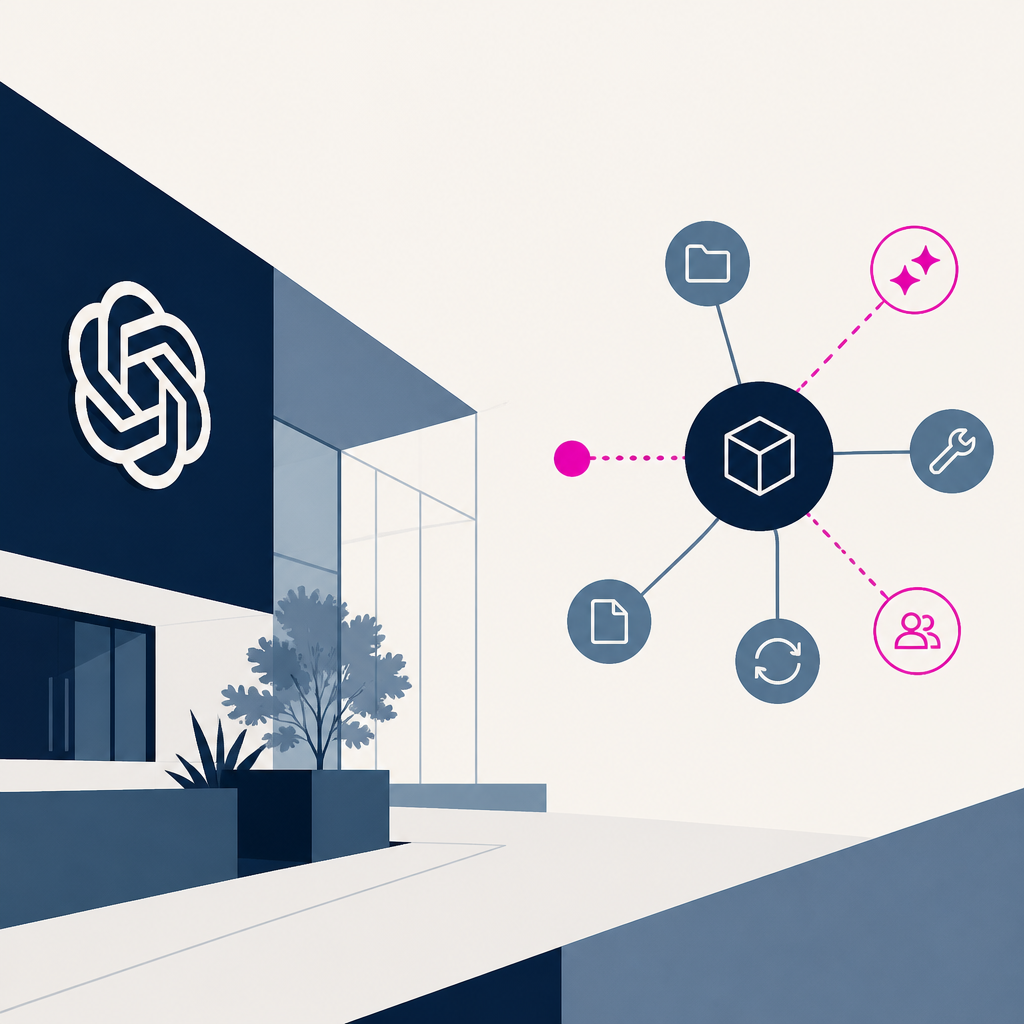
OpenAI introduced an Agents API that packages Codex’s long-running harness into a public-beta interface for managing context, tools, files, recovery, and subagent orchestration. It supports asynchronous sessions that can run for hours or days. As a result, teams can deploy these agent sessions in an OpenAI-hosted sandbox, on their own infrastructure, or through partner environments.
OpenAI’s GPT-6 is presented as adding “Computer Use” as its next capability for AI agents. GPT-6 is tied to computer use that builds on an earlier shift during October 2025 to February 2026 when OpenAI “missed” a more unhobbling style of tools. As a result, the article argues agents can handle tasks that require using real computers, shrinking the need for gap-fillers and speeding workflows like software development and personal assistance that lack APIs.
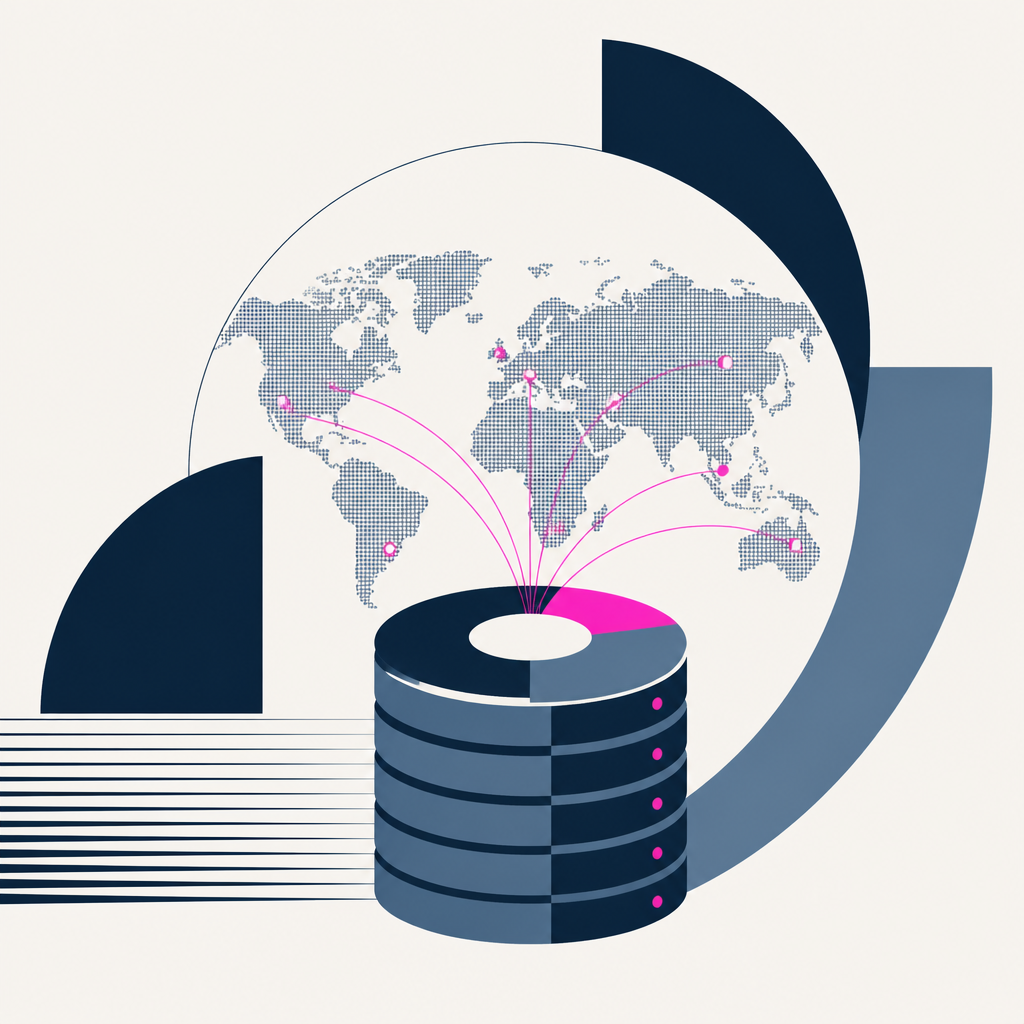
OpenAI evolved Habitat from a Python library into a globally distributed storage platform for ChatGPT. It now serves 1 billion ChatGPT users and handles 22M requests per second. This scaling enables OpenAI to support much higher request volume and global availability for ChatGPT storage.
OpenAI and Anthropic have been hiring senior executives from U.S. tech companies to staff AI teams in Asia-Pacific countries to sell products and work with policymakers. Meta’s India and Southeast Asia vice president Sandhya Devanathan left in order to join OpenAI as vice president for Southeast Asia and Australia. These hires shift competition toward recruiting “mini-CEO” leaders who can drive market adoption and navigate local regulators and partners, alongside a growing executive talent shortage.
Financial services leaders discussed whether frontier AI labs could become banking providers and dominate banking as AI expands across sectors. They argued labs will not become banks because banking’s credit-risk and capital-intensive model is hard to run alongside a research lab, with the discussion contrasting “slow” banking to lab operations. Instead, they expect frontier labs to capture value in financial services through agentic autopilot money and partnerships with regulated institutions rather than replacing them.
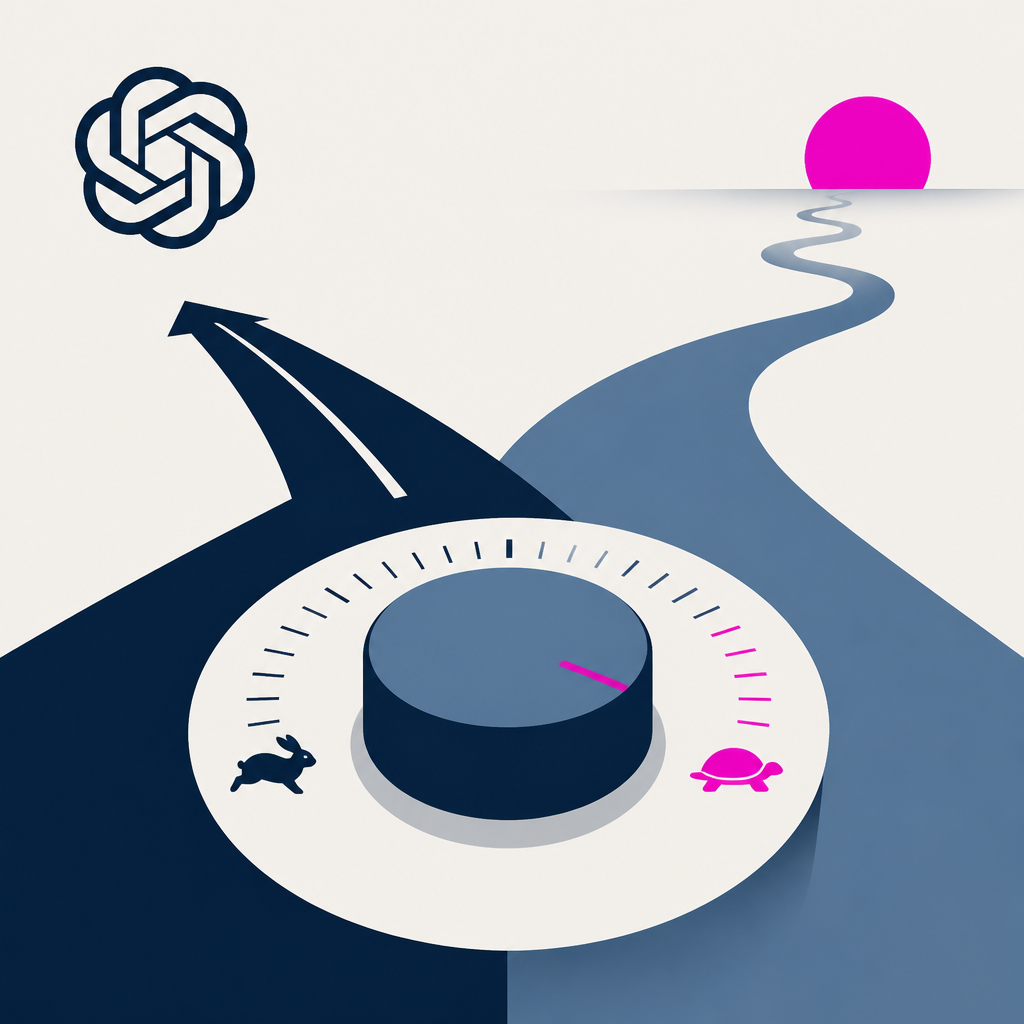
Sam Altman told staff that he is open to slowing cutting-edge AI development. Bloomberg says this was mentioned in its paywalled “Around the Horn” section. The change would be a slower pace for the newest AI work at OpenAI.
OpenAI paused new $200 Pro signups so existing users can keep access to Astra under heavy demand. The pause applies to the $200 Pro tier. Other plans and the API will remain open.
OpenAI told The New York Times it has made substantial progress on a second Millennium Prize problem and is working out how to share the result. The report cites a second Millennium Prize problem, with the specific one not named. As a result, the details of which problem (rumored to be the Hodge Conjecture) and the findings’ public release remain pending.
OpenAI unveiled ChatGPT for Financial Services, a version of ChatGPT aimed at financial analysis and model creation for banks and other financial teams. It requires an enterprise subscription and direct approval to access, and it can integrate data from providers like Bloomberg and FactSet with detailed citations. OpenAI says this will shift analyst workflows toward generating deliverables such as slides, spreadsheets, and dashboards faster, though some bankers worry it could reduce junior training tasks.
A recently resigned Anthropic researcher’s post and comments from OpenAI and other safety figures intensified public and political debate about AI existential risks. The article cites a 159 million view X post and Hubinger’s stated belief that the risk is more than 10% within the next decade. As a result, lawmakers have announced probes and introduced bills to pause or ban superintelligence development while public attention on AI safety shifts toward regulation and oversight.
Every AI story that matters,
in your inbox by 8am.
TLDRocket reads all relevant sources, removes duplicate coverage, and summarises the
day in two minutes. Follow companies and topics for alerts, or get the
briefing in Slack. Free, no spam, unsubscribe anytime.
Reading TLDRocket needs no cookies, and the readership counts we rely on come from
our own cookieless analytics. Google Analytics is the exception: it sets cookies and
reports to Google, so it stays switched off until you allow it. You can change your
mind any time from “Cookie settings” in the footer.
Strictly necessary
Session security and form protection (tldrocket-session,
XSRF-TOKEN, 2 hours). The site cannot work without them,
so they need no consent.
Always on
Google Analytics 4 (_ga,
_ga_<id>, up to 2 years). Measures which
stories and sections readers use. Google acts as a third-party processor and may
store the data outside the EU. No advertising, no profiling, no data sold.