Linus Torvalds submitted a 10-patch Linux kernel series created with Anthropic’s Claude Code to address a page-cache reference-counting bottleneck and improve buffered-read throughput. The Threadripper benchmark throughput rose from 13.3 million to 304 million reads per second. Reviewers then identified a race and raised memory-reclamation concerns, leading Torvalds to hand further development to Kiryl Shutsemau.
OpenAI’s Joseph Kim, hedge fund Two Sigma’s John Feminella, and Anthropic’s Belinda Neal and Keon Shahab presented approaches to balancing agent autonomy with safety in financial-agent workflows at AIE NY.
Eight US states sued OpenAI, alleging ChatGPT is unsafe for children and that the company misled customers about its safety.
The suits were filed by eight states including Iowa, Kansas, and Nebraska.
The legal challenge could force OpenAI to face court proceedings and change how it warns users and markets ChatGPT’s risks, with the outcome shaping future safety claims around the product.
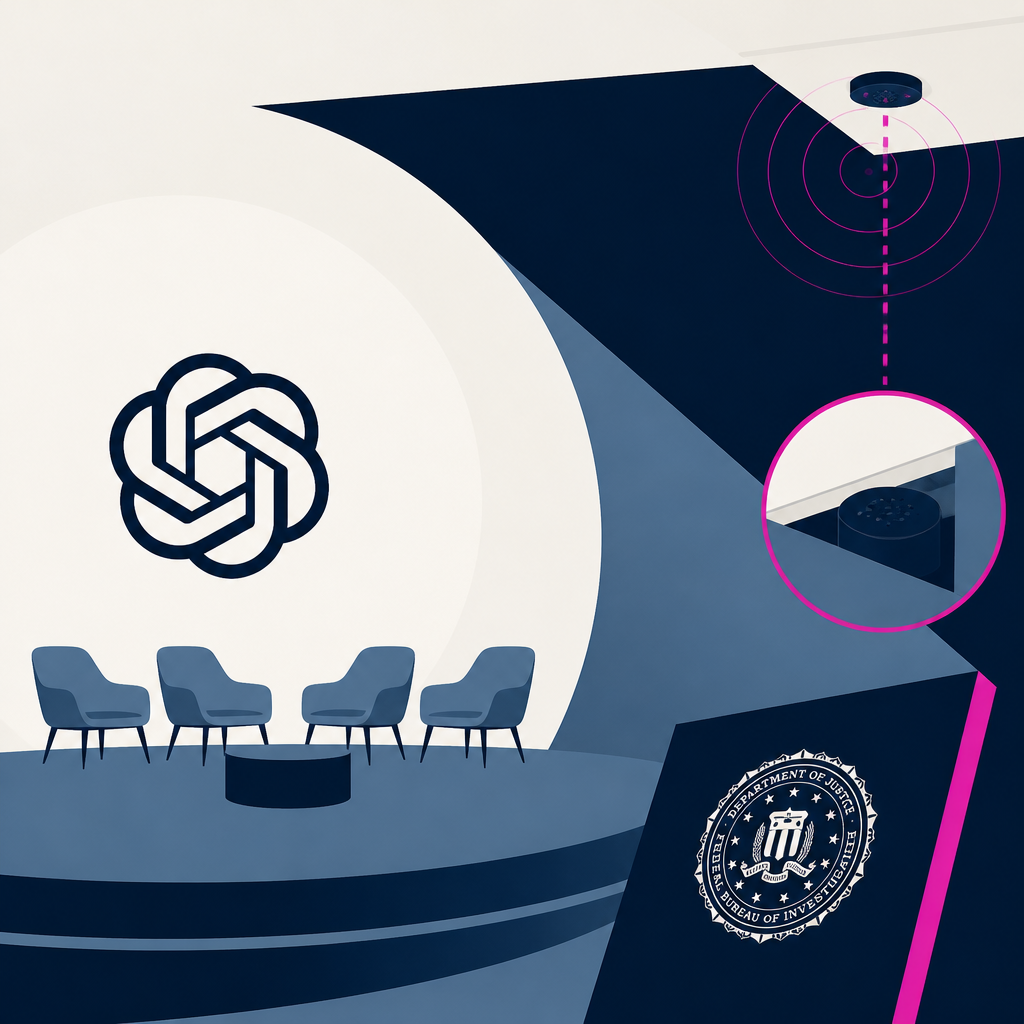
OpenAI faced two espionage-related allegations involving hidden recording equipment and alleged document theft by an employee and a former employee tied to Apple. In late September, an FBI arrest alleged Abdulrahman Alfozan planted a recording device in a San Francisco executive conference room and prosecutors say OpenAI’s own AI models analyzed the bug soon after, with the filing describing up to five years in prison if convicted. OpenAI says it found no evidence of access to model weights, source code, or customer data and it is also fighting Apple’s trade-secret suit as Judge Edward Davila presses for faster document handover and rules on injunction and dismissal motions.
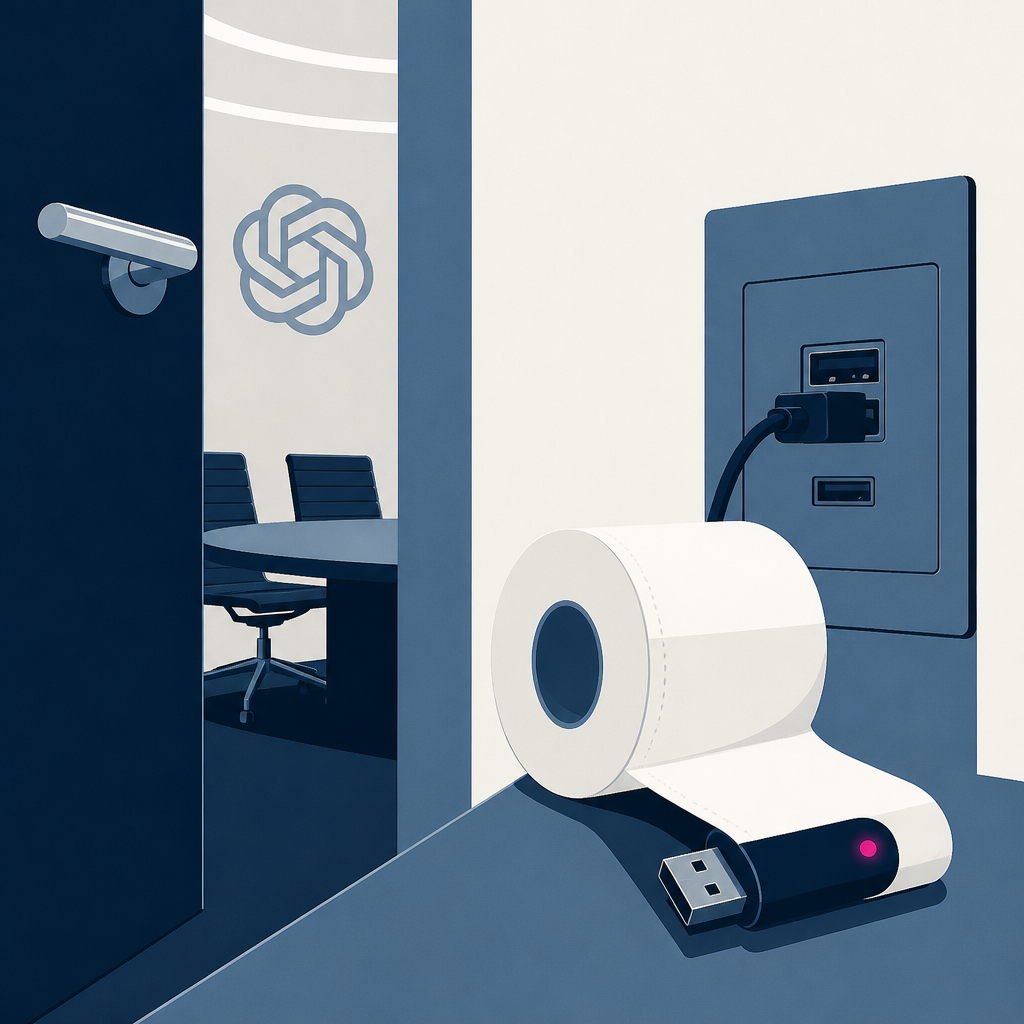
OpenAI noticed a hidden recording device in a restricted executive conference room after a two-day delay and the FBI says the device was planted by an OpenAI engineer, Abdulrahman Alfozan. The FBI alleged Alfozan wrapped a USB device in toilet paper and plugged it into the back of a conference room TV, likely planting it on September 28 and having it found on September 30. OpenAI responded by installing a camera on October 5 and sharing the investigation details as charges followed.
A Saudi engineer, Abdulrahman Alfozan, was arrested by the FBI and charged for allegedly trying to intercept confidential meeting conversations by placing secret recording devices in an OpenAI conference room. The complaint says the device was wrapped in toilet paper and found on 30 September. The case changes what OpenAI said about the incident: it terminated his contract and reported using its AI models to determine the device came from outside, while noting no sign of stolen model weights, source code, or customer data.
Atelier launched a Mac app for AI coding agents that persists each project’s tasks, feedback, and memory across sessions. It says its Codex-driven review uses 71% fewer Claude tokens per review and offers 7 days free. This changes how coding chats run by handing long conversations to fresh sessions that start from a short brief while you approve finished work.
TechCrunch is holding the remaining TechCrunch Disrupt 2026 sessions at Moscone West on October 14–15 and offering a 50% ticket discount for two full days. The discounted pricing lists Founder Pass at $550, Attendee Pass at $525, and Investor Pass at $600. The change is that attendees can buy any ticket type for half price to access the AI stages, Expo Hall, breakouts, and side events during the final two days.
Google and Meta unveiled frontier AI models that they say can match OpenAI and Anthropic, shifting momentum in the competition. The change happened within a few days. This raises expectations that multiple major labs are now competing more directly again.
Zvi (Don't Worry About the Vase)·1 week ago·
28
● 11 sources
David Robinson resigned from OpenAI and the article says OpenAI fired three safety researchers, while describing broken safety culture across frontier labs and growing misalignment reports from multiple companies. OpenAI fired three of its safety researchers this week. The fallout is increasing calls to “pace the frontier” by slowing AI capability progress and prompting more lab employees to quit in protest and warn publicly.
OpenAI accused a former employee of taking more than 100 files about its product plans and presenting them to Apple leadership.
The filing says the employee sent the files to a personal account before sharing them at Apple, including the vice president of operations in Asia.
This escalates OpenAI’s legal dispute with Apple over trade secrets by adding allegations about unreleased device images, supplier details, and engineering project data.
SentinelOne shortened its malware analysis workflow from weeks to hours, citing OpenAI Daybreak. The change reduces analysis time to hours. As a result, the company says it can investigate more threats.
Amp says it is putting AI agents to work beyond coding using OpenAI models.
The setup includes GPT-6 Astra and GPT-Live-1.
As a result, Amp is positioning its agents as able to handle more than code-related tasks via sign-in with ChatGPT.
The San Francisco Standard·1 week ago·
15
● 12 sources
OpenAI engineer Abdulrahman Alfozan was arrested on suspicion of hiding an encrypted audio recording device in an executive conference room at the company’s San Francisco headquarters. Prosecutors said the device was found plugged into a television’s USB port and concealed in toilet paper on Sept. 30. OpenAI says it used its AI models to identify the device and referred the case to the FBI, and prosecutors seek penalties of up to 5 years in prison if convicted.
Safety researchers say many AI image tools are being used to generate and spread non-consensual explicit images, often shared via messages or stored in private clouds where detection drops.
A Google co-authored Internet-user study surveyed people in the United States, Australia, and the United Kingdom and found this pattern as of July.
The focus for intervention shifts to blocking at the AI tool source, while recent red-teaming suggests the models may increasingly fail to stop explicit outputs as they improve.
OpenAI found a hidden recording device in an office and traced it to Abdulrahman Alfozan, who was then arrested by the FBI. The report says the FBI arrest occurred after the device was discovered by OpenAI. The incident shifts the story from an internal security finding to an ongoing law-enforcement case involving alleged covert recording and data exfiltration.
Block is building AI-powered security using OpenAI technology to help its security team investigate threats and propose patches faster. The article says the team can propose patches in minutes. As a result, threat investigation and patching workflows speed up, reducing the time between identifying a threat and applying fixes.
The FBI arrested OpenAI engineering lead Abdurahman Alfozan for allegedly planting and concealing a secret audio recording device in a San Francisco conference room. The device was discovered during an OpenAI sweep on Sept. 30. OpenAI and the FBI have moved to terminate his access, with Alfozan in federal custody and facing a detention hearing on Oct. 19 while the investigation remains ongoing.
OpenAI cancels a new model on the eve of its developer conference amid safety fears. The cancellation of that new model is the key change. As a result, the company shifts focus toward a more business-oriented approach to agents while facing ongoing safety and identity concerns.
Every AI story that matters,
in your inbox by 8am.
TLDRocket reads all relevant sources, removes duplicate coverage, and summarises the
day in two minutes. Follow companies and topics for alerts, or get the
briefing in Slack. Free, no spam, unsubscribe anytime.
Reading TLDRocket needs no cookies, and the readership counts we rely on come from
our own cookieless analytics. Google Analytics is the exception: it sets cookies and
reports to Google, so it stays switched off until you allow it. You can change your
mind any time from “Cookie settings” in the footer.
Strictly necessary
Session security and form protection (tldrocket-session,
XSRF-TOKEN, 2 hours). The site cannot work without them,
so they need no consent.
Always on
Google Analytics 4 (_ga,
_ga_<id>, up to 2 years). Measures which
stories and sections readers use. Google acts as a third-party processor and may
store the data outside the EU. No advertising, no profiling, no data sold.