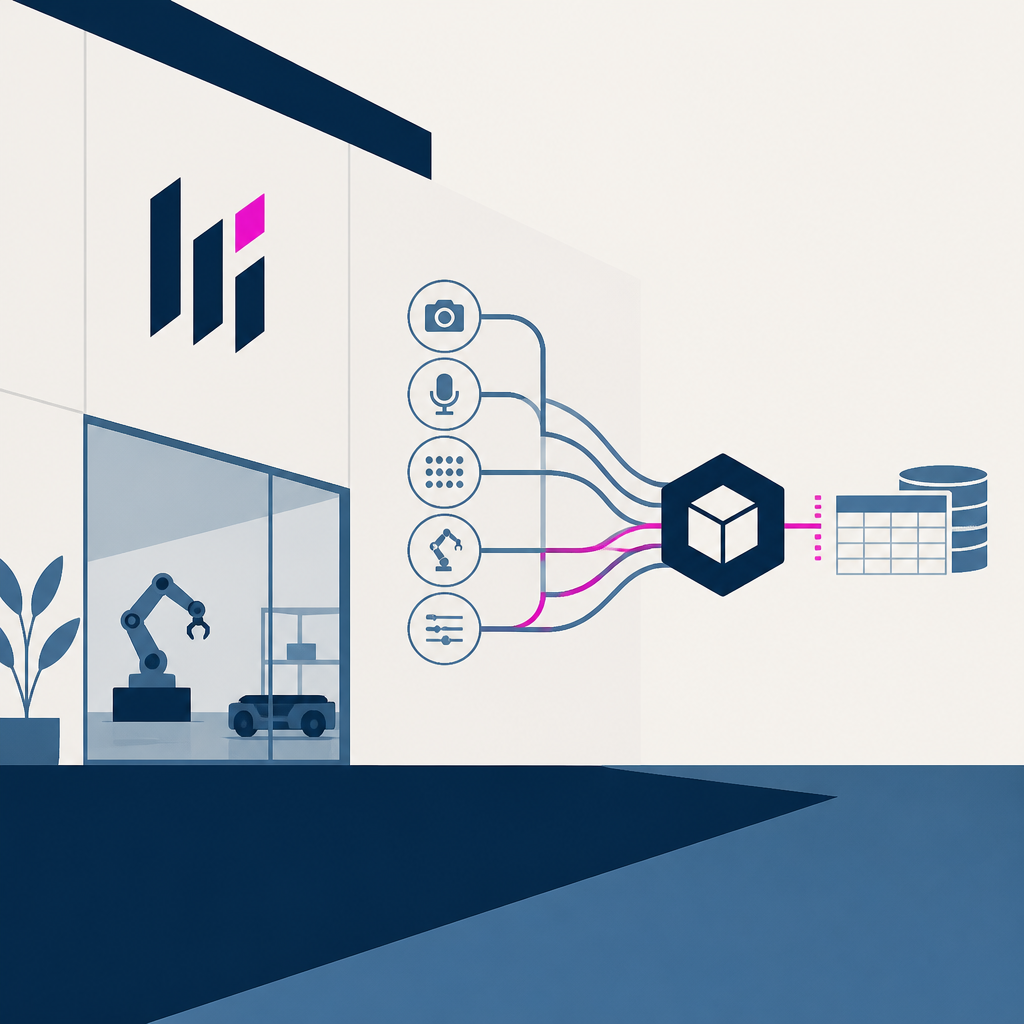
Keenable AI released NEEDLE, an open-source live web search benchmark that avoids leakage by regenerating its query sets from fresh public sources while preventing engines from fetching or re-ranking results. The benchmark regenerates news queries hourly (from RSS feeds and Google Trends) and scores 15 search APIs against an “ultimate” pooled oracle ceiling, with evidence clipped to 2,000 characters. Results are now reported against a moving, field-wide achievable ceiling rather than a static test set, changing evaluation to separate retrieval failures from ranking failures across the market.
Model Context Protocol (MCP) enables AI apps to connect to tools, but it assumes the client already knows which server to use so it skips agentic resource discovery across many registries. The proposed ARD specification is at v0.91, dated August 26, and defines a required POST /search endpoint for discovery. ARD would add a discovery layer so agents can search multiple compatible registries before attempting tool access, allowing federation across providers without forced migration.
OpenClaw released version 2.0 of its open-source self-hosted AI agent harness with a redesigned installation flow and a rebuilt browser app experience. The update began rolling out on Sunday, and it adds shared cloud sessions for multiple team members. Security changes focus on protected credentials and a contributor-code sandbox, but sandboxing is off by default and shared-session controls are explicitly not a security boundary.
OpenClaw shipped OpenClaw 2.0, a major update to its open-source personal AI agent tool. The release (v2026.8.1) reports 933 contributors, including 569 first-timers, and over 16,000 merged pull requests. It adds reusable setup options for existing model subscriptions/keys, a rebuilt browser app with conversational dashboards and progress tracking, new memory plus Swarm/Fleet shared-session and collaboration features, and requires backed-up data plus breaking migrations for some older components.
OpenClaw released version 2.0 of its open-source personal AI agent framework, positioning it as an update to its task-executing “digital secretary” experience. The release version is 2026.8.1. It adds streamlined installation, a redesigned control-center dashboard with live-agent monitoring, multiplayer shared sessions, improved search, and tighter security via trust boundaries and least-privilege controls.
Amazon describes Verus, an open-source automated verifier that adds formal specifications and proofs directly to Rust code to prove behavioral correctness rather than just relying on runtime checks like panics. Verus is reported to provide feedback on code and proofs in under 1 second and scale to verifying projects with thousands of lines of code. This enables machine-checked guarantees for properties like unsafe Rust safety and concurrent-program correctness, including Amazon’s prior proofs of primitives used in the Nitro Isolation Engine.
Hebbian Robotics launched HFlow, an SDK that converts synchronized robot and human multimodal recordings into standardized, quality-checked episodes with queryable dataset manifests. HFlow takes one MCAP file per episode and writes a canonical MCAP plus an append-only Parquet catalog. Robotics teams can run the same registered processing steps via Airflow 3 DAGs, query reproducible manifests with DuckDB SQL, and quarantine bad episodes without deleting the underlying data.
OpenClaw launched OpenClaw 2.0 as an open-source AI agent that can perform tasks on a user’s machine through chat apps like WhatsApp and Telegram. The launch is described as happening “today,” and it includes automatic detection of ChatGPT or Claude keys during setup. It adds multiplayer team session sharing, updated browser tools for better tracking, and memory upgrades while continuing to run helpers locally for tasks such as browser control and file management.
Debian voted to allow developers to use AI tools in contributions to its Linux distribution for development, maintenance, and documentation. The policy was set after Debian’s voting developers considered and rejected ban-style proposals. As a result, generative AI usage is treated under the same contributor standards as before rather than being subject to extra or special rules.
Terminals launched as a free open source, node-based terminal manager for macOS, Linux, and Windows that lets users run real terminals and connect coding agents as live nodes on a canvas. The launch page highlights dictation for Wispr Flow claiming “4x faster.” Sessions are kept across reboots and tools/agents can be wired together visually.
Naseem is launching as a native macOS AI agent built entirely in Swift. It can automate tasks by running terminal commands and driving iOS Simulator testing. Users can bring their own model or run locally with Ollama/MLX, instead of using Electron or Node.
OpenClaw shipped OpenClaw 2.0, its largest update to date, adding new setup flow, a rebuilt chat-based browser interface, session search, remote/external session execution, interactive widgets, and tighter handling of credentials and permissions. The release includes more than 16,000 pull requests from 933 contributors, 569 of them first-timers. The update shifts the software toward faster first use, SQLite-backed session history with full-text search, cloud-capable sessions, and more granular security controls, while intensifying competition from other personal-agent products and frameworks.
Every AI story that matters,
in your inbox by 8am.
TLDRocket reads all relevant sources, removes duplicate coverage, and summarises the
day in two minutes. Follow companies and topics for alerts, or get the
briefing in Slack. Free, no spam, unsubscribe anytime.
Reading TLDRocket needs no cookies, and the readership counts we rely on come from
our own cookieless analytics. Google Analytics is the exception: it sets cookies and
reports to Google, so it stays switched off until you allow it. You can change your
mind any time from “Cookie settings” in the footer.
Strictly necessary
Session security and form protection (tldrocket-session,
XSRF-TOKEN, 2 hours). The site cannot work without them,
so they need no consent.
Always on
Google Analytics 4 (_ga,
_ga_<id>, up to 2 years). Measures which
stories and sections readers use. Google acts as a third-party processor and may
store the data outside the EU. No advertising, no profiling, no data sold.