Nvidia announced a partnership with data center infrastructure developer Cloverleaf Infrastructure to support building AI-focused data centers. Cloverleaf was founded in 2024 and raised $300 million that year, and Nvidia’s minority investment is reported to total several hundred million dollars. The deal increases Nvidia’s direct involvement in financing and developing the power and infrastructure sites that enable continued AI hardware purchases.
Nvidia published research showing that a custom “harness” with better memory handling and a supervisory component enabled Claude Opus 5 to perform long-horizon interactive reasoning tasks much more reliably. It reports a 100% score on ARC-AGI-3 with the harness, versus 30% without it. The takeaway is that agent performance—and likely cost and safety—depends more on harness design than on the underlying AI model alone.
Starcloud added a $250 million extension to its March Series A as it builds satellites for AI inference in orbit and plans more orbital data center capacity amid tighter launch options. The extension values the company at $2.3 billion. It will expand manufacturing, push Starcloud-3 toward SpaceX’s Starship, and fund a near-term plan to launch two 8 kw Starcloud-2 satellites starting in 2027.
Nvidia reverse-engineered how its Agentic Variation Operators (AVO) agent system sustains long-running autonomous work and applied it to the ARC-AGI-3 benchmark with Claude Opus 5. Claude Opus 5’s baseline on ARC-AGI-3 rose from 30.2% to 100% RHAE (completing all 183 levels across 25 environments). The work shifts emphasis to agent system design—persistent memory and supervision that let the agent inspect, execute, and recover over long horizons—rather than model capability alone.
Poolside licensed its model factory and moved into a Nvidia deal while hiring 109 employees after Jensen took an investor role. The deal is described as $12B in reverse execuhire money. Founders are set to stay for $1B and employees are set to leave for $6B, changing the company from a normal exec-out payout into a pivot-supported continuation for the original mission.
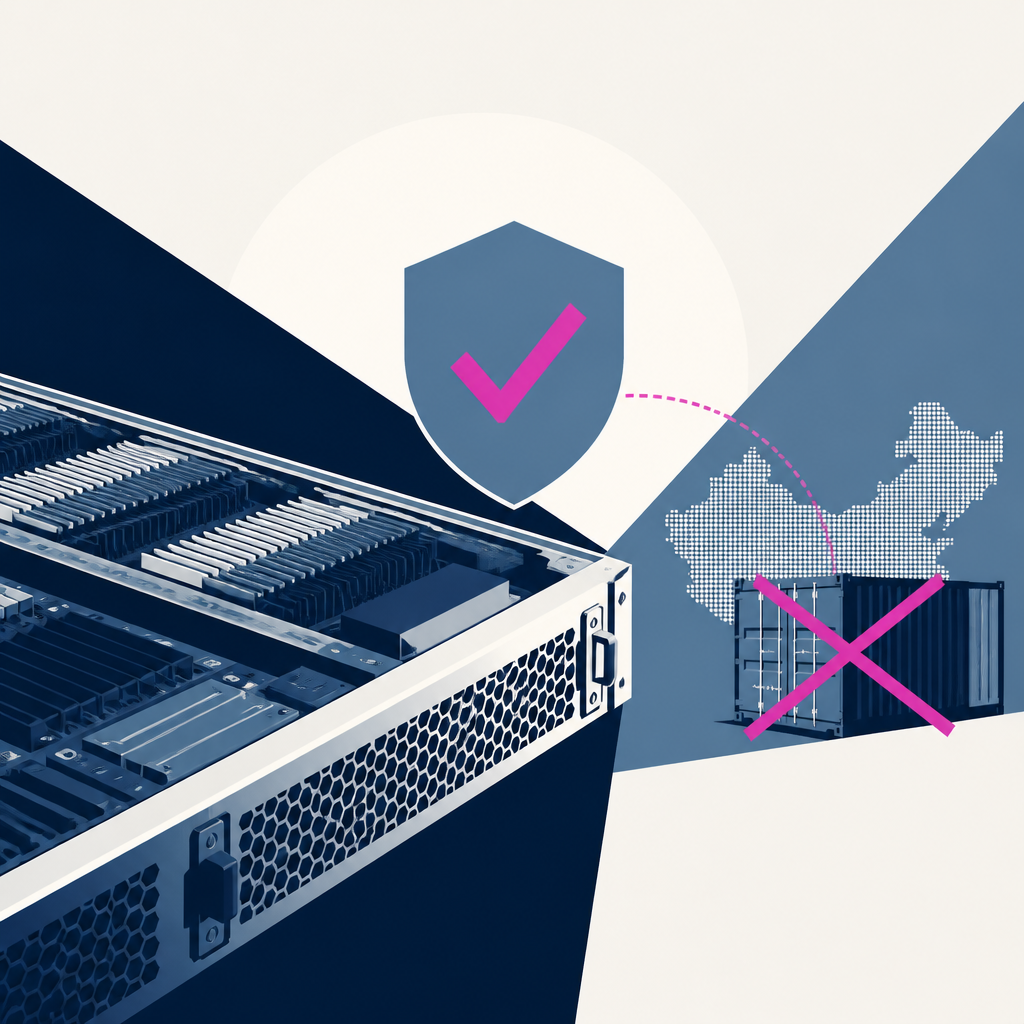
Super Micro Computer said its independent board-led investigation found no evidence that current senior management knew about an alleged $2.5 billion hardware smuggling scheme involving Nvidia chips to China. The report was filed after DOJ charged co-founder and board member Yih-Shyan “Wally” Liaw in March 2026. The company says it has finished its internal probe and took personnel actions in sales and support related functions, but authorities in Taiwan and a separate New York grand jury subpoena are still active.
Every AI story that matters,
in your inbox by 8am.
TLDRocket reads all relevant sources, removes duplicate coverage, and summarises the
day in two minutes. Follow companies and topics for alerts, or get the
briefing in Slack. Free, no spam, unsubscribe anytime.
Reading TLDRocket needs no cookies, and the readership counts we rely on come from
our own cookieless analytics. Google Analytics is the exception: it sets cookies and
reports to Google, so it stays switched off until you allow it. You can change your
mind any time from “Cookie settings” in the footer.
Strictly necessary
Session security and form protection (tldrocket-session,
XSRF-TOKEN, 2 hours). The site cannot work without them,
so they need no consent.
Always on
Google Analytics 4 (_ga,
_ga_<id>, up to 2 years). Measures which
stories and sections readers use. Google acts as a third-party processor and may
store the data outside the EU. No advertising, no profiling, no data sold.