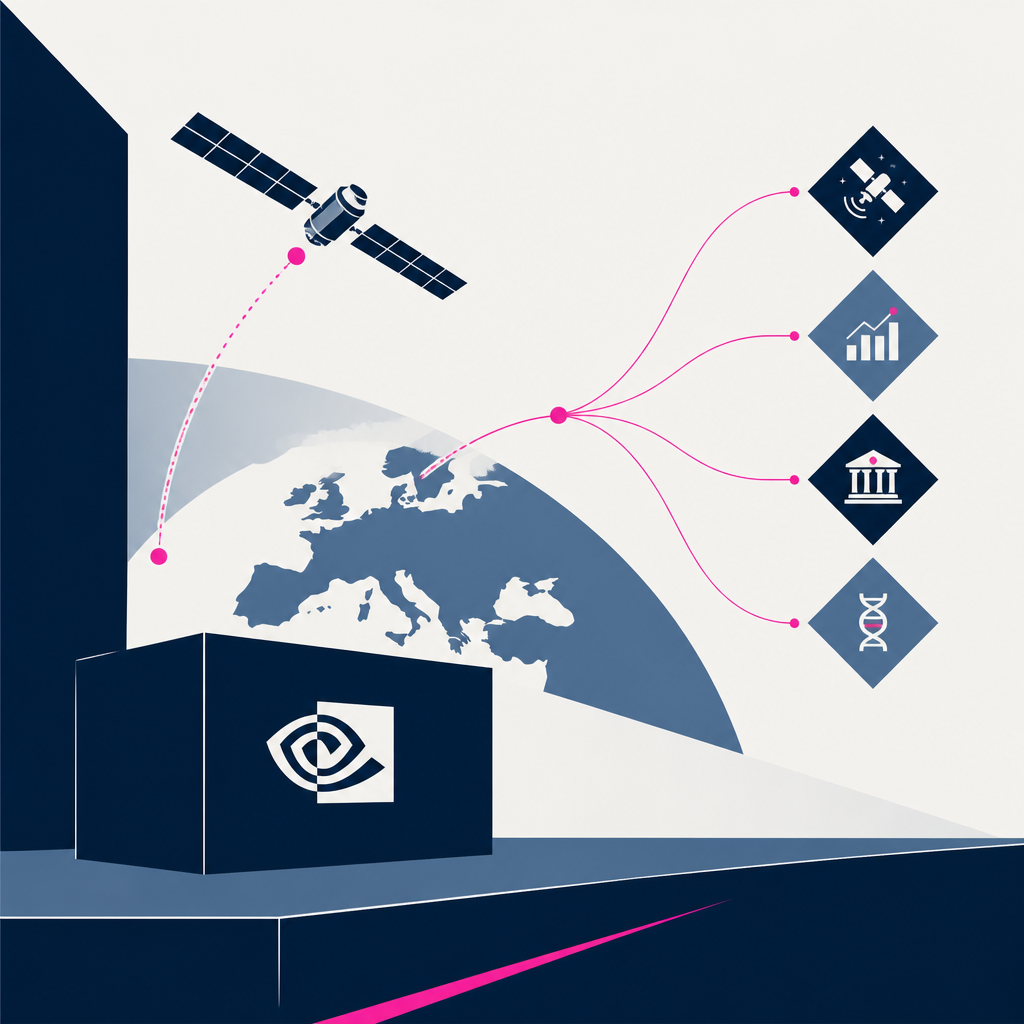
Nvidia announced investments in four French tech companies, including healthcare platform Doctolib, plus robotics, financial planning, and materials startups. Doctolib was valued at €5.8 billion in a 2022 funding round. The deals expand Nvidia’s stake in French AI-linked startups and add to its wider Europe investment plan without revealing investment amounts.
TheCUBE Pod discussed rising public skepticism about AI while focusing on how IBM is trying to build competitive advantage through an enterprise AI operating model and how the market is shifting toward inference. Marvell set a fiscal 2031 revenue target of $70 billion to $90 billion. The emphasis changes from training to inference and from model differentiation to infrastructure and orchestration built on Red Hat-based hybrid capabilities for deploying agents and managing AI.
NVIDIA announced RTX Spark laptops and software updates, designed to bring gaming-PC and local AI agent capabilities together with RTX and CUDA on a single platform.
Nvidia rolled out DLSS 5 in new Hogwarts Legacy comparisons, but the face changes previously shown for DLSS 5 look less extreme than before.
The update lands next month.
As a result, the technology is presented in a more subtle visual form for its Hogwarts Legacy debut rather than the more dramatic face transformations Nvidia initially highlighted.
Ubitium raised a €14 million seed round, led by Ibex Investors, to build drone-focused onboard intelligence on a unified chip architecture. The company’s seed funding totals €18 million since launching in 2024, with evaluation units for its next-generation UB410 planned for 2027. Ubitium will shift from its UB108 demonstration silicon to developing UB410 evaluation hardware and pursuing onboard sensing and AI workloads at the physical edge.
France-based companies are deploying agentic computing across space, finance, public services, and research using NVIDIA technology and models. Altair-1 launched this month as the first satellite in a $1 billion, 50-satellite constellation with on-board autonomous capabilities. The rollout expands from infrastructure and open model production into operational systems like edge satellite AI, sovereign workplace tooling for public agencies, and agent-building platforms for employees.
Every AI story that matters,
in your inbox by 8am.
TLDRocket reads all relevant sources, removes duplicate coverage, and summarises the
day in two minutes. Follow companies and topics for alerts, or get the
briefing in Slack. Free, no spam, unsubscribe anytime.
Reading TLDRocket needs no cookies, and the readership counts we rely on come from
our own cookieless analytics. Google Analytics is the exception: it sets cookies and
reports to Google, so it stays switched off until you allow it. You can change your
mind any time from “Cookie settings” in the footer.
Strictly necessary
Session security and form protection (tldrocket-session,
XSRF-TOKEN, 2 hours). The site cannot work without them,
so they need no consent.
Always on
Google Analytics 4 (_ga,
_ga_<id>, up to 2 years). Measures which
stories and sections readers use. Google acts as a third-party processor and may
store the data outside the EU. No advertising, no profiling, no data sold.