Ubitium zips $14M to put drone intelligence on a single chip, backed by Quantum Systems co-CEO
Tech Funding News Sofia Chesnokova ● Covered by 2 sources
Ubitium raised €14M to build one chip for drone brains and control. A Quantum Systems co-CEO backed it, betting autonomous machines need fewer chips.
Based on reporting by Tech Funding News, Sofia Chesnokova — read the original for the full story.
Summary, retelling and take written by AI under human oversight; images are AI-generated illustrations. How we work · Report an error
Düsseldorf startup Ubitium has pulled in a €14 million seed round led by Ibex Investors, lifting its total seed funding to €18 million since launching in 2024. OpenOcean, KBC Focus Fund, Runa Capital and Inflection joined in, along with a personal investment from Florian Seibel, the co-founder and co-CEO of Quantum Systems.
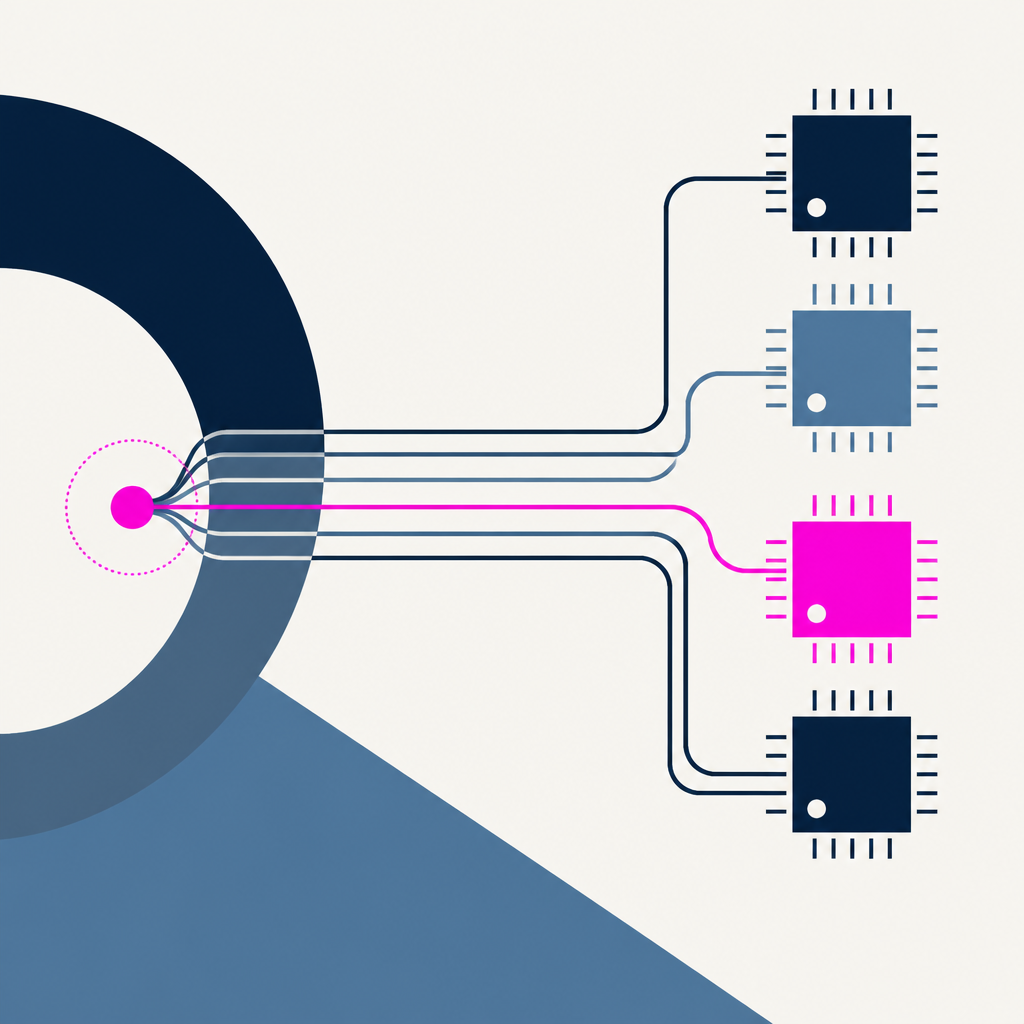
That last part matters. Seibel isn’t backing the company because he thinks semiconductors are sexy; he says autonomous machines need processors that can keep working when communications drop, while staying inside brutal limits on power and weight. Today, that usually means stitching together chips that were never meant to live together. Ubitium’s pitch is simpler: one processor that handles the whole job.
The startup is building a unified processor for perception, intelligence and control, aimed first at sensing-heavy physical AI applications such as advanced radar and acoustic systems. The company says its early customer conversations are centered on those use cases, though it won’t name clients, disclose valuation or say how many people work there. Longer term, it wants the same architecture to cover the full perceive-think-act loop on robots and drones.
Technically, Ubitium is betting on a reconfigurable processing array that can shift between signal processing, AI inference and real-time control. It uses unified memory, RISC-V toolchains and aims to cut down off-chip data movement. The first silicon, the UB108, has already been demonstrated on Samsung’s 8nm process with 256 processing elements. The next chip, the UB410, is planned for evaluation silicon in 2027 and will have 4,096 elements.
Ubitium is still tiny next to some of the other chip bets floating around Europe, but it already has working silicon, which puts it in a different category from the usual deck-and-dream startup. The team says it has 17 issued core patents, more pending applications, and more than 250 combined patents across the group, plus alumni from Intel, Nvidia, Apple and Texas Instruments. That’s the kind of hardware story investors like to tell themselves: less hype, more chips that actually exist.
My take — AI-written commentary, not fact-checked reporting
This is the better kind of European AI hardware bet: narrow, physical, and allergic to cloud-sized nonsense. A single chip for edge autonomy is a real thesis, not a slogan, and it helps that Ubitium already has silicon instead of a slide deck with a mood board. European startups should keep doing more of this and less pretending every problem needs another giant model and a prayer.
Read more about this at: Tech Funding News