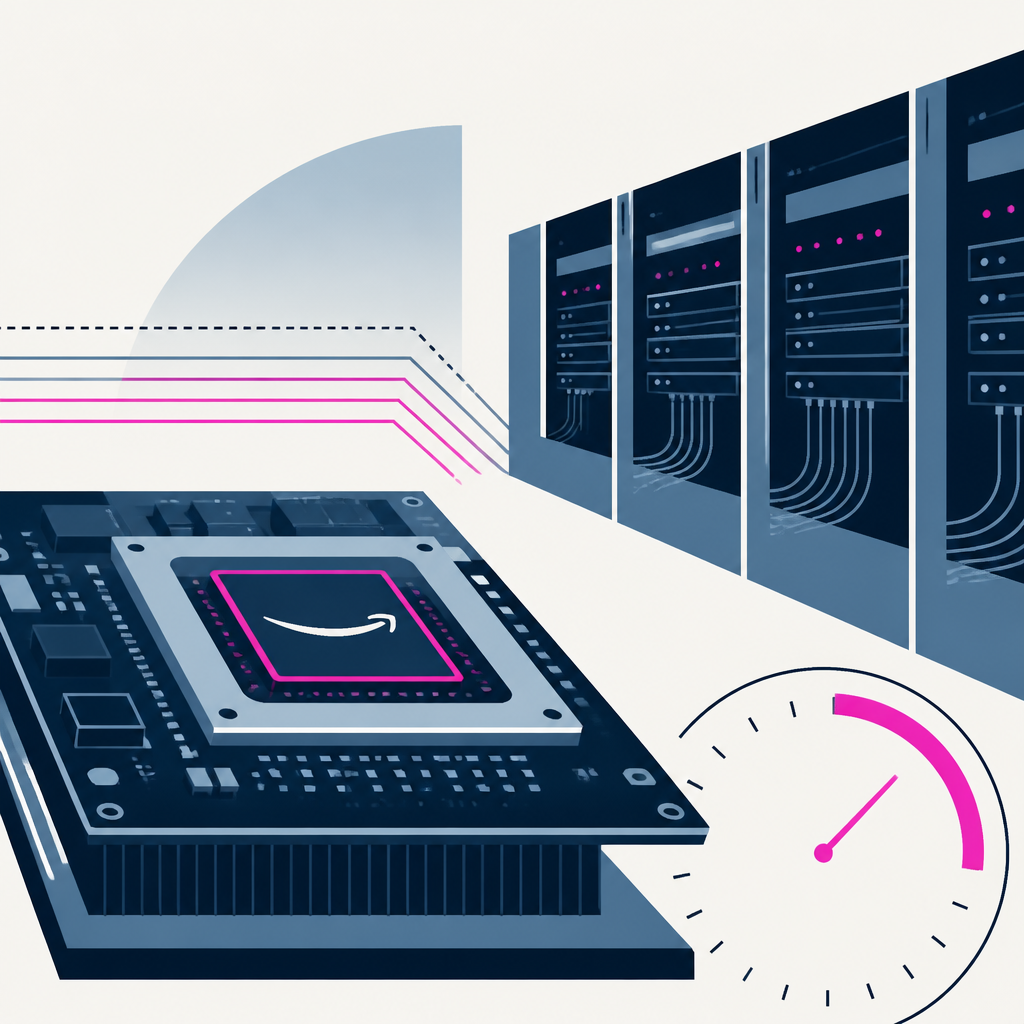
AWS is running the AWS Trainium Frontier competition to let teams co-design language-model training setups and optional custom kernels for AWS Trainium, to see what architectures perform best under different hardware constraints. Phase 1 uses a single Trainium2 chip with a 30-minute training budget scored by validation bits-per-byte (val_bpb). The competition is progressing from a single-chip, single-metric test to a four-hour, top-10-team Phase 2 that also adds a 50/50 composite including CORE inference performance.
Reinforcement Learning from Human Feedback: Aligning and Post-training LLMs was published by Manning as a post-training textbook built from the author’s earlier documentation of RLHF methods. The book is 50% off until August 19 using code PBLambert, with online access plus a 12-hour course and shipping now from Manning/Amazon US and later in October from Amazon UK. Readers are given 25% RL-focused intuitions, systems guidance, and a fuller account of RLHF’s history and distillation/optimization pitfalls as a single reference.
Meta Superintelligence Labs released Muse Glimmer, while Mark Zuckerberg defended AI distillation and criticized labs that keep the strongest models closed. Muse Glimmer is a 30 billion-parameter model available on Hugging Face under the Apache 2.0 license. Meta’s product direction shifts toward more open releases, including a stated “soon” plan to resume open-source model publishing and signals that Muse Spark 1.2 will get open weights in the coming weeks.
Efficient Knowledge Distillation for LLMs proposes caching teacher top-K logits offline and using a fused, chunked KL-divergence loss to avoid building full vocabulary-by-sequence probability grids during training. The work reports cutting peak VRAM from about 250GB with dense KL to about 128GB with fused chunked KL, enabling long-context distillation on a single H200-class GPU. As a result, training cost drops enough for more large-scale experiments, and the authors claim near-lossless match to online distillation at 8K context while scaling to 32K–256K contexts with much lower memory.
Every AI story that matters,
in your inbox by 8am.
TLDRocket reads all relevant sources, removes duplicate coverage, and summarises the
day in two minutes. Follow companies and topics for alerts, or get the
briefing in Slack. Free, no spam, unsubscribe anytime.
Reading TLDRocket needs no cookies, and the readership counts we rely on come from
our own cookieless analytics. Google Analytics is the exception: it sets cookies and
reports to Google, so it stays switched off until you allow it. You can change your
mind any time from “Cookie settings” in the footer.
Strictly necessary
Session security and form protection (tldrocket-session,
XSRF-TOKEN, 2 hours). The site cannot work without them,
so they need no consent.
Always on
Google Analytics 4 (_ga,
_ga_<id>, up to 2 years). Measures which
stories and sections readers use. Google acts as a third-party processor and may
store the data outside the EU. No advertising, no profiling, no data sold.