Google is shutting down Gemini “Gems,” its feature for building custom AI assistants, and replacing them with “skills.” The Gems become skills starting on November 17, 2026. User-made Gems will be automatically migrated and remain usable until that date, while the new skills require selecting them with a “/” command in task threads.
Tarini Padmanabhuni’s grandfather was tricked by a deepfake voice that claimed a kidnapping and prompted a ransom payment before it was discovered to be fake. The FBI reports Americans lost close to $900 million to AI-driven scams last year, up 24% from 2024. DetectifAI, her startup, is building compact AI voice-detection models to run on phones so calls and voice messages can be flagged without sending audio off the device.
SelfJev was launched as an open 4B “decisions” model you can host yourself for asking typed questions over text. The model is described as being 4B parameters and supports calibrated probabilities for question types like yes/no and score. You can use it via TypeSafe’s SDK with two environment variables and optionally fine-tune it on your data.
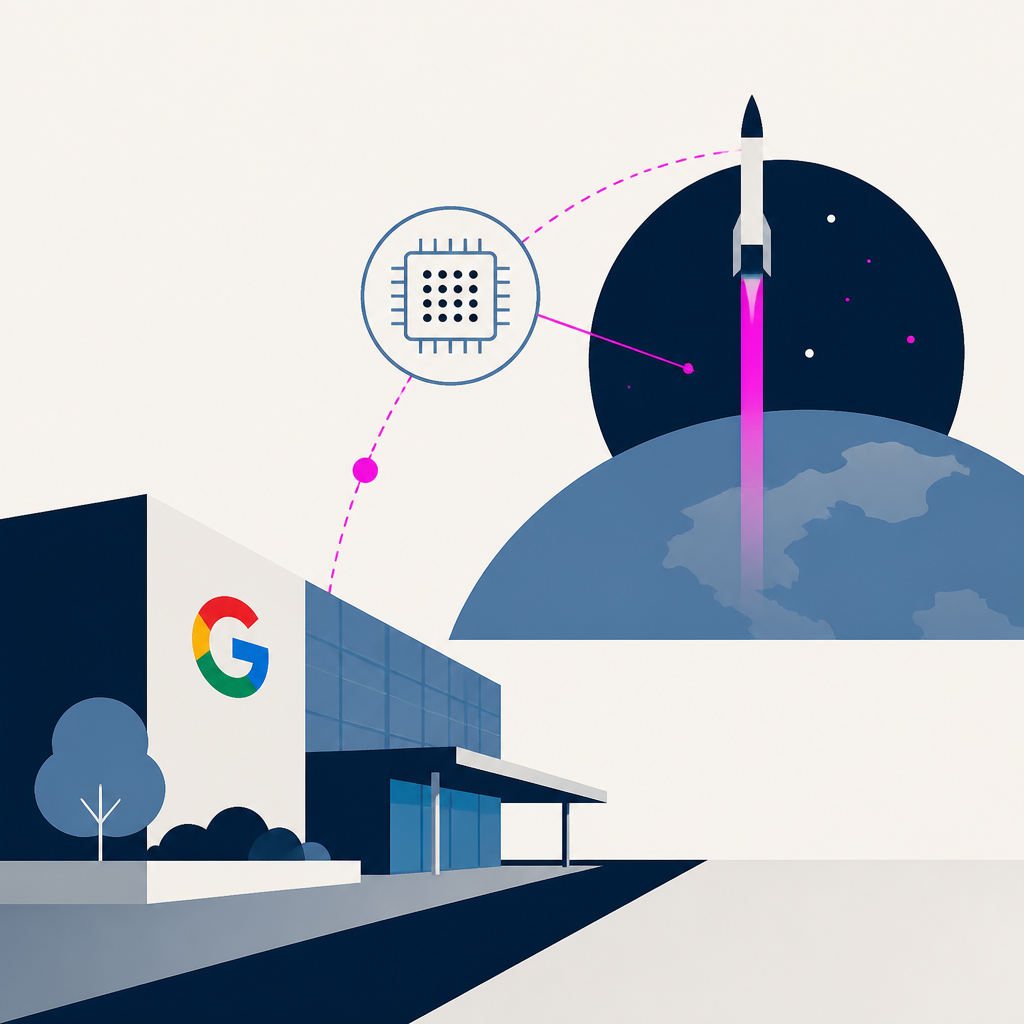
The newsletter reports that Google is preparing its Project Suncatcher to send Trillium TPUs into space on SpaceX’s Transporter-18 rideshare mission while continuing stress tests for g-forces and radiation. Its radiation testing found the TPUs can survive a total ionizing dose greater than what they would receive during a five-year space mission. As a result, AI training and inference compute could be shifted off-planet sooner, but practical issues like cooling in vacuum remain a key challenge.
NASA used generative AI to plan Mars rover routes, test a compressed model in orbit for Earth observation, and astronauts tried a large language model for maintenance questions on the ISS. In May, NASA and IBM demonstrated a compressed AI model in space on the International Space Station and a satellite. These tests are shifting space engineering toward partial autonomy and gradually expanding how much non-deterministic AI systems can interpret conditions and plan tasks, while keeping humans supervising since AI is not yet trustworthy enough for full control.
Every AI story that matters,
in your inbox by 8am.
TLDRocket reads all relevant sources, removes duplicate coverage, and summarises the
day in two minutes. Follow companies and topics for alerts, or get the
briefing in Slack. Free, no spam, unsubscribe anytime.
Reading TLDRocket needs no cookies, and the readership counts we rely on come from
our own cookieless analytics. Google Analytics is the exception: it sets cookies and
reports to Google, so it stays switched off until you allow it. You can change your
mind any time from “Cookie settings” in the footer.
Strictly necessary
Session security and form protection (tldrocket-session,
XSRF-TOKEN, 2 hours). The site cannot work without them,
so they need no consent.
Always on
Google Analytics 4 (_ga,
_ga_<id>, up to 2 years). Measures which
stories and sections readers use. Google acts as a third-party processor and may
store the data outside the EU. No advertising, no profiling, no data sold.