IBM launched Granite 4.2, a new open-weight family of dense, decoder-only, reasoning-capable large language models with optional “thinking” behavior. The release ships models with 3 billion, 8 billion, and 30 billion parameters and was pre-trained on 15 trillion tokens. IBM positions the update as enabling enterprises to run multi-step agentic workflows more cheaply by limiting reasoning-token use on easy questions, while keeping overall architecture dense for flexible fine-tuning.
IBM released a technical walkthrough describing how its Granite 4.2 reasoning model family was built and trained. The first stage of long-context training extends the model’s context window to 512K tokens. The work shifts Granite from instruction-following toward explicit reasoning with dense decoder-only models that support thinking/non-thinking modes and native tool calling, and it adds multi-stage RL including agentic tool use for the 8B and 30B sizes.
General Intuition is in talks to raise new funding at a $6 billion pre-money valuation. The company is seeking the higher valuation only weeks after raising $320 million at a $2.3 billion valuation. If the round closes, new investors would join existing backers and the money would be used to improve its foundation model, expand compute, and hire more talent toward robotics and real-world agent performance.
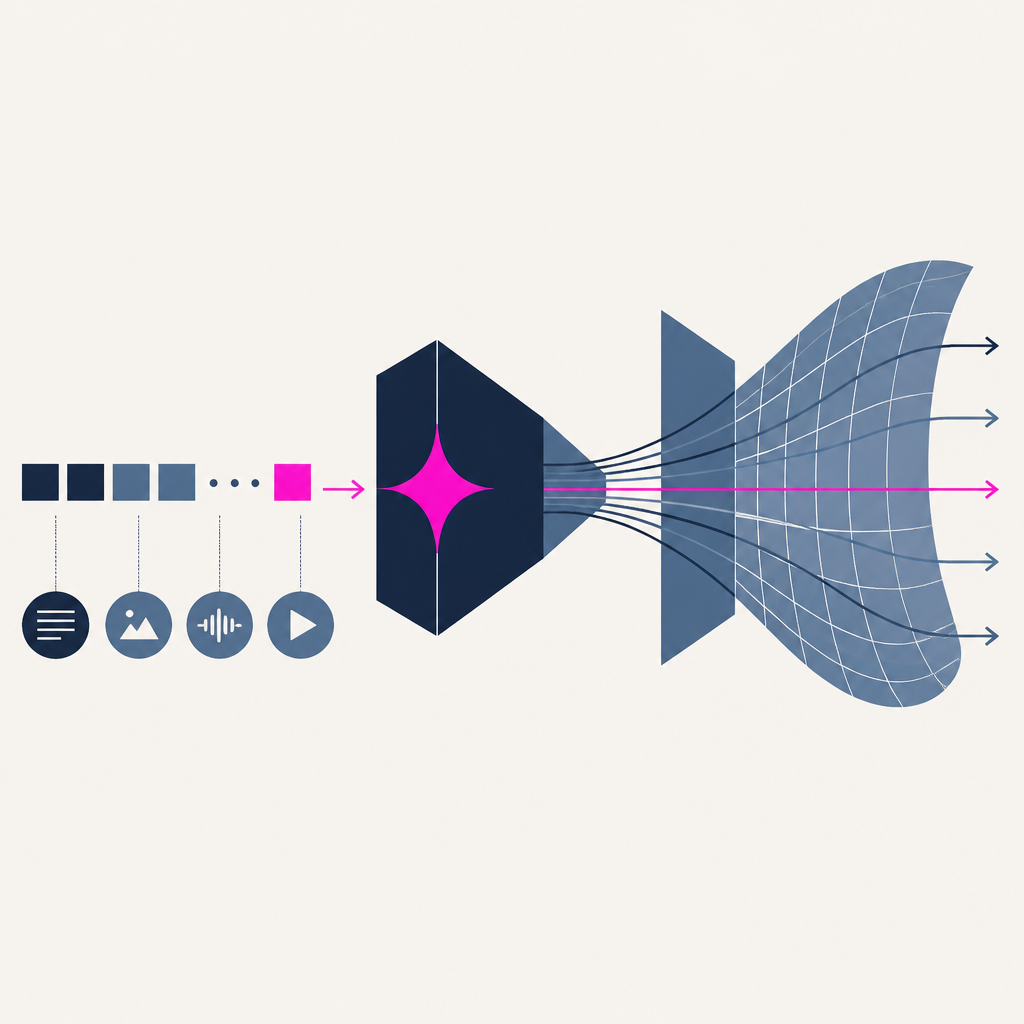
STARFlow2 proposes a unified multimodal generation approach that connects language-model-style autoregression with normalizing flows to reduce fragmentation across text–image generation methods. STARFlow2 is presented as a version “2” that treats autoregressive normalizing flows as autoregressive Transformers using the same left-to-right structure as LLMs. This shifts generation toward a single, Transformer-aligned framework rather than using discrete tokenization, asymmetric text-vs-image pipelines, or adaptation that can harm pretrained understanding.
Every AI story that matters,
in your inbox by 8am.
TLDRocket reads all relevant sources, removes duplicate coverage, and summarises the
day in two minutes. Follow companies and topics for alerts, or get the
briefing in Slack. Free, no spam, unsubscribe anytime.
Reading TLDRocket needs no cookies, and the readership counts we rely on come from
our own cookieless analytics. Google Analytics is the exception: it sets cookies and
reports to Google, so it stays switched off until you allow it. You can change your
mind any time from “Cookie settings” in the footer.
Strictly necessary
Session security and form protection (tldrocket-session,
XSRF-TOKEN, 2 hours). The site cannot work without them,
so they need no consent.
Always on
Google Analytics 4 (_ga,
_ga_<id>, up to 2 years). Measures which
stories and sections readers use. Google acts as a third-party processor and may
store the data outside the EU. No advertising, no profiling, no data sold.