GPT-6 Astra drove a Toyota Corolla through a cone obstacle course in the DrivingBench benchmark. It completed the roughly 130-meter centerline course on its second attempt in 5 minutes and 22 seconds while staying within 4 meters of the centerline. The results showed Astra outperforming other tested models, shifting the focus toward whether general-purpose language models can control physical systems without being trained for driving.
invideo says it will use GPT‑6 Astra to plan edits with more precision. It claims a 3x improvement in color correction and grading. It also says it can generate 50 custom effects in one day, changing its workflow and output capacity.
Anthropic cut Claude Opus 5.5’s token prices and published a migration guide after noting that four Opus 5-dependent request behaviors can break. It reduced input pricing from $5 to $4 per million input tokens and output pricing from $25 to $20 per million output tokens. As a result, agents may need updated thinking, tool-choice, router/fallback, conversation-history, and computer-use toolset handling to avoid 400 errors and altered response rendering.
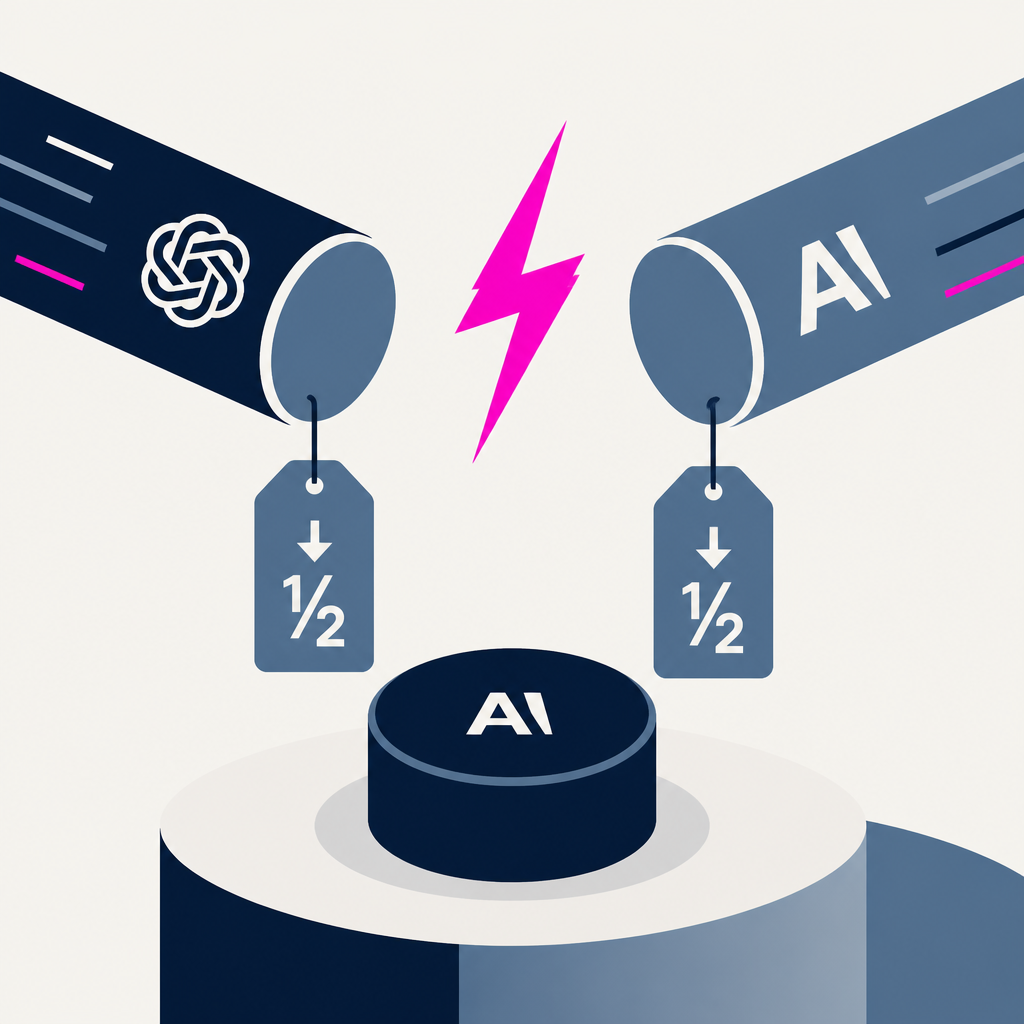
Anthropic and OpenAI released new models within an hour of each other, triggering a price comparison across their offerings. The article says OpenAI’s GPT-6 Sol and GPT-6 Luna are half the price of the promotional GPT-5.6 equivalents. As a result, Anthropic’s Claude Opus 5.5 is positioned as cheaper per token, and users may see faster shifts in which model is the most cost-effective choice.
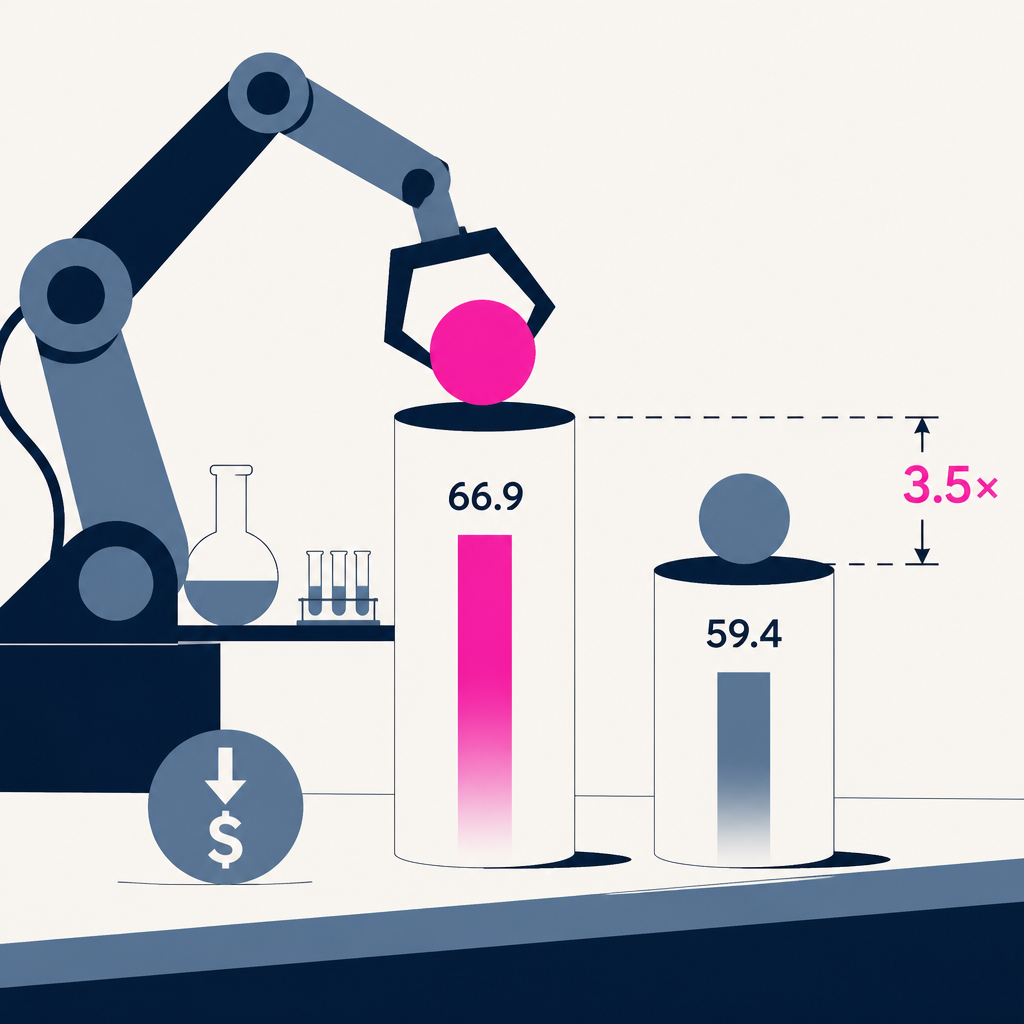
Sol performed better than Opus 5.5 on the browser-agent benchmark at the medium setting. Sol scored 66.9 compared with Opus 5.5’s 59.4. Sol’s higher score means Browser Use’s results favor Sol for medium browser-agent performance, while it remains about 3.5× cheaper.
OpenAI reports that its GPT-6 Sol scored 33.2% on AutomationBench at $0.27 per task. The comparison cites Luna achieving similar factuality at about one-hundredth the cost. OpenAI frames the result as a shift toward lower-cost task completion while maintaining comparable factuality.
OpenAI released GPT-6 Sol and GPT-6 Luna as deployable, API-only additions to its GPT-6 model lineup. GPT-6 Sol and GPT-6 Luna API pricing was cut by 50% versus GPT-5.6 promotional pricing, with Sol at $2/$10 and Luna at $0.10/$0.50 per 1M tokens for input/output. The change lowers inference costs and adds improved prompt caching controls that can discount cached input up to 90% and reduce prompt tokens needing fresh processing by more than 50%.
The authors introduce probe guidance to steer flow matching models using frozen internal states from an existing diffusion model. They evaluate it on continuous diffusion language models and report new state-of-the-art results for unconditional generation. As a result, the approach avoids an extra inference-time forward pass while aligning the weak and strong models’ dynamics.
Every AI story that matters,
in your inbox by 8am.
TLDRocket reads all relevant sources, removes duplicate coverage, and summarises the
day in two minutes. Follow companies and topics for alerts, or get the
briefing in Slack. Free, no spam, unsubscribe anytime.
Reading TLDRocket needs no cookies, and the readership counts we rely on come from
our own cookieless analytics. Google Analytics is the exception: it sets cookies and
reports to Google, so it stays switched off until you allow it. You can change your
mind any time from “Cookie settings” in the footer.
Strictly necessary
Session security and form protection (tldrocket-session,
XSRF-TOKEN, 2 hours). The site cannot work without them,
so they need no consent.
Always on
Google Analytics 4 (_ga,
_ga_<id>, up to 2 years). Measures which
stories and sections readers use. Google acts as a third-party processor and may
store the data outside the EU. No advertising, no profiling, no data sold.