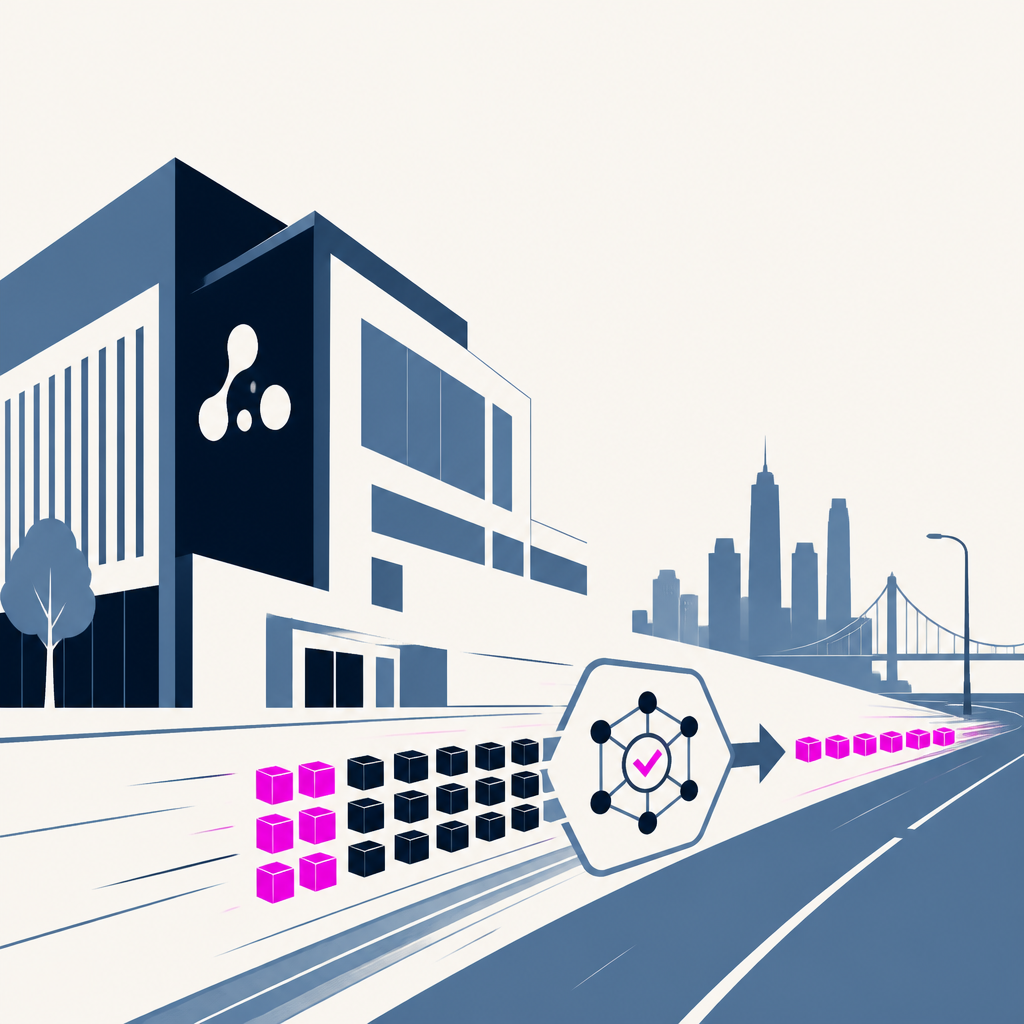
Callosum announced a $100 million funding round to support its cloud service, Tailored Inference, for optimizing AI inference workloads. Tailored Inference claims it can complete some inference tasks 3.7 times faster than GPT-5.6 Luna while improving output quality. The funding enables it to further route task steps to different models and deploy them to the most efficient chips, including integration with Cerebras WSE-3 Turbo accelerators.
Liquid AI released DSpark draft model checkpoints for three LFM2.5 targets by adding a ~300M-parameter speculative-decoding drafter that proposes a 9-token block for the target to verify. It reports up to 3.18x faster decoding on an H100 while keeping greedy-decoded outputs identical and benchmark accuracy unchanged. The checkpoints require self-hosting with DSpark-enabled llama.cpp or SGLang, and speedups vary by acceptance rate (notably lower on MoE workloads).
Liquid AI released DSpark draft model checkpoints for three LFM2.5 models, adding a speculative-decoding path intended to speed up inference without changing greedy output quality. The LFM2.5-2.6B checkpoints reportedly cut multi-tool function-calling latency by an average of 57% while also delivering up to 2.87x on-device throughput on an M4 Max. This results in day-one DSpark support in llama.cpp and SGLang and open-source LFM-compatible integration plus faster throughput across the listed benchmarks.
Token-efficient multi-agent systems article argues that production costs come less from the model itself and more from workflow inefficiencies like repeated retrievals, duplicate prompts, oversized contexts, and redundant model calls. It proposes a context budget capped at 2500 tokens when building the context for the final LLM call. The recommended architecture changes by adding routing, semantic caching, single retrieval shared across agents, context budgeting, token estimation telemetry, and model selection so the LLM is used only as a final, most-expensive step.
Every AI story that matters,
in your inbox by 8am.
TLDRocket reads all relevant sources, removes duplicate coverage, and summarises the
day in two minutes. Follow companies and topics for alerts, or get the
briefing in Slack. Free, no spam, unsubscribe anytime.
Reading TLDRocket needs no cookies, and the readership counts we rely on come from
our own cookieless analytics. Google Analytics is the exception: it sets cookies and
reports to Google, so it stays switched off until you allow it. You can change your
mind any time from “Cookie settings” in the footer.
Strictly necessary
Session security and form protection (tldrocket-session,
XSRF-TOKEN, 2 hours). The site cannot work without them,
so they need no consent.
Always on
Google Analytics 4 (_ga,
_ga_<id>, up to 2 years). Measures which
stories and sections readers use. Google acts as a third-party processor and may
store the data outside the EU. No advertising, no profiling, no data sold.