OpenAI increased its infrastructure spending target to $750 billion through 2030, raising its earlier estimate by 25 percent as its Stargate data center project stalled. The company's first major project is a 1,400-acre Georgia data center called Project Camellia that will consume 3.2 gigawatts of power between 2028 and 2032, with Georgia Power building primarily natural gas generation capacity to supply it. The expansion commits OpenAI to paying full infrastructure costs and will more than double the utility's natural gas fleet, raising questions about the climate impact of powering large-scale AI infrastructure.
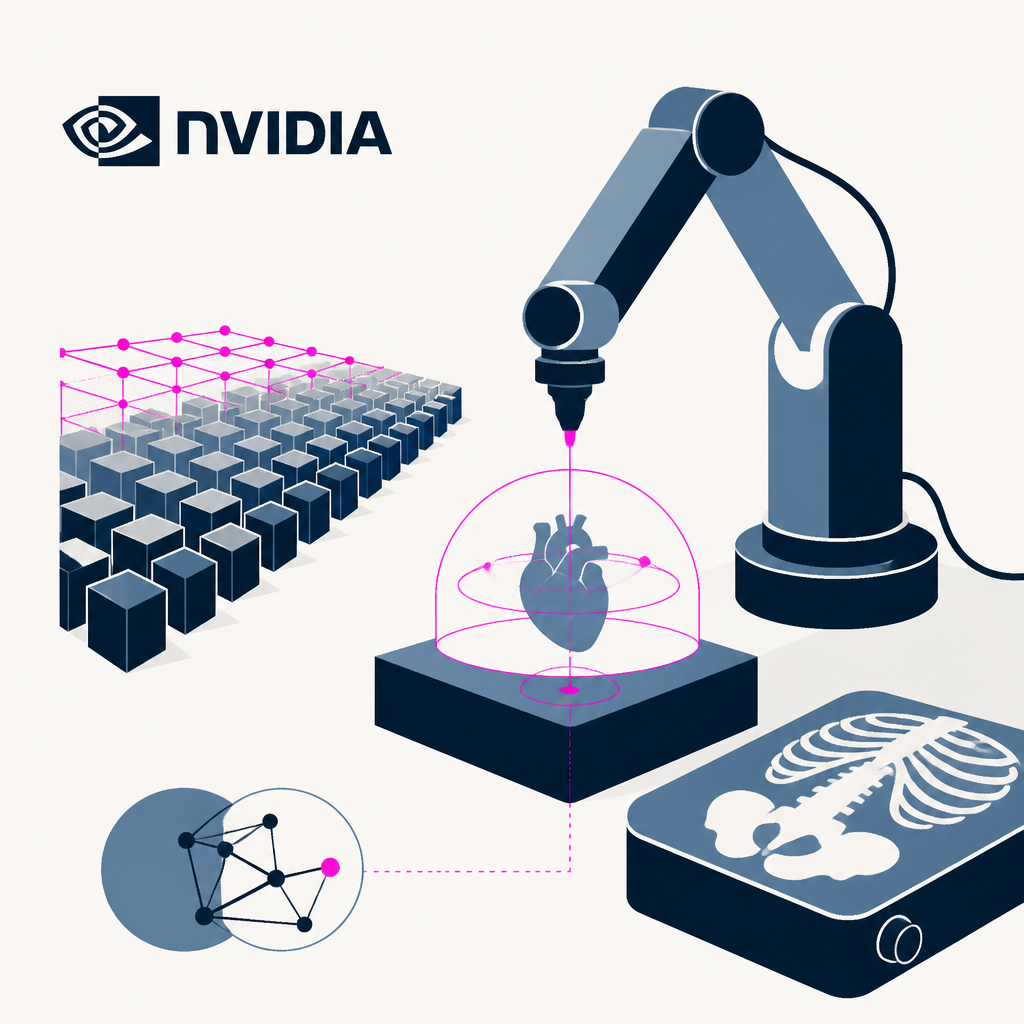
NVIDIA released an open-source GPU-accelerated Medical Physics Simulation framework within Isaac for Healthcare to help medical robotics developers train and test robot behavior in virtual environments before physical testing. The framework can run 8,192 parallel simulations with GPU acceleration, reducing training time from over five hours to under two minutes, and integrates classical physics simulation with generative AI to model anatomy-device interactions and sensor inputs. Companies like CMR Surgical, Johnson & Johnson MedTech, and others are already using the framework to develop surgical robots and reduce the need for extensive real-world testing data.
AMD is committing up to $5 billion in investment to Anthropic while supplying the AI company with its Instinct MI450 GPUs for expanded computing capacity. The partnership includes deployment of up to 2 gigawatts of AMD hardware, with the first gigawatt coming online in the first half of 2027. Anthropic gains significant computational resources to support its large language models, while AMD secures a major customer for its data center AI chips.
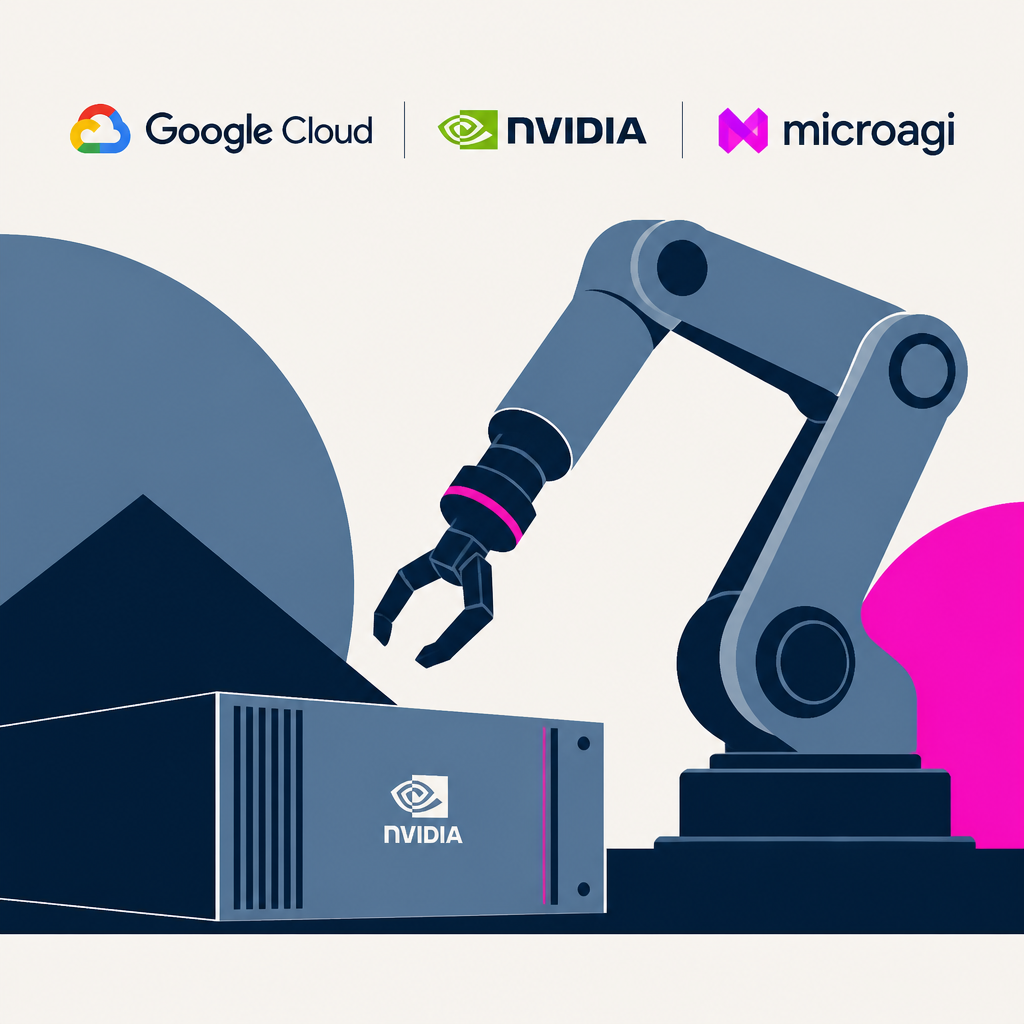
Microagi, a robotics AI startup founded in 2025, announced a partnership with Google Cloud and NVIDIA to train customized embodied AI models for industrial robots using the Blackwell GPU platform. The company raised $55 million in seed funding—Germany's largest seed round—after only five days of fundraising, with Google Cloud engineers helping optimize computational efficiency by roughly doubling it while reducing energy consumption. The partnership enables microagi to deploy task-specific robotics systems faster and expands its ability to serve European manufacturers with on-premises compute infrastructure under GDPR compliance.
Every AI story that matters,
in your inbox by 8am.
TLDRocket reads all relevant sources, removes duplicate coverage, and summarises the
day in two minutes. Follow companies and topics for alerts, or get the
briefing in Slack. Free, no spam, unsubscribe anytime.
Reading TLDRocket needs no cookies, and the readership counts we rely on come from
our own cookieless analytics. Google Analytics is the exception: it sets cookies and
reports to Google, so it stays switched off until you allow it. You can change your
mind any time from “Cookie settings” in the footer.
Strictly necessary
Session security and form protection (tldrocket-session,
XSRF-TOKEN, 2 hours). The site cannot work without them,
so they need no consent.
Always on
Google Analytics 4 (_ga,
_ga_<id>, up to 2 years). Measures which
stories and sections readers use. Google acts as a third-party processor and may
store the data outside the EU. No advertising, no profiling, no data sold.