Battery suppliers in Europe are trying to regain momentum after failures like Northvolt and Morrow by betting on nanometre-scale battery components made with semiconductor-style techniques.
Nvidia CEO Jensen Huang said Nvidia expects its AI-related revenue growth to continue through next year despite rising GPU competition. He reiterated a forecast of 70% year-over-year revenue growth for next year. Nvidia’s guidance implies the company is positioning for sustained demand across AI labs and systems, including GPUs and data-center infrastructure, rather than expecting a slowdown.
Amazon SageMaker HyperPod inference experienced long pod cold-start times because each new pod had to pull the vLLM/LMI container image from Amazon ECR and download model weights from the configured remote source before it could serve requests. For a 600+ GB model such as DeepSeek-R1, the article says this can take 30 minutes or more for a single request and repeats on every scale-out event. Amazon launched model caching that pre-loads weights to node NVMe (about 7 GB/s) and can pre-pull images so pods typically start serving in seconds instead of tens of minutes, with fallbacks to normal downloading when cache-ready capacity isn’t available.
Red Hat released Red Hat AI 3.5, expanding its platform for multi-tenant AI workloads with tenant isolation and priority-aware scheduling. The release adds a priority decision for every GPU request, plus new fairness scheduling and admission control for shared GPU inference. As a result, teams can move AI pilots into a governed enterprise architecture with pre-deployment safety benchmarking, real-time observability, and per-user token showback, reducing stalls from the GPU queue.
NVIDIA says robotaxi leaders are building and scaling commercial driverless fleets using its end-to-end platform for AI training, simulation/validation, and in-vehicle computing. Uber plans to reach 28 cities by 2028 while using NVIDIA DRIVE Hyperion. As more programs adopt NVIDIA’s three-computer architecture, robotaxi deployment shifts toward standardized compute, simulation, and safety validation workflows across fleets at scale.
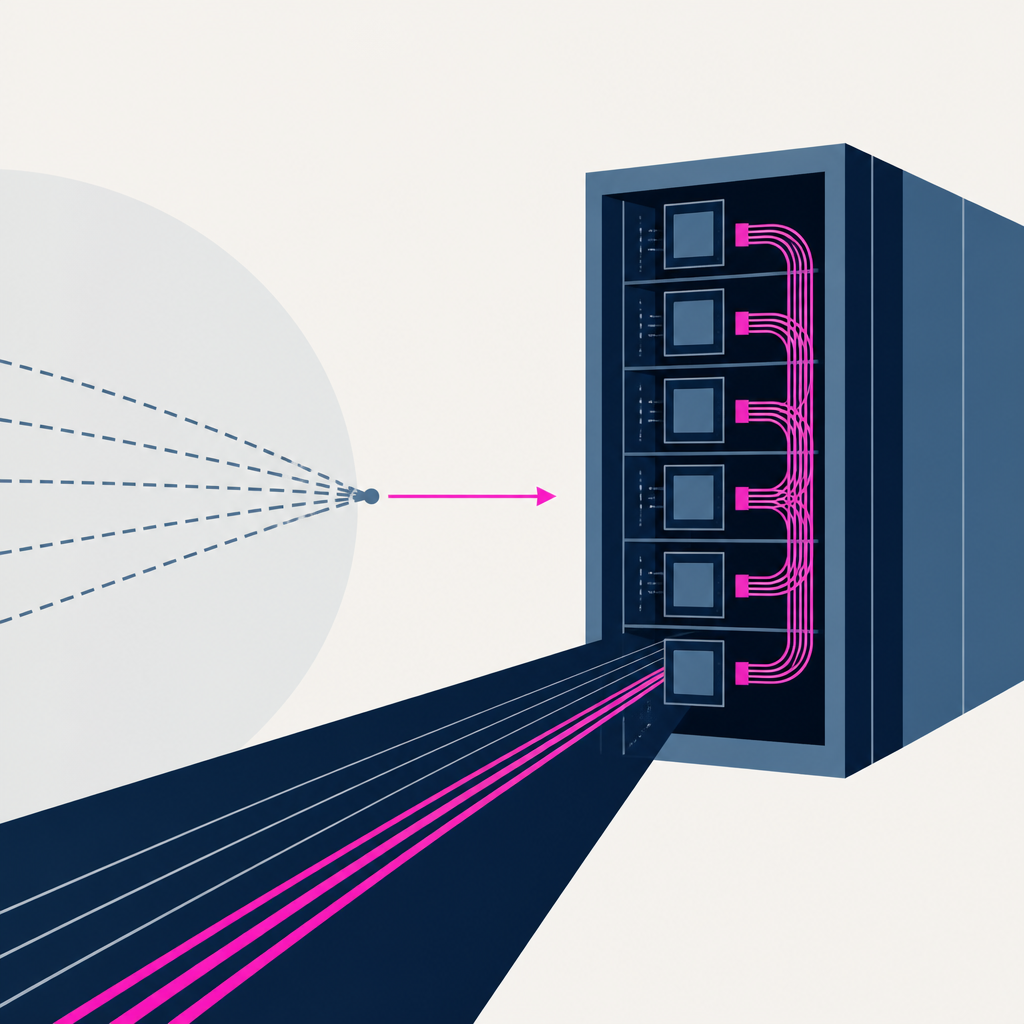
d-Matrix announced it will connect its next-generation Raptor XPUs to NVIDIA’s AI infrastructure using NVIDIA NVLink Fusion within the MGX rack architecture. NVLink Fusion is claimed to deliver 3x lower XPU-to-XPU latency than off-the-shelf Ethernet. As a result, d-Matrix can deploy its custom silicon via NVIDIA’s standardized rack-scale platform, rather than building rack-scale infrastructure itself.
Transmission-line faults and surge arrester failures in Ashburn, Virginia caused more than 3 gigawatts and about 1,500 megawatts of AI data-center load to drop off the grid within seconds, showing the issue was grid architecture rather than power supply. The article cites an early-2026 full-scale test at the National Laboratory of the Rockies, where the system cleared ERCOT large-load voltage ride-through requirements with room to spare. By moving AI UPS and power conditioning from low-voltage, battery-based, bypass-heavy setups to medium-voltage, inline systems near substations, load swings become harder to notice and backup power can also support grid programs.
Together’s kernels team gained access to the NVIDIA Vera Rubin NVL72 platform and updated ThunderKittens to run NVFP4 and FP8 GEMMs on it by adding Rubin-specific ISA and memory/pipeline features. The NVFP4 GEMM kernels improve from about 42.1% of the roofline to over 22 PFLOPS. These changes increase attainable performance by doubling the K step, expanding tensor memory and shared memory use, and adjusting tiling and commit/collector behaviors so tensor cores stay fed.
Together announced public preview of preemptible GPU compute for Together GPU Clusters on Kubernetes, where interruptible nodes can be reclaimed from unused capacity.
Every AI story that matters,
in your inbox by 8am.
TLDRocket reads all relevant sources, removes duplicate coverage, and summarises the
day in two minutes. Follow companies and topics for alerts, or get the
briefing in Slack. Free, no spam, unsubscribe anytime.
Reading TLDRocket needs no cookies, and the readership counts we rely on come from
our own cookieless analytics. Google Analytics is the exception: it sets cookies and
reports to Google, so it stays switched off until you allow it. You can change your
mind any time from “Cookie settings” in the footer.
Strictly necessary
Session security and form protection (tldrocket-session,
XSRF-TOKEN, 2 hours). The site cannot work without them,
so they need no consent.
Always on
Google Analytics 4 (_ga,
_ga_<id>, up to 2 years). Measures which
stories and sections readers use. Google acts as a third-party processor and may
store the data outside the EU. No advertising, no profiling, no data sold.