Residents in multiple U.S. cities, especially in industrially scarred communities like Philadelphia, are pushing back against new AI data center construction over environmental, energy, health, and surveillance concerns.
BloombergNEF projects that by 2035 U.S. data centers will consume more natural gas than Germany and Japan combined, nearly doubling its prior estimate from nine months earlier.
Philadelphia and other cities are responding with steps like executive orders and moratoriums to pause or limit permits while officials gather more information about local impacts.
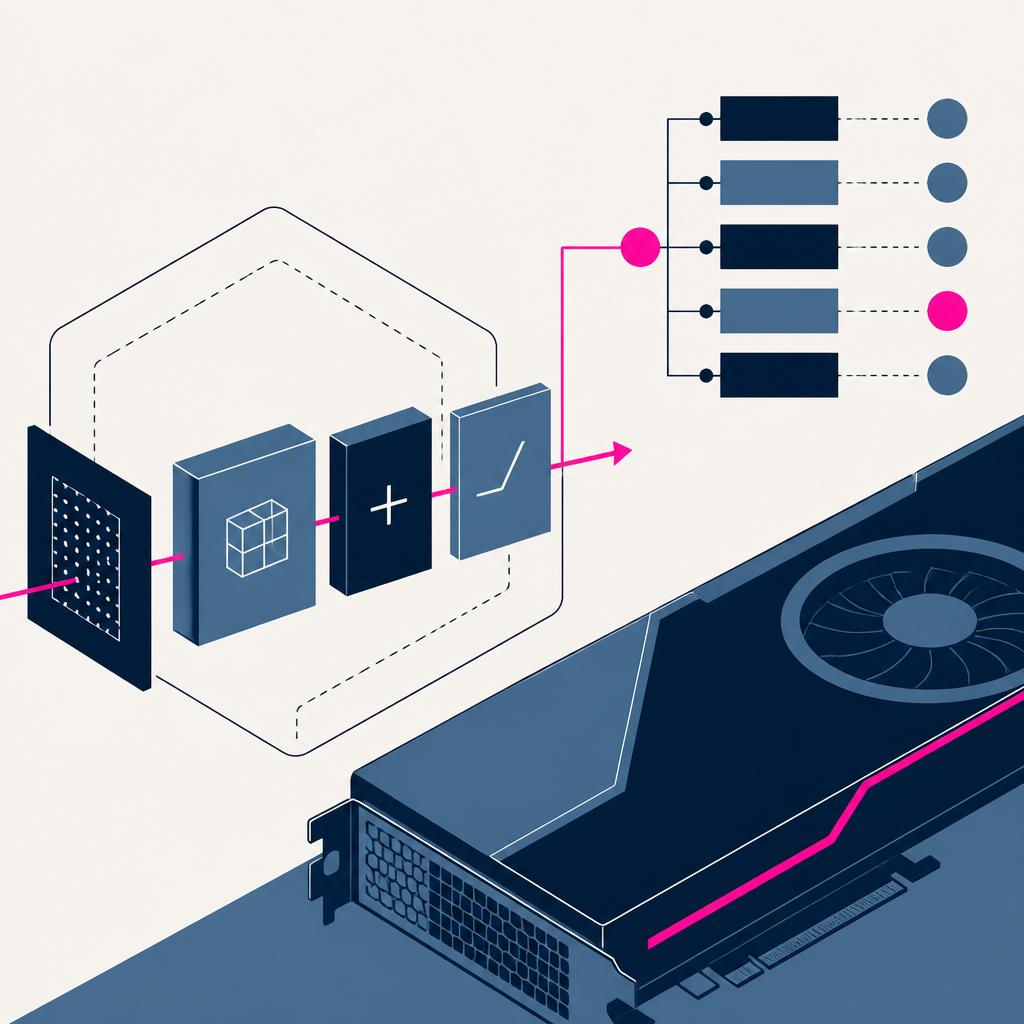
The article presents a tutorial that builds cuDNN Frontend graph API examples that fuse convolution+bias+ReLU, then expands to autotuning across multiple engine configurations and plan handling. It validates numerical correctness by asserting the maximum error stays below 5e-2 versus a PyTorch reference. As a result, it shows how to benchmark fused execution and how shipping a preselected autotuned plan (or a serialized one) can outperform relying on cuDNN’s default engine pick for fixed “hot” shapes.
U.S. data centers are projected to drive natural gas consumption higher than Germany and Japan combined by 2035, according to BloombergNEF. The forecast estimates about 18 billion cubic feet per day of gas use. As grid-connected demand and onsite power plants expand, natural gas prices and greenhouse gas emissions are expected to rise.
Emerald AI’s Conductor platform on an NVIDIA GPU data center automatically adjusted flexible workloads in response to Silicon Valley Power grid signals, reducing power draw while keeping high-priority AI jobs running. Power dropped from 4 megawatts to 3 megawatts within a minute, and the utility sent more than 200 demand signals that worked every time. NVIDIA’s DSX platform and related tooling are positioned to let AI factories increase token throughput and GPU capacity within fixed megawatt limits using dynamic power allocation and demand-response automation.
NVIDIA presented AI infrastructure updates at the AI Infra Summit, covering partnerships and performance results for its AI factory stack focused on token efficiency. Lambda reported running 19 nodes within a power budget typically used for 16 nodes, raising cluster-wide token throughput from about 4 million to 5 million tokens per second and improving performance per watt by 23%. The focus shifts from peak performance to validated agentic tokens per megawatt, with platform features meant to optimize power and improve efficiency at large scale.
Microsoft will hold a Windows and Surface event in San Francisco to outline the future of Windows and Surface devices, featuring a discussion about how local AI will shape the next PC chapter. The event is scheduled for October 7th. The focus shifts toward local AI on PCs, and potential RTX Spark-related details (including Surface Laptop Ultra pricing) may be discussed.
Amazon SageMaker AI introduced instance preference lists for Training Jobs and Processing Jobs so a single job submission can automatically select the first available GPU instance type from an ordered list. The ordered list supports up to 5 instance types and launches on the first one with available capacity. Jobs no longer require manual retries or monitoring scripts and can automatically fall back to on-demand (including optional Flexible Training Plans priority), reducing time spent waiting to start.
Euclyd closed a Series A round led by Samsung to develop AI inference chips aimed at competing with Nvidia. The startup raised more than €200 million, including support from Samsung and ex-ASML chairman Peter Wennink. The funding will expand its engineering team, accelerate its silicon and systems roadmap, and target starting supplies to two customers in 2027.
AI hyperscalers’ spending on AI data centers faces break-even pressure because the earnings growth needed to justify the buildout depends on productivity gains materializing. By 2030, the analysis estimates AI companies must raise their own productivity by a factor of 2.7 to break even, given the cost of capital and a 15% return. If that acceleration fails, the article warns profits may not cover debt and free-cash-flow, increasing the risk of stranded infrastructure and broader economic drag.
Children’s Hospital of Philadelphia built an open-source AI cardiac modeling workflow that turns pediatric heart imaging into patient-specific 3D models for congenital heart disease planning. It cuts model creation from about four hours of researcher work to seconds. The hospital is now expanding from routine pre-op modeling to near-real-time physics simulations using NVIDIA Warp and Newton within broader clinical workflows across disciplines.
Boxd raised $2 million in a pre-seed round to build cloud infrastructure for developers and AI coding agents. The platform can live-fork machine copies, including memory and active connections, in under 100 milliseconds. It will expand Boxd’s team and continue developing its custom virtualisation engine to scale persistent, hardware-isolated environments for running multiple autonomous agents in parallel.
Jensen Huang took a live call from Trump while an audience focused on the phone he used for it.
The article provides no numbers or dates.
As a result, attention shifted from the call itself to the device Huang was holding rather than to any specific AI product.
Every AI story that matters,
in your inbox by 8am.
TLDRocket reads all relevant sources, removes duplicate coverage, and summarises the
day in two minutes. Follow companies and topics for alerts, or get the
briefing in Slack. Free, no spam, unsubscribe anytime.
Reading TLDRocket needs no cookies, and the readership counts we rely on come from
our own cookieless analytics. Google Analytics is the exception: it sets cookies and
reports to Google, so it stays switched off until you allow it. You can change your
mind any time from “Cookie settings” in the footer.
Strictly necessary
Session security and form protection (tldrocket-session,
XSRF-TOKEN, 2 hours). The site cannot work without them,
so they need no consent.
Always on
Google Analytics 4 (_ga,
_ga_<id>, up to 2 years). Measures which
stories and sections readers use. Google acts as a third-party processor and may
store the data outside the EU. No advertising, no profiling, no data sold.