Tyler Murkerson sued Flock and the Coweta County Sheriff’s Office, alleging retaliation tied to license plate camera (ALPR) searches and officer surveillance. The suit says the searches ran over many months without probable cause. The settlement of Murkerson’s related case is the immediate result, while the new lawsuit seeks accountability for ALPR use and alleged missing safeguards.
Eight US states sued OpenAI, alleging ChatGPT is unsafe for children and that the company misled customers about its safety.
The suits were filed by eight states including Iowa, Kansas, and Nebraska.
The legal challenge could force OpenAI to face court proceedings and change how it warns users and markets ChatGPT’s risks, with the outcome shaping future safety claims around the product.
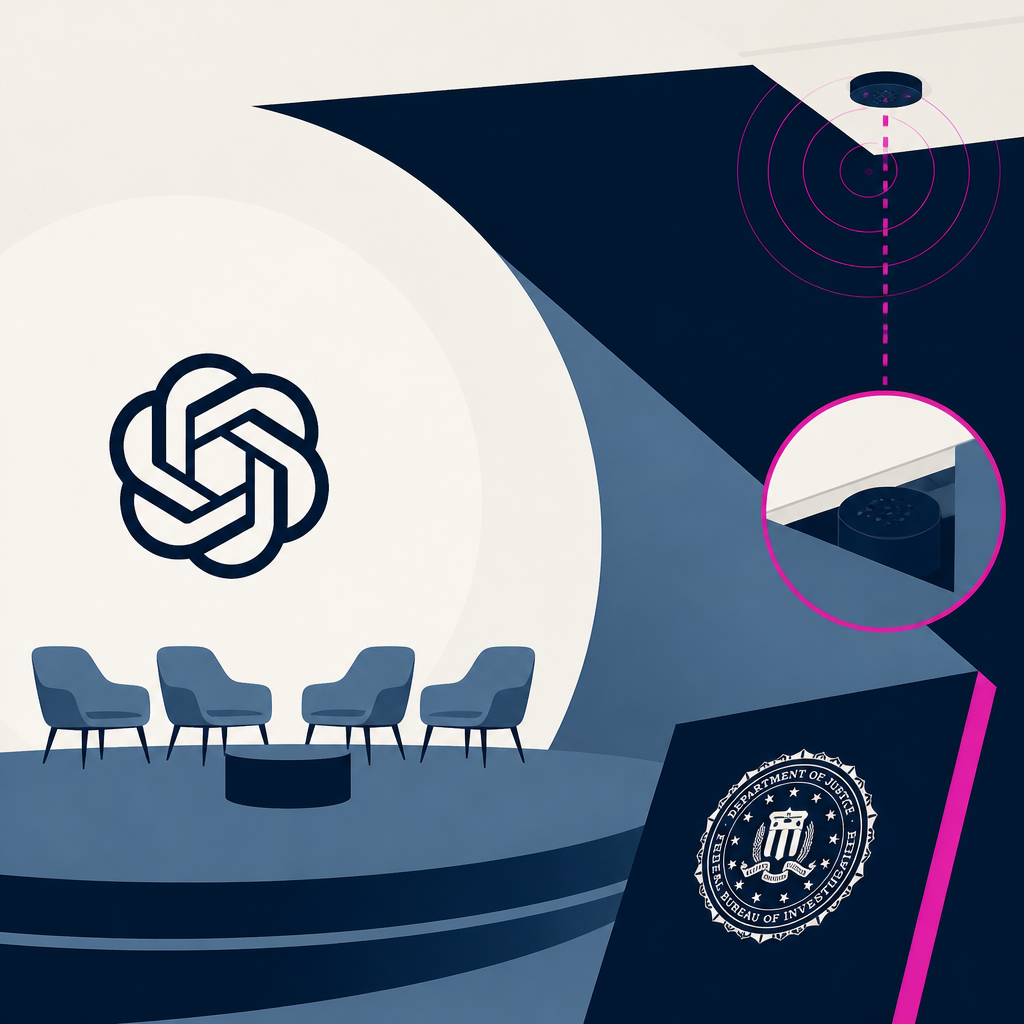
OpenAI faced two espionage-related allegations involving hidden recording equipment and alleged document theft by an employee and a former employee tied to Apple. In late September, an FBI arrest alleged Abdulrahman Alfozan planted a recording device in a San Francisco executive conference room and prosecutors say OpenAI’s own AI models analyzed the bug soon after, with the filing describing up to five years in prison if convicted. OpenAI says it found no evidence of access to model weights, source code, or customer data and it is also fighting Apple’s trade-secret suit as Judge Edward Davila presses for faster document handover and rules on injunction and dismissal motions.
Google released Deep Review, an agentic AI system for rigorous feedback and technical verification of complex documents. The public release includes two complimentary document reviews per week for every user. It expands access beyond the prior Paper Assistant Tool pilots, offering tiered API use, initial support for PDFs and plain text, and a policy that uploaded documents are not used to train Google models.
Agent Vault is described as an AI infrastructure tool that has an agent fill checkout and sign-in forms using mock tokens. It replaces real card numbers and passwords inside a secure enclave the agent can never see, with the launch page showing 18 followers. As a result, the agent can complete the forms without accessing the real payment or login credentials.
New York Attorney General Letitia James and 40 bipartisan attorneys general filed notice in Character.AI’s Chapter 11 case, asking for protections around consumer data as the company sells assets. The filing involves 40 bipartisan AGs and targets how data could be handled in any sale or transfer. This pushes the bankruptcy proceeding toward regulatory conditions on consumer-data treatment tied to technology transfer.
Vast Data says stitched-together AI pipelines can’t reliably keep sensitive data and permissions aligned for AI inference, leaving gaps between embeddings, access controls, and source records. Vast raised about $1 billion at a $30 billion valuation in April 2026. As a result, Vast is pitching its DataEnclave confidential AI runtime so frontier models can access regulated datasets only after attestation and with logged, tamper-proof key and database access.
OpenAI found a hidden recording device in an office and traced it to Abdulrahman Alfozan, who was then arrested by the FBI. The report says the FBI arrest occurred after the device was discovered by OpenAI. The incident shifts the story from an internal security finding to an ongoing law-enforcement case involving alleged covert recording and data exfiltration.
Google DeepMind and Singapore’s GovTech announced an on-device AI scam detection model built for encrypted messaging to warn users about manipulative social engineering in real time. The model is described as on-device and optimized to run on typical Singapore smartphones. As a result, threat analysis can happen locally with the app triggering real-time cautions while avoiding cloud scanning that would compromise privacy.
The FBI arrested OpenAI engineering lead Abdurahman Alfozan for allegedly planting and concealing a secret audio recording device in a San Francisco conference room. The device was discovered during an OpenAI sweep on Sept. 30. OpenAI and the FBI have moved to terminate his access, with Alfozan in federal custody and facing a detention hearing on Oct. 19 while the investigation remains ongoing.
Every AI story that matters,
in your inbox by 8am.
TLDRocket reads all relevant sources, removes duplicate coverage, and summarises the
day in two minutes. Follow companies and topics for alerts, or get the
briefing in Slack. Free, no spam, unsubscribe anytime.
Reading TLDRocket needs no cookies, and the readership counts we rely on come from
our own cookieless analytics. Google Analytics is the exception: it sets cookies and
reports to Google, so it stays switched off until you allow it. You can change your
mind any time from “Cookie settings” in the footer.
Strictly necessary
Session security and form protection (tldrocket-session,
XSRF-TOKEN, 2 hours). The site cannot work without them,
so they need no consent.
Always on
Google Analytics 4 (_ga,
_ga_<id>, up to 2 years). Measures which
stories and sections readers use. Google acts as a third-party processor and may
store the data outside the EU. No advertising, no profiling, no data sold.