Apple introduced new Apple Watch “audio intelligence” features that process live audio to transcribe speech and generate conversation recaps via AI. Live Rewind lets users go back 15 seconds and transcribe what was said by double-pressing the watch’s digital crown. Privacy and consent concerns may increase as always-on listening behavior becomes more normalized, even though Apple says it doesn’t store audio and protects generated text with end-to-end encryption.
Apple’s new CEO John Ternus launched the first major iPhone redesign in nearly 20 years with a foldable “Duo” and also unveiled updates to Siri under the “Siri AI” label. The Duo starts at $2,000 and can rise to $3,200. The iPhone lineup gains a premium foldable priced at far above prior iPhones, while Siri AI is set to access personal data like messages and emails and perform actions with privacy protections via on-device processing or private remote servers.
Apple will impose daily usage limits on Apple Intelligence features that rely on server-side models, with Siri AI prompting users to pay to exceed the included allowance. The limits will start with the 2027 software releases. Siri on the classic assistant functions will mostly be unaffected, while EU users initially get Siri AI only on macOS (and visionOS) and expanded access is set to roll into a paid tier.
Apple’s foldable phone, the Duo, uses AI and 3D printing to design and build a critical hinge to improve alignment and reduce imperfections. Apple says its process 3D prints up to 25 micro layers of a custom photopolymer per hinge unit. Apple claims this, along with additional durability-focused design protections, should reduce the typical wear seen in foldables over time, though long-term results are not yet proven.
Apple updated its product lineup on an events page for an event covering a foldable “iPhone Duo,” iPhone 18 Pro, Watch Series 12, Watch Ultra 4, and AirPods 5.
Apple used its September 9 event to lay out how Siri AI, new foundation models, and local-on-device processing will ship across iPhone, iPad, Watch, and developer tools. Siri AI’s English beta begins with iOS 27 on September 14, with additional languages rolling out in October, alongside limits on some compute-heavy features. Apple’s AI focus shifts from a single chatbot to an operating-system-wide hybrid approach that runs more functions locally, adds camera/text/dictation and app-spanning actions, and ties AI image creation to signed photo provenance.
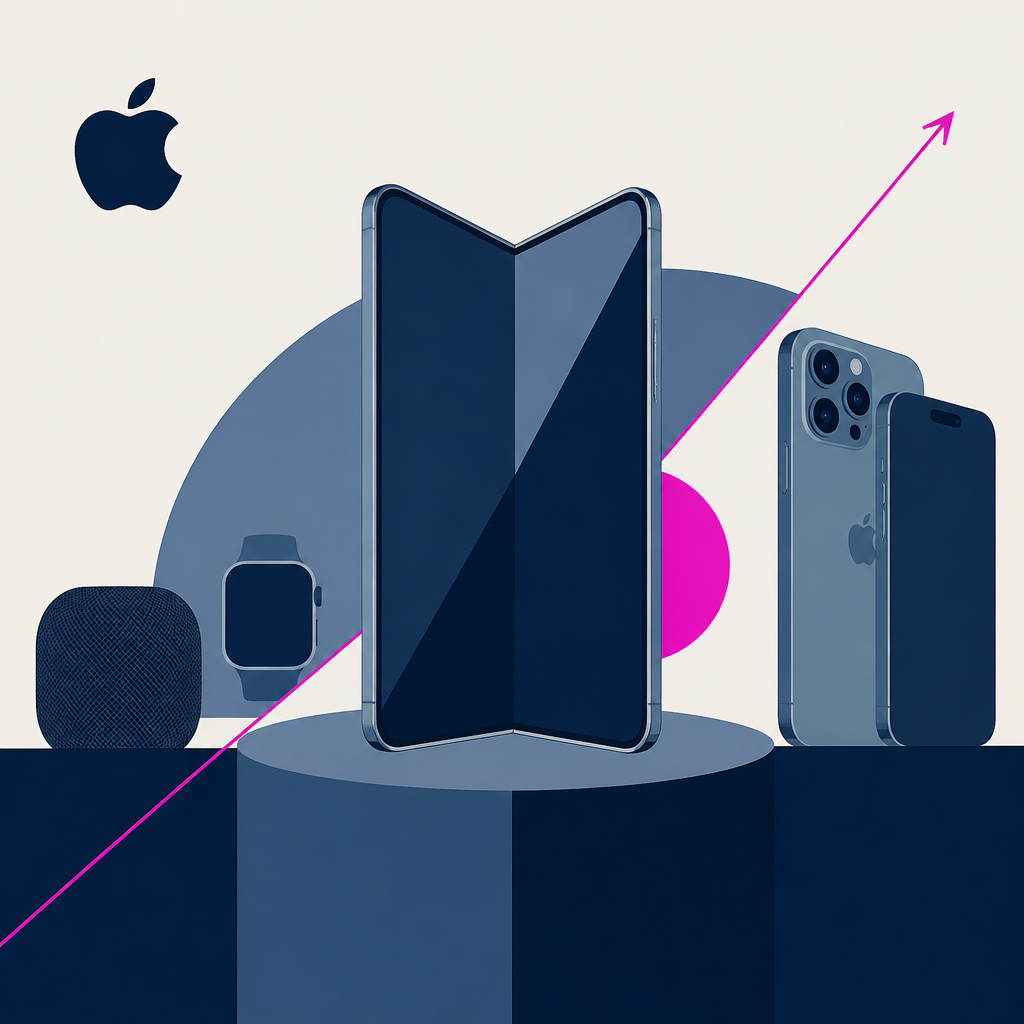
Apple unveiled the foldable iPhone Duo alongside new iPhone, AirPods, Apple Watch, and iPhone software and chip features at its biggest launch event of the year on Wednesday. The iPhone Duo starts at $1,999 and Apple says its foldable will ship on Oct. 23. The lineup expands with foldable hardware, an in-house C2 modem, AI-oriented watch features, and higher prices for several new Apple devices.
Apple launched the iPhone Duo foldable iPhone in Germany and Austria, making iPhone enter a foldable category dominated by Samsung, Huawei and others. Pre-orders start on October 16 with shipping from October 23, and Siri AI based on Apple Intelligence is not available in the EU at launch. EU buyers get fewer AI assistant features initially, while the rest of the phone’s dual-screen functions and pricing tiers roll out as scheduled.
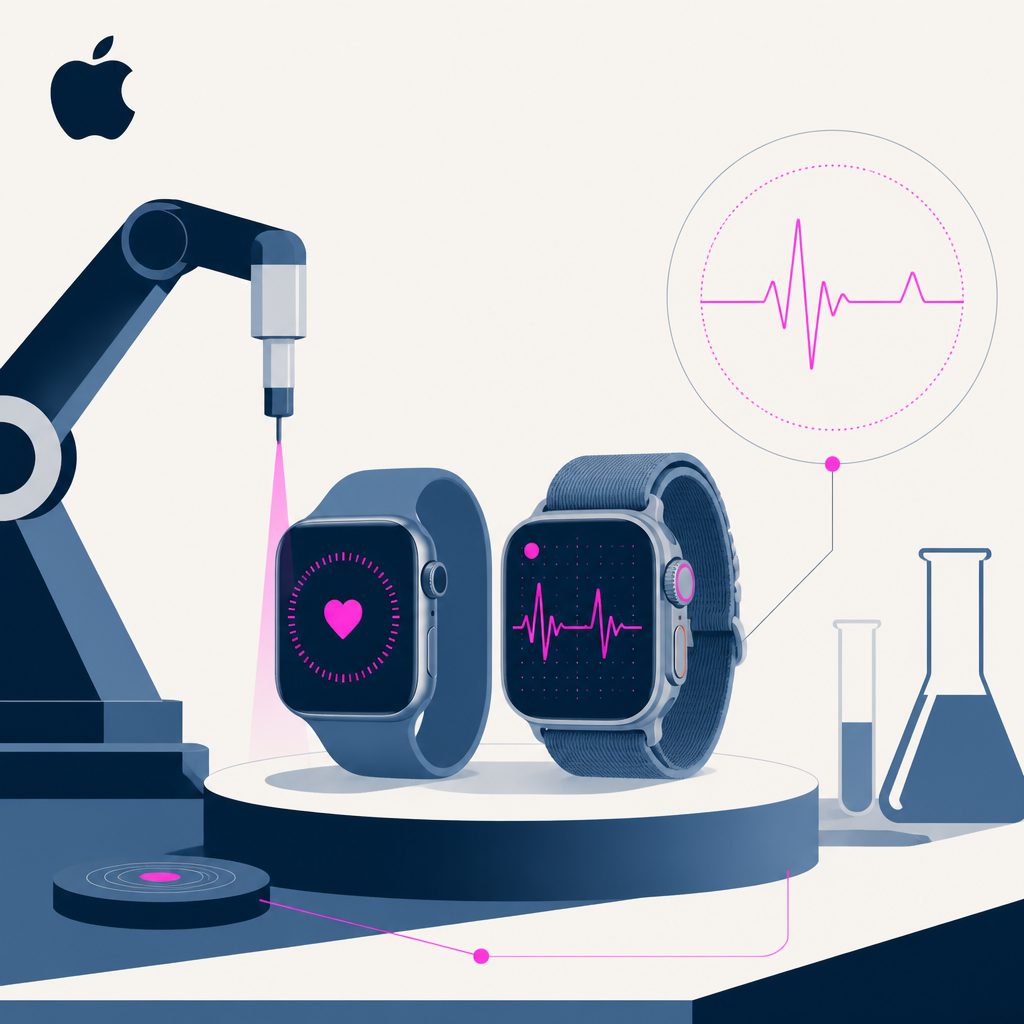
Apple started preorders for the Watch Series 12 and Ultra 4 with a new Health Sensing System and the S11 chip. The watches measure heart rate every 5 seconds. This adds higher-frequency heart rate and HRV readings and a real-time heart rate complication to the watch face.
Apple introduced a redesigned Apple Health app alongside Apple Watch Series 12 and Ultra 4, adding an Insights tab plus personalized assessments and guidance using Apple Intelligence. It includes a readiness score and a “Health Age” calculation, and Apple is partnering with Quest for a 50-biomarker panel priced at $119. The app adds a longevity tab and can incorporate lab results, and it will roll out later this year starting in U.S. English.
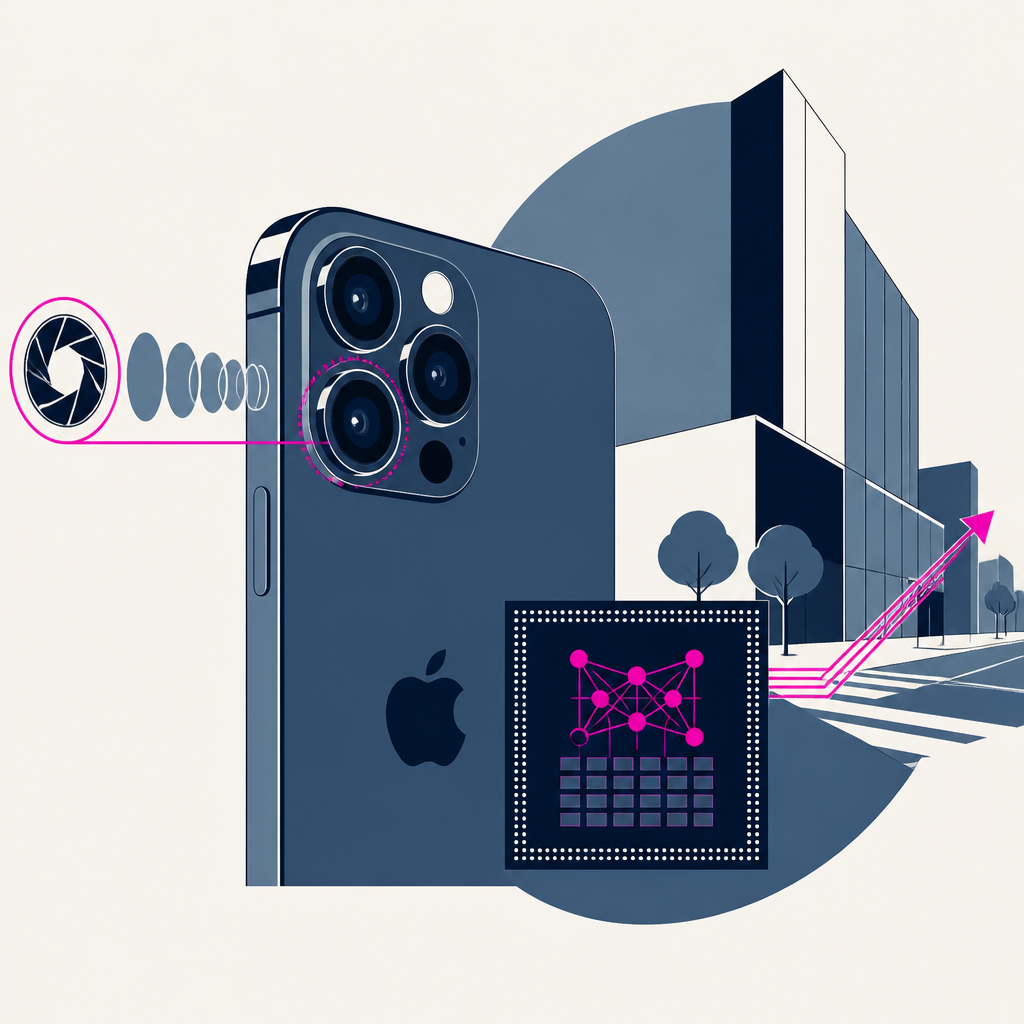
Apple introduced Apple Reference Image to verify that iPhone 18 Pro photos are authentic. It uses signed sensor data captured by the main camera sensor and processed via Private Cloud Compute into an “unalterable image” that can be compared in the Photos app. The feature will launch in Photos and later be exposed through developer APIs, with support for the SynthID standard to flag AI-created or altered images.
Apple released the iPhone 18 Pro with updated camera controls and a new A20 Pro chip. The A20 Pro is Apple’s first 2 nm iPhone chip. As a result, users get a variable aperture camera and improved AI/ML processing via a larger Neural Engine design, alongside faster CPU and GPU performance.
John Ternus said Apple’s iPhone is already the best AI device and emphasized Apple’s privacy-first approach for its AI strategy. He described an “intelligent personal hub” that should have powerful on-device AI processing plus an internet connection to reach cloud models. Apple’s focus shifts to positioning the iPhone as the core interface for AI rather than launching separate AI-focused hardware.
Apple announced new Siri Audio Intelligence listening features at its iPhone Duo launch and also published a privacy document describing how it limits access to any captured audio. The document says raw audio is handled within dedicated hardware, is not saved as a file, and is not accessible to the operating system, apps, or Apple. As a result, Audio Intelligence can process ambient audio without storing it or exposing it through the system or apps.
Apple released the Apple Watch Series 12 and Apple Watch Ultra 4 with upgraded health sensors and new audio transcription and summary features. The Series 12 starts at $399 for the aluminum, non-cellular model, while the Ultra 4 starts at $799. Prices stay the same as prior models and the main differences come from S11-powered features including Apple Intelligence.
Apple is adding a camera feature to iPhone 18 Pro models that authenticates photos against an AI-manipulation reference image. The “Reference Image” mode arrives later this month on iPhone 18 Pro and Pro Max. Photos captured in Reference mode are processed via Private Cloud Compute into an unalterable reference image for side-by-side comparison with edited versions.
Apple is expected to unveil its first foldable phone at an event led by newly appointed CEO John Ternus, alongside iPhone 18 Pro models and other new hardware, including potential Siri AI beta details. The foldable’s base-model price is expected to be around $2,000, with competing Galaxy Z Fold8 starting at $1,899.99. Apple’s launch calendar would shift to include a foldable first rather than waiting for the iPhone 18 base model in Spring 2027, while its Siri AI rollout and on-device AI approach become part of the main product narrative.
Apple announced the Apple Watch Ultra 4 at its “Surprise and shine” event as the next rugged Apple Watch model. It switches to the new S11 processor, replacing the S10 chip used starting with the Series 10 in 2024. With the added S11 performance, the Ultra 4 is positioned to support Apple’s upcoming watchOS 27 release with a more capable Siri.
Apple is launching iOS 27 on September 14, with Siri AI as its main feature rolling out first as a beta. Siri AI starts on iOS 27 for English-only devices, with French, Japanese, Korean, Portuguese, and Spanish following in October. iOS 27 also adds a Liquid Glass opacity slider and updates built-in app icons plus extra-large widgets.
Apple announced Apple Watch Series 12 with AI-powered Audio Intelligence for Siri. It adds a Live Rewind option that replays the last 15 seconds of recently detected audio and shows a transcript on the watch. Siri now also creates daily audio recaps and provides accessibility alerts via Sound Recognition.
Apple announced the iPhone 18 Pro and iPhone 18 Pro Max at its Wednesday event.
The A20 Pro chip uses a 2nm “brand new architecture.”
The phones add a dynamic-aperture main camera and are positioned to support Apple Intelligence and updated Siri voices.
Every AI story that matters,
in your inbox by 8am.
TLDRocket reads all relevant sources, removes duplicate coverage, and summarises the
day in two minutes. Follow companies and topics for alerts, or get the
briefing in Slack. Free, no spam, unsubscribe anytime.
Reading TLDRocket needs no cookies, and the readership counts we rely on come from
our own cookieless analytics. Google Analytics is the exception: it sets cookies and
reports to Google, so it stays switched off until you allow it. You can change your
mind any time from “Cookie settings” in the footer.
Strictly necessary
Session security and form protection (tldrocket-session,
XSRF-TOKEN, 2 hours). The site cannot work without them,
so they need no consent.
Always on
Google Analytics 4 (_ga,
_ga_<id>, up to 2 years). Measures which
stories and sections readers use. Google acts as a third-party processor and may
store the data outside the EU. No advertising, no profiling, no data sold.