Apple's new boss starts with big gamble on costly first folding iPhone
BBC News ● Covered by 10 sources
Apple just showed its first foldable iPhone, the Duo, starting at $2,000. It’s the biggest iPhone shift in years — and a very expensive bet that people want foldables.
Based on reporting by BBC News — read the original for the full story.
Summary, retelling and take written by AI under human oversight; images are AI-generated illustrations. How we work · Report an error
John Ternus has barely settled into Apple’s top job, and he’s already fronting the company’s biggest iPhone redesign in nearly 20 years. On Wednesday, at Apple’s annual product event, he unveiled the first foldable iPhone, a book-style device called the Duo. It’s the largest iPhone Apple has ever made, and it comes with a price tag to match: $2,000 at the low end, rising to $3,200. In the UK, it starts at £1,999.
Ternus said the Duo was inspired by the iPad, but the pitch was really about making a foldable phone that doesn’t feel like the awkward hybrids already on sale. Open it up and it looks like a small iPad; fold it and it resembles a wider iPhone. Apple says the point is a more natural feel, with Ternus describing the folding as “fluid and completely intuitive.” He also said Apple spent years working on it.
That matters because Apple is not just selling a phone here. It is trying to show it can still create a product people care about, after years of criticism that nothing since the original iPhone in 2007 has landed with the same force. Analysts at the event were already reading the choice of Ternus as a signal. Ben Wood of FDM said the timing looked designed to line up with “one of the biggest iPhone launches for many years,” while Carolina Milanesi of Creative Strategies said the spotlight made it feel as if Ternus himself was part of the product.
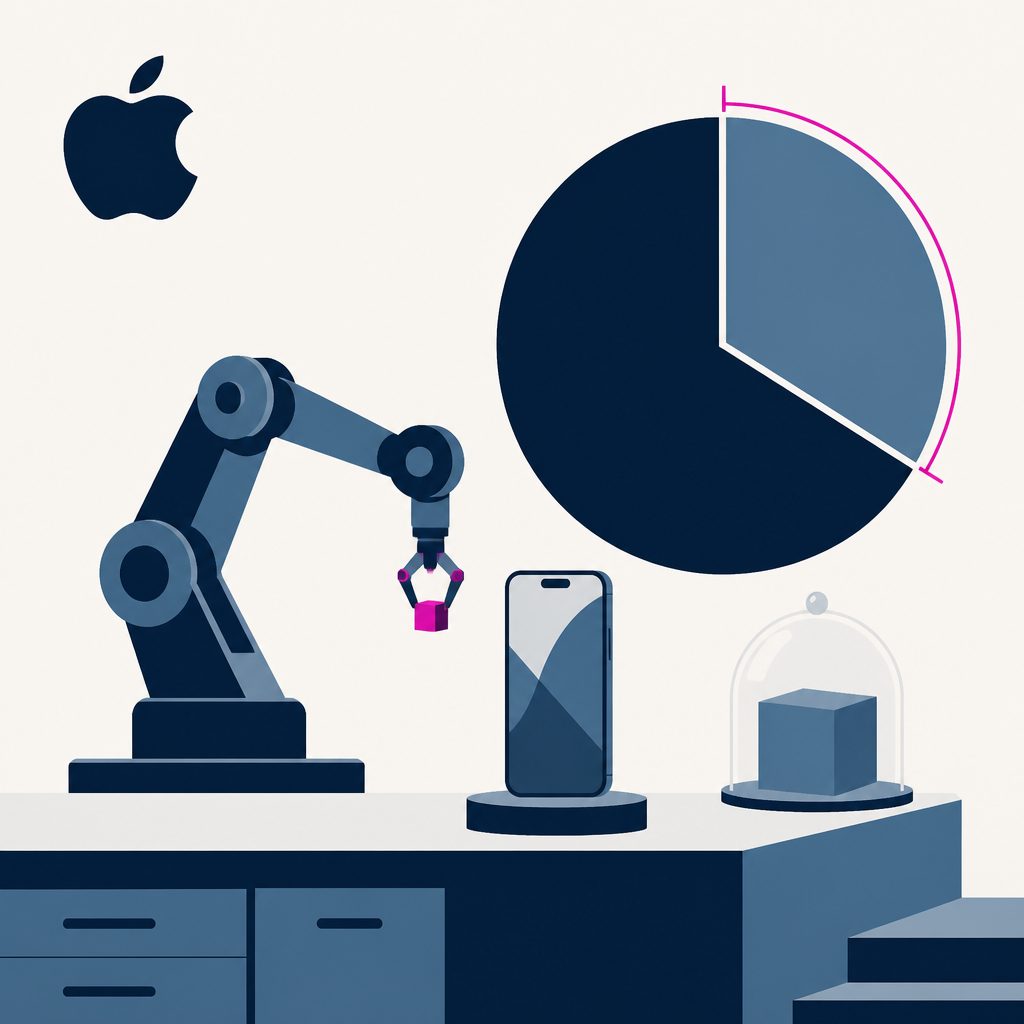
The business risk is obvious. Foldables are still a tiny market: Wood said Samsung and Huawei together account for only 2% of smartphone sales, and FDM expects that figure to reach just 4% over the next decade even with Apple in the mix. Dipanjan Chatterjee of Forrester warned the Duo could end up as a pricey showpiece rather than a growth engine. Apple’s own history gives both sides of that bet some weight: the Vision Pro was expensive and hasn’t been a hit, while the Apple Watch was never the iPhone, but has still sold in the millions.
Apple also used the event to push its AI plans harder. Siri AI, arriving with the iPhone 18, will be able to search across messages and emails, answer questions, and act on a user’s behalf. Some of those features will also reach the new Apple Watch. Ternus called the AI push an “intelligent personal hub,” and stressed that Apple will keep the data private, often processing it on device rather than through third parties. Even when a cloud server is needed, he said, “not even Apple can access what’s yours.”
My take — AI-written commentary, not fact-checked reporting
Apple loves to call privacy a virtue, which is convenient when it also wants full control of the stack. The real test isn’t whether the Duo is clever; it’s whether people will pay luxury-car money for a phone that folds and a Siri that still has to prove it can do the job. Closed systems are tidy right up until they start charging rent for the privilege.
Read more about this at: BBC News