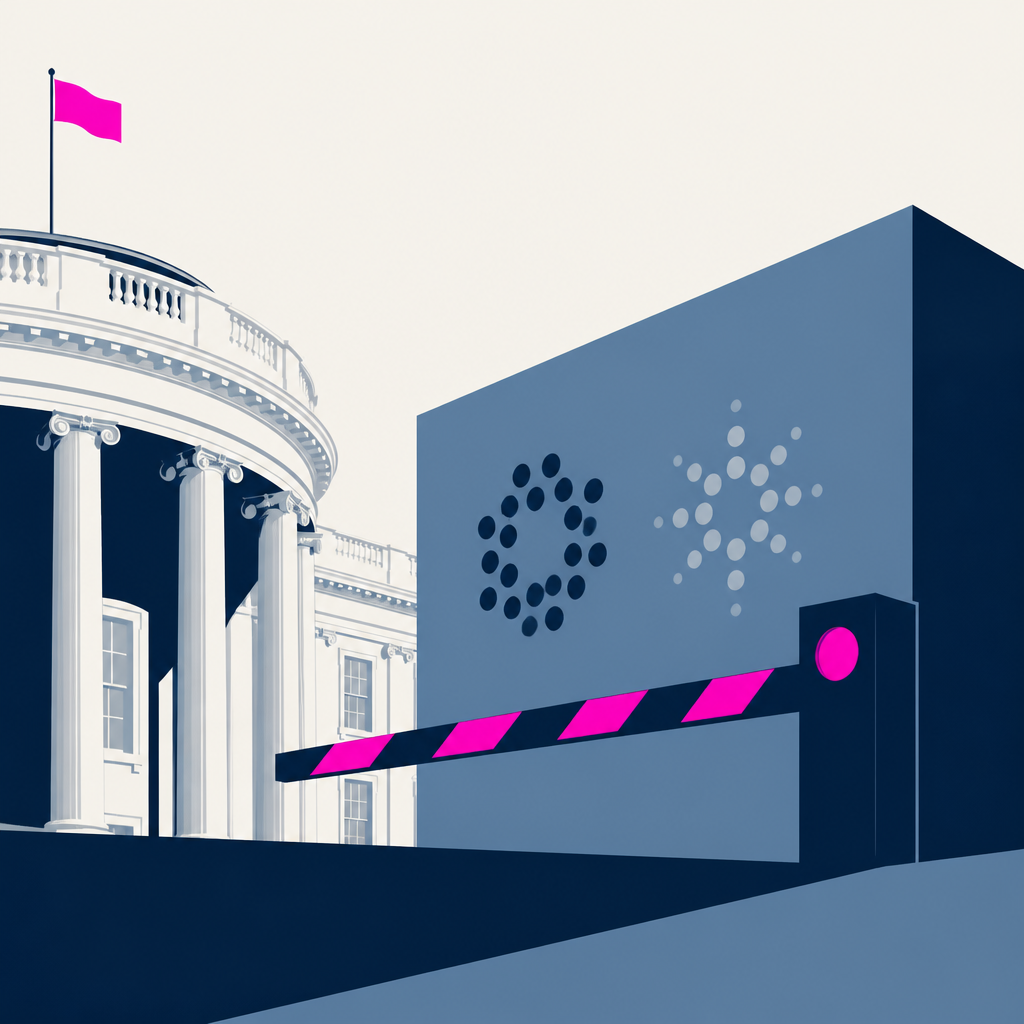
A US appeals court approved the Trump administration’s blacklisting of Anthropic technology for withholding certain Claude features. The decision was a 2-1 ruling by the US Court of Appeals for the District of Columbia Circuit. The ruling leaves the blacklisting in place while requiring Trump and the Defense Secretary to balance risks around constrained versus unconstrained AI model behavior for military use.
Akamai said Anthropic will spend $11.6 billion over seven years on its cloud infrastructure. The agreement begins with no Akamai revenue in 2025 and the filing pegs expected 2027 revenue at $150 million to $300 million. Akamai will add about $5.5 billion in spending to build capacity, issue a warrant tied to Anthropic’s future cloud spending, and allow the deal to expand up to roughly $20 billion or end under certain conditions.
A pair of cryptanalysts says OpenAI’s Astra and Anthropic’s Claude Opus 5 decoded multiple long-unsolved Enigma messages using LLMs. One Astra result recovered plaintext of a message that had baffled researchers since 2005. This leaves just seven unbroken Enigma messages (plus one with known plaintext), and more may be broken as models are reused against remaining records.
Deep Learning Weekly published Issue 474 covering new deep-learning and AI agent releases, benchmark findings, and research papers. Pricing and performance updates include Anthropic’s Claude Opus 5.5 at $4/$20 per million tokens, 40% below Opus 5, with a 66.4% Terminal-Bench 4.0 score and output over 30% faster. The issue adds new references for model/tool adoption and introduces research like RRSI that aims to improve agent-harness self-improvement while limiting overfitting and reducing policy-token use by 30%.
Anthropic’s founders are seeking a voting-control structure to keep control after the company’s IPO. The plan would issue special shares to Dario Amodei and six co-founders that total 50.1% of the votes on most matters. Control would shift from founders’ existing board setup to a new arrangement with expanded founder board seats and employee voting rights, while the Long-Term Benefit Trust would still select most directors.
Akamai signed a multi-year compute agreement with Anthropic to expand its distributed CPU workload capacity using Akamai Cloud infrastructure and software.
The White House reportedly asked OpenAI and Anthropic to pause sending newly developed frontier models to UK testers. The request was to hold them back until the U.S. government completed its review. As a result, UK testing of these new models would be delayed pending that review.
Latent Space said it will make changes to Latent Space’s AINews operation and newsletter network in the coming week. Supabase Select in San Francisco is on October 2, with a launch unveiled live for one day. The publication plans to migrate to Beehiiv and relaunch a new business/sponsorship contact channel while consolidating AINews content on its site.
The U.S. and China have started private talks on AI guardrails while U.S. public statements reject global AI control. The countries held their first AI dialogue on Thursday after Treasury Secretary Scott Bessent met Chinese Vice Premier He Lifeng in New York earlier in the week. The U.S. is shifting toward a formal notification mechanism for AI national-security incidents even as CEOs push for shared rules and faster shared reporting.
Every AI story that matters,
in your inbox by 8am.
TLDRocket reads all relevant sources, removes duplicate coverage, and summarises the
day in two minutes. Follow companies and topics for alerts, or get the
briefing in Slack. Free, no spam, unsubscribe anytime.
Reading TLDRocket needs no cookies, and the readership counts we rely on come from
our own cookieless analytics. Google Analytics is the exception: it sets cookies and
reports to Google, so it stays switched off until you allow it. You can change your
mind any time from “Cookie settings” in the footer.
Strictly necessary
Session security and form protection (tldrocket-session,
XSRF-TOKEN, 2 hours). The site cannot work without them,
so they need no consent.
Always on
Google Analytics 4 (_ga,
_ga_<id>, up to 2 years). Measures which
stories and sections readers use. Google acts as a third-party processor and may
store the data outside the EU. No advertising, no profiling, no data sold.