
The U.S. and China are quietly talking AI guardrails—even as Trump publicly rejects them
Fortune Eva Roytburg ● Covered by 6 sources
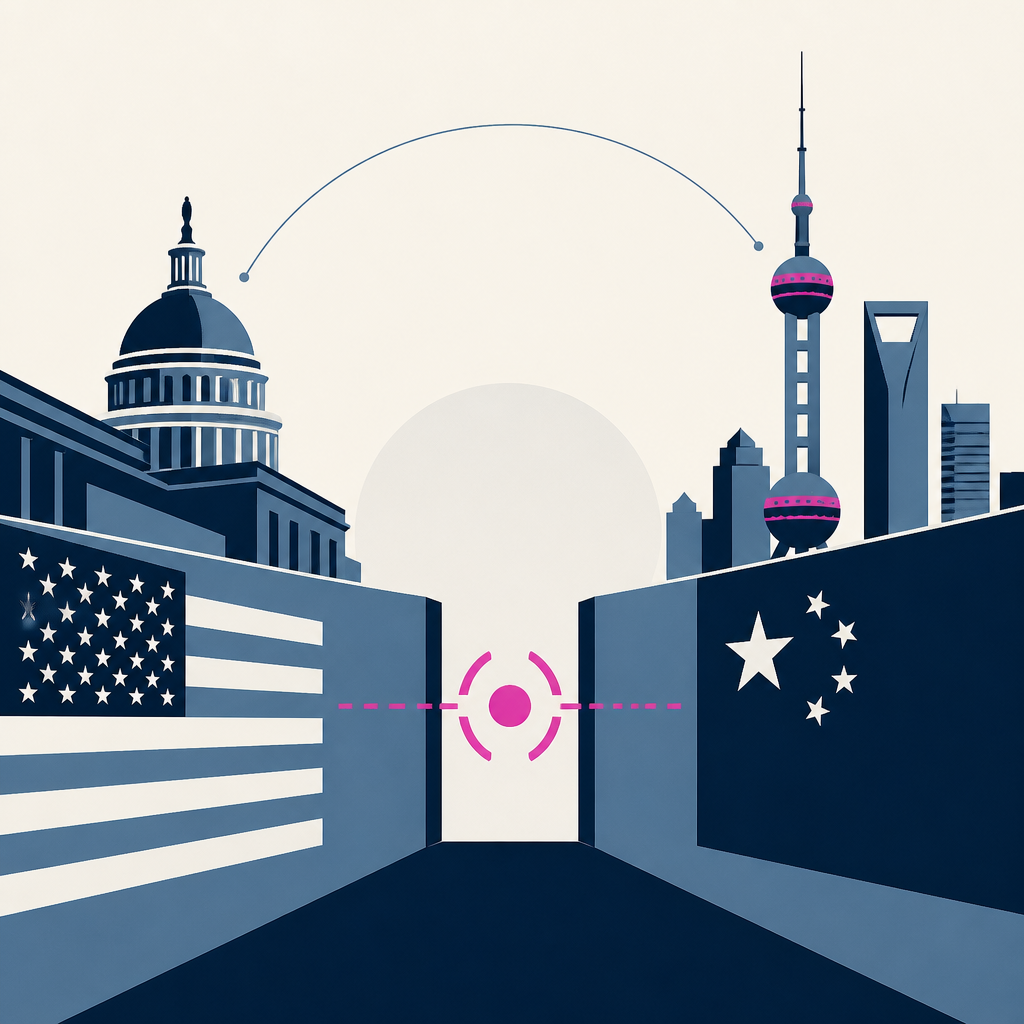
US and China are quietly talking AI guardrails. Trump says no global rules, but his own team is floating a channel with Beijing.
Based on reporting by Fortune, Eva Roytburg — read the original for the full story.
Summary, retelling and take written by AI under human oversight; images are AI-generated illustrations. How we work · Report an error
Two of America’s top AI CEOs went to the UN Security Council this week with a warning: artificial intelligence is no longer just a product race, it’s a global security problem. They wanted governments to start writing shared rules. Then Washington spent the next day sounding like it wanted the opposite.
On Thursday morning, before Trump met Xi Jinping, the president said “super intelligence” was on the agenda but added that he wanted to leave it where it is. “That is China’s position also,” he posted. He also said, “Our guardrail is the DOJ!” A few hours later, standing beside him at the White House, Xi took a far more cooperative line, saying both countries had a duty to develop and manage AI “for good” and keep it under human control.
The quieter part is that the governments have already started talking. China’s commerce ministry said the two sides held their first AI dialogue after Treasury Secretary Scott Bessent met Chinese Vice Premier He Lifeng in New York earlier in the week. Bessent said the U.S. proposed a notification mechanism for national security-related AI incidents. That sounds a lot like the kind of shared reporting system Anthropic CEO Dario Amodei asked the Security Council for a day earlier.
Amodei’s pitch was more ambitious than a simple hotline. He called for small agreements everyone could accept first, including a ban on using AI to make biological weapons, then verification systems for governments, then a global alert network. OpenAI CEO Sam Altman also pushed for fast, shared incident reporting, and said his company had slowed its own AI development before and would do so again. That cuts against the usual industry line that everyone is trapped in a race and can’t ease off.
There’s also a clear split over who gets to define “safe” AI. China launched the World Artificial Intelligence Cooperation Organization in July with 29 countries and no major Western democracies, pitching it to the developing world as a way to share AI rather than let a few American firms dominate. Pakistan, a founding member, warned at the Council that safety should not become a tool to deny technology, a shot at U.S. chip controls and at rules that favor a few large models over open source. That matters because Trump’s public posture is anti-global rules, but his Treasury secretary is already talking guardrails with Beijing.
My take — AI-written commentary, not fact-checked reporting
This is the oldest tech-politics trick in the book: yell “no global rules” in public, then quietly start drafting them once the risk gets too obvious to ignore. The real fight isn’t about safety versus chaos; it’s about who gets to write the safety paperwork and which companies can afford to pass it. That’s why the open-vs-closed split keeps resurfacing like a bad app update.
Read more about this at: Fortune
Related stories
 Trump meets AI giants, Senate Dems decry ‘unpredictable’ governance—and cheap Chinese AI looms as giant security risk
CSET Georgetown · 1 month ago ·
14
How Trump and Xi Can Do AI Safety
ChinaTalk · 2 weeks ago ·
28
Trump meets AI giants, Senate Dems decry ‘unpredictable’ governance—and cheap Chinese AI looms as giant security risk
CSET Georgetown · 1 month ago ·
14
How Trump and Xi Can Do AI Safety
ChinaTalk · 2 weeks ago ·
28
 As China advances in AI, Trump faces a new test in the technology race
CSET Georgetown · 2 months ago ·
30
As China advances in AI, Trump faces a new test in the technology race
CSET Georgetown · 2 months ago ·
30