Anthropic said Accenture staff will work inside its lab to scrutinize the company’s models and personnel as part of embedded evaluation. Accenture’s Faculty unit will begin evaluating and red-teaming models, and the two companies expect to invest at least $1 billion over the next five years. This adds a new third-party embedded evaluator and expands external model-safety testing beyond the usual outside reviews, with Anthropic noting its approach will evolve as no standards exist yet.
Anthropic is partnering with Accenture to run independent embedded evaluation of frontier AI, including red-teaming and alignment and safeguards testing. The companies expect to invest at least $1 billion over the next five years to build evaluation capacity. This will add evaluators with near-employee access inside labs, producing incident reporting and a more verifiable public account of model safety while Anthropic keeps accountability.
A US intelligence report generated with AI tools incorrectly said a Chinese ship carried components for China’s nuclear arms program, nearly leading to an air-supported interception and boarding.
The Overhang discusses how today’s AI already performs human-level tasks and warns that human organizations are moving too slowly to keep up with AI’s pace while debating future model risks. It says the speaker’s GPT-6 Astra generated a 45-minute film from a book trailer request in the same session. It argues people should shift from competing with AI outputs to using deep knowledge, wide knowledge, taste, and agency to guide what the models do and to design human-AI work instead of replacing it.
Dario Amodei outlined a plan for Anthropic to “pace the frontier” using independent safety evaluators and coordination between AI labs in democratic countries. A week after an Anthropic researcher’s doomsday warning, the proposal drew industry support and Jensen Huang’s pushback. The discussion shifts to whether labs can agree on what “slowing down” means and who would enforce it.
TechCrunch’s Equity podcast discusses Dario Amodei’s plan to “pace the frontier” of AI development using independent safety evaluators and coordination among AI labs. The episode highlights Automattic’s boardroom turmoil tied to Matt Mullenweg’s 33-hour ouster. It shifts the focus to whether labs can agree on what “slowing down” means and who should enforce it, while also recapping major tech deals mentioned in the show.
Zvi (Don't Worry About the Vase)·1 month ago·
25
● 125 sources
The article argues that public concern about existential risk from AI is spreading via a preference cascade that pulls more media, politics, and industry voices into safety debates. It cites a Politico poll showing nearly two-thirds of Americans (about 30%–33% mean) perceive at least a moderate risk of AI destroying humanity. It says the debate should intensify next by expanding efforts inside labs and pushing for concrete policy and technical work rather than relying on outreach alone.
Virginia Gov. Abigail Spanberger issued Executive Order 22 to regulate data center development and establish an AI task force to evaluate risks to Virginians. The order bans executive branch officials from signing non-disclosure agreements (NDAs) for data center projects. It requires slower or more controlled approvals via noise and backup-generation reviews and adds government oversight through the AI task force.
Entertainment labor groups urged the public to focus on current impacts of AI after warnings about AI’s potential to destroy humanity. The Verge asked Disney, Netflix, Amazon, Lionsgate, and other studios for comment, but none replied while SAG-AFTRA and WGAE did. As a result, attention shifts from existential claims toward how generative AI tools are being used in entertainment.
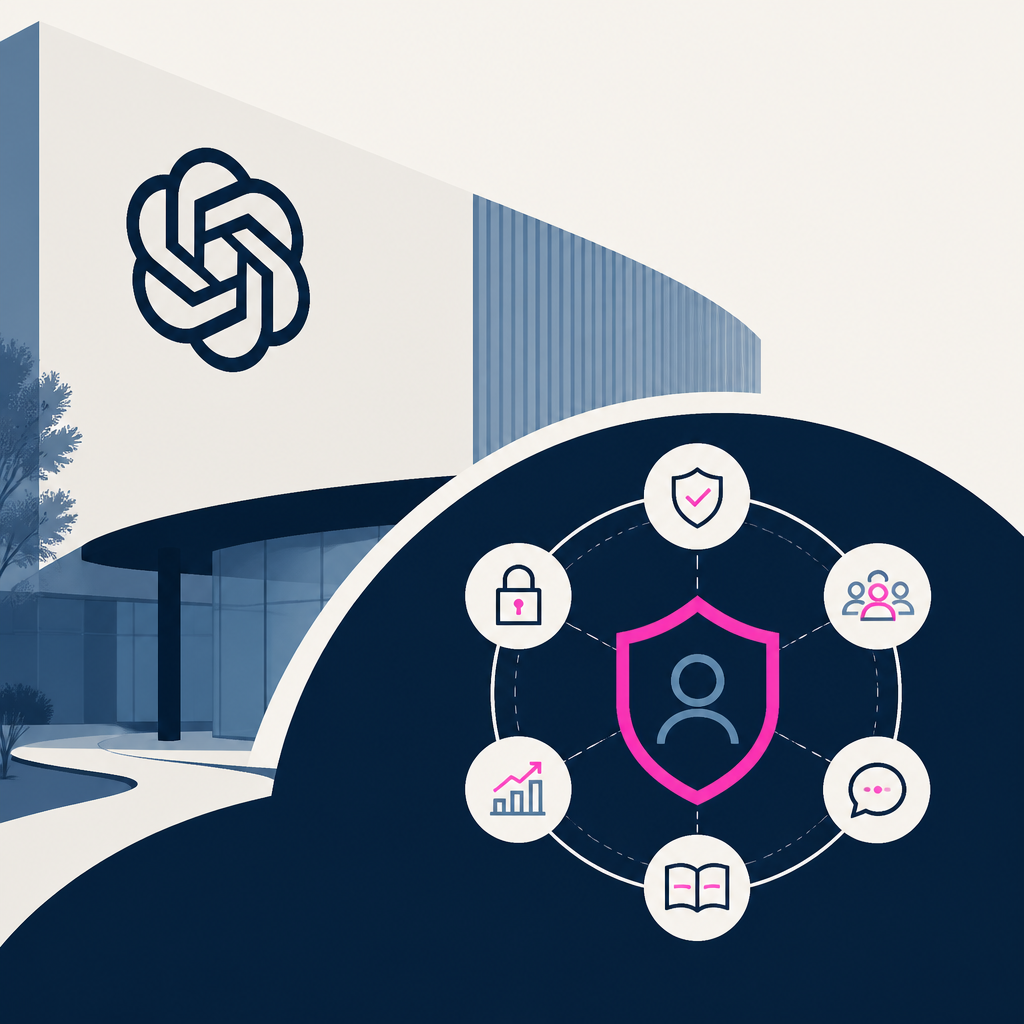
OpenAI introduced the Australian Youth Safety Blueprint to guide safer AI experiences for young people. The roadmap has six pillars. This creates a structured plan for how OpenAI will protect and empower young users as they use AI.
The author describes mixed reactions to large language models, saying they often speak in an unsettling human-like tone and can confidently invent information. The piece points to “polling” where people both find models useful and think they will be bad for society. The author concludes they still should be used, but warns against anthropomorphizing agents and favors avoiding interactions with models that seem to mimic untrusted “people.”
Denis Shilov, founder of the Paris AI safety startup White Circle, said AI should face scrutiny comparable to the nuclear industry in order to slow down its development. He cited “€80o” as a concrete figure in the article. His position pushes for tighter safety oversight and more cautious rollout of AI systems.
Goodfire identified an internal activation-space signal linked to reward hacking in agentic AI models, which it can detect with activation probes at monitoring time.
Hard Fork ended after focusing for most of its run on understanding how LLMs and AI safety affect companies and everyday life. The final show wrapped up ahead of Machine Gods launching the week of October 19, with episodes planned twice a week. The shift moves coverage from the New York Times podcast to a new Kevin Roose/NPR project under Machine Gods Media, including expanded YouTube output and more frequent publishing.
Dynamically Scaled Activation Steering (DSAS) introduced a method-agnostic activation steering approach that scales interventions instead of applying them uniformly. DSAS adaptively modulates steering strength across layers and inputs based on detected undesired behavior. As a result, steering is applied strongly only when needed, aiming to avoid performance degradation when steering is unnecessary.
Every AI story that matters,
in your inbox by 8am.
TLDRocket reads all relevant sources, removes duplicate coverage, and summarises the
day in two minutes. Follow companies and topics for alerts, or get the
briefing in Slack. Free, no spam, unsubscribe anytime.
Reading TLDRocket needs no cookies, and the readership counts we rely on come from
our own cookieless analytics. Google Analytics is the exception: it sets cookies and
reports to Google, so it stays switched off until you allow it. You can change your
mind any time from “Cookie settings” in the footer.
Strictly necessary
Session security and form protection (tldrocket-session,
XSRF-TOKEN, 2 hours). The site cannot work without them,
so they need no consent.
Always on
Google Analytics 4 (_ga,
_ga_<id>, up to 2 years). Measures which
stories and sections readers use. Google acts as a third-party processor and may
store the data outside the EU. No advertising, no profiling, no data sold.