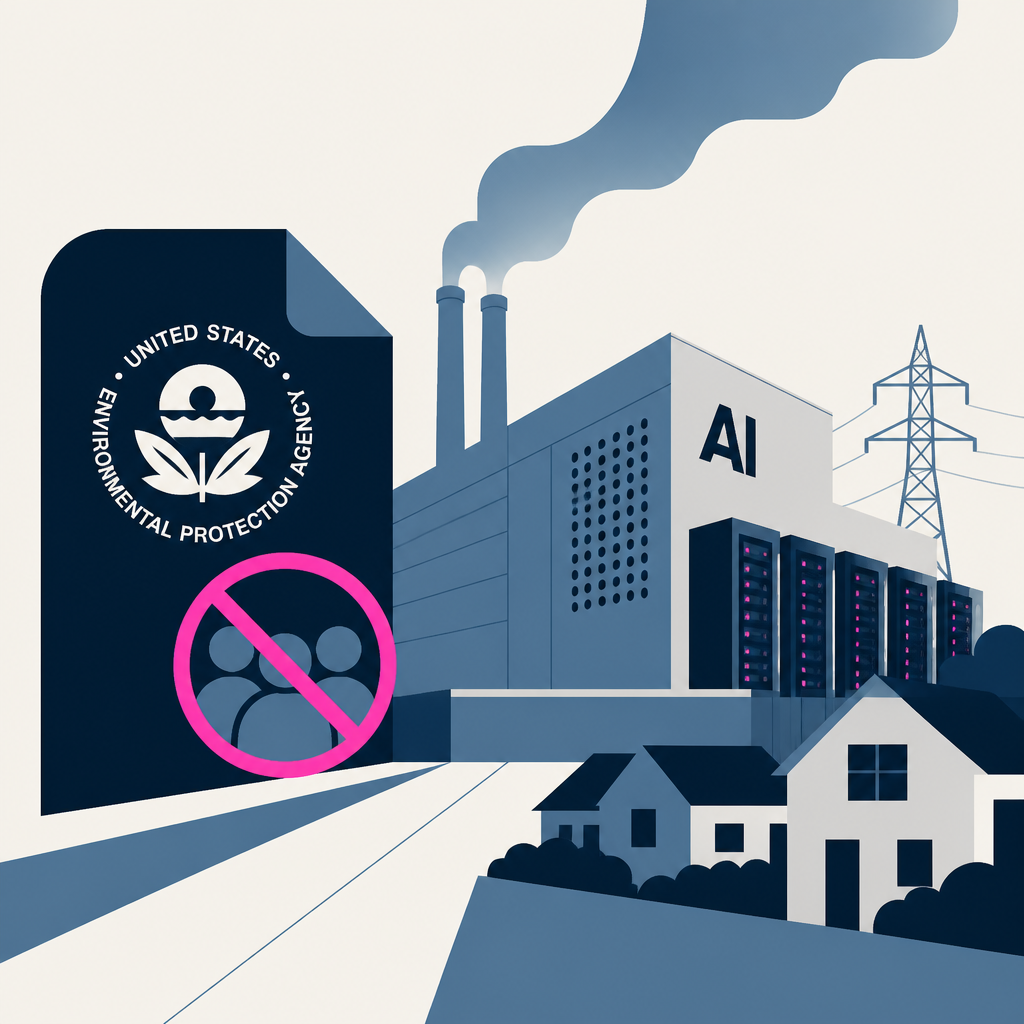
The Trump administration is considering reducing public notice and participation requirements in air pollution permitting for data centers and power plants. The EPA held a hearing on a proposed rule that would give states control over public involvement in permitting for certain pollution sources. If adopted, the change would limit communities' ability to influence or delay data center development through the permitting process.
U.S. political figures including Trump and Sanders have proposed government ownership stakes in AI companies to address inequality concerns, but critics argue this creates regulatory conflicts of interest and doesn't ensure public benefit. A minority stake doesn't guarantee taxpayers profit or control, and government ownership may weaken safety, antitrust, and content regulation while creating conflicts in lawsuits and data privacy matters. Rather than equity stakes, the article suggests alternatives like targeted government investment funds in startups or dedicated AI safety institutes would better serve both innovation and public interest.
The Algorithmic Bridge·2 months ago·
12
● 75 sources
The White House accused Moonshot AI of stealing Anthropic's Fable model through large-scale distillation to develop its K3 model, with Treasury Secretary Scott Bessent warning that sanctions could follow. The accusation lacks supporting evidence, and the timeline doesn't align since Fable was only publicly available for two weeks before K3's release, making significant distillation implausible during training. The episode reveals divisions within the U.S. government and tech industry over whether to restrict Chinese AI models, while Chinese models already account for nearly 60% of token usage on OpenRouter by U.S. companies, making enforcement difficult and raising questions about America's confidence in competing through open-source alternatives rather than restrictions.
Congress is proposing an AI kill switch in response to emerging details about OpenAI's cyberattack against Hugging Face, prompting lawmakers to examine AI safety mechanisms. The article, dated July 23, 2026, discusses growing concerns from 200 economists and AI leaders about AI's impact on employment. The proposal would give authorities ability to shut down AI systems deemed unsafe, marking a shift toward regulatory control over advanced AI deployments.
Every AI story that matters,
in your inbox by 8am.
TLDRocket reads all relevant sources, removes duplicate coverage, and summarises the
day in two minutes. Follow companies and topics for alerts, or get the
briefing in Slack. Free, no spam, unsubscribe anytime.
Reading TLDRocket needs no cookies, and the readership counts we rely on come from
our own cookieless analytics. Google Analytics is the exception: it sets cookies and
reports to Google, so it stays switched off until you allow it. You can change your
mind any time from “Cookie settings” in the footer.
Strictly necessary
Session security and form protection (tldrocket-session,
XSRF-TOKEN, 2 hours). The site cannot work without them,
so they need no consent.
Always on
Google Analytics 4 (_ga,
_ga_<id>, up to 2 years). Measures which
stories and sections readers use. Google acts as a third-party processor and may
store the data outside the EU. No advertising, no profiling, no data sold.