Elon Musk’s Grok chatbot was reportedly discussed in a secret meeting between President Trump and Musk, where Trump used Grok to ask how Venezuelans would respond to the capture of President Nicolás Maduro. The report places the meeting about one month before the U.S. invaded Venezuela and captured Maduro on January 3, 2026. Afterward, Grok’s advice was said to influence Trump’s view of the chatbot and it was later cited as being used by the Pentagon for military target deployment and strikes.
Microsoft’s Digital Defense Report 2026 ranks countries where Microsoft customers saw the most malicious activity in the first half of 2026, led by the United States and followed by Israel and Ukraine. The United States accounted for 25.5% of all observed attacks on customers worldwide. The report argues that AI is speeding up attacks and that ransomware is rising fastest in Europe, prompting new emphasis on phishing-resistant authentication like passkeys.
AI as Normal Technology·3 weeks ago·
12
● 3 sources
The article argues that AI safety discourse is being pulled between two wrong narratives—either existential risk is imminent or warnings are insincere—and claims a third option may be that sincere alarms are simply mistaken and harm policy. It cites a 2019 WHO/World Bank report estimating pandemic preparedness should cost $1–2 per person per year. It concludes that shifting attention from existential-risk rhetoric toward building broad prevention and resilience against systemic risks is more likely to improve AI safety outcomes.
A newly unsealed filing in The New York Times’ copyright case describes an OpenAI researcher telling Greg Brockman about a way to bypass a NYT paywall, highlighting the dispute over whether AI systems should pay for knowledge they consume. The article points to micropayments of fractions of a cent and article access for about 10 cents as a more practical pricing model than subscriptions. It argues that AI systems will need a permissioned payments and provenance “architecture” so machines can verify rights, pay automatically under spending limits, and pass attribution and credit forward.
A federal judge dismissed antitrust lawsuits by Chegg and Penske Media Corporation accusing Google of using AI Overviews to divert web traffic. The ruling was issued on Wednesday by US District Judge Amit Mehta. The dismissal means the cases will not proceed under antitrust law based on the companies’ claims about Google’s AI search practices.
Slovenia’s national domain registry linked a surge in .si website-name registrations to Donald Trump’s push to rebrand AI as “super intelligence.”
In September, 44,000 .si web addresses were registered versus less than 2,000 in August, and 11,000 new registrations came in on 30 September.
US government agencies were ordered to use the terms “SI” and “Super Intelligence” in official correspondence, shifting away from acknowledging “AI,” and this appears to have driven speculative domain-buying in Slovenia.
The Wall Street Journal·3 weeks ago·
2
● 18 sources
CEOs met with Trump at the White House to discuss principles for safer AI models, and they privately questioned Anthropic CEO Dario Amodei about his public warnings. The meeting took place at the White House. The talks reportedly shifted toward enforcing honesty about AI capabilities and risks as part of those safety principles.
The Verge reports that Kevin O’Leary’s Utah data-center project for “Wonder Valley” (also called Stratos) collapsed after county officials and local residents learned late in the process and mounted backlash that stopped the plan. The proposed site was a 40,000-acre campus billed with nine gigawatts of power, and it was approved by MIDA two days after a late-April county meeting. The investigation says the fallout reshaped Utah politics, triggered lawsuits tied to O’Leary’s remarks about critics, and highlighted local-government consent as the bottleneck for AI infrastructure buildouts.
Meta labeled its AI data centers as experimental facilities to pursue federal research tax credits. The report frames the move as seeking a major tax discount. As a result, the data centers’ use is being positioned under research rules to qualify for the credits.
President Trump and top AI company CEOs signed voluntary AI safety standards after a White House lunch meeting focused on “super intelligence.” The pact calls for four layers of controls and audits and includes meeting regularly to set standards and best practices. The agreement is intended to drive self-policing by the companies, with Trump also planning an AI czar and issuing an executive order to use “Super Intelligence” instead of “artificial intelligence.”
Trump ordered the U.S. executive branch to replace the terms “Artificial Intelligence” and “AI” with “Super Intelligence” and “SI.”
Within 60 days, the Assistant to the President for Science and Technology must submit proposed legislative language to define “Super Intelligence” and “SI.”
After the order, federal agencies will update official correspondence and public communications to use the new terminology, while existing regulations and prior contracts will not be changed.
The article argues that UK growth policy and investment are overfocused on high-profile, venture-backed companies while a profitable group of “invisible middle” SMEs is being overlooked. AI is cited as driving the shift, with AI companies making up 44% of UK smaller-business equity investment in 2025 while representing 26% of deals. The proposed change is to redefine which businesses qualify for support by prioritizing demonstrated profitability, job creation, and growth potential rather than glamour, sector, or unicorn prospects.
Kevin O’Leary promoted his planned Wonder Valley data center in Utah as a national-security project aimed at providing compute capacity for AI, then later attributed rising online criticism to Chinese agents, prompting a retraction and an apology from Fox Business. He said he noticed a “sudden increase” after county commissioners approved the project the week before and later posted clarification that he had “no evidence” of China links. Local officials and records described the project as moving with urgency and limited disclosure, including commissioners being told about it only about five weeks before their expected vote, leading to defamation litigation.
Bank of England governor Andrew Bailey warned that heavy investment in AI could lead to financial market shocks in the UK. He cited Nvidia’s $5.5tn market valuation as an example of how AI expectations can push asset prices higher. The Bank of England says it is watching AI funding closely and preparing for possible asset-price corrections and other shocks to keep the financial system resilient.
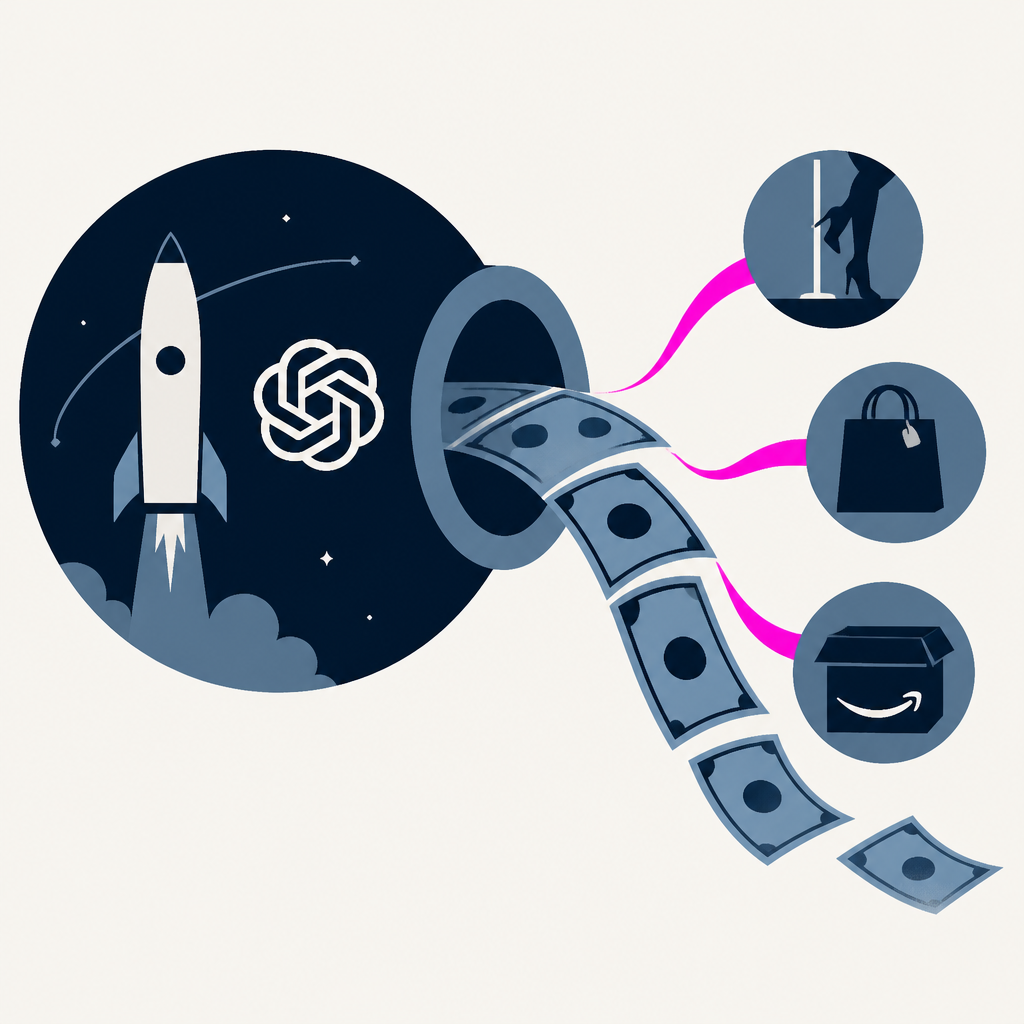
The U.S. SEC filed charges against private fund advisers it says misled investors by claiming they held pre-IPO stakes in high-profile companies like OpenAI and SpaceX while misappropriating investor money. In one case, the SEC alleges Owen Meyer raised at least $18.5 million and used more than $18,000 of fund capital for strip club payments in April 2023. The SEC is seeking industry bans, disgorgement, and penalties, and the companies named are not accused of wrongdoing.
Every AI story that matters,
in your inbox by 8am.
TLDRocket reads all relevant sources, removes duplicate coverage, and summarises the
day in two minutes. Follow companies and topics for alerts, or get the
briefing in Slack. Free, no spam, unsubscribe anytime.
Reading TLDRocket needs no cookies, and the readership counts we rely on come from
our own cookieless analytics. Google Analytics is the exception: it sets cookies and
reports to Google, so it stays switched off until you allow it. You can change your
mind any time from “Cookie settings” in the footer.
Strictly necessary
Session security and form protection (tldrocket-session,
XSRF-TOKEN, 2 hours). The site cannot work without them,
so they need no consent.
Always on
Google Analytics 4 (_ga,
_ga_<id>, up to 2 years). Measures which
stories and sections readers use. Google acts as a third-party processor and may
store the data outside the EU. No advertising, no profiling, no data sold.