Nscale, a GPU-focused cloud provider, acquired Anyscale, a multi-cloud AI workload orchestration platform, raising concerns about whether Anyscale can remain cloud-neutral under single-company ownership. The deal is valued at approximately $1.65 billion and is expected to close in the second half of 2026. Critics worry that optimizations favoring Nscale's infrastructure will create performance and cost advantages that undermine Anyscale's cloud-agnostic positioning, even if the software technically runs on competing cloud providers.
SpaceX said it will remove unpermitted turbines powering xAI's data centers near Memphis, but won't complete the removal until July 2027 as it transitions to a permanent 1.2 gigawatt natural gas power plant. The company currently operates 69 gas turbines that can emit over 2,000 tons of smog-forming NOx annually, and the Department of Justice sided with SpaceX in litigation brought by the NAACP and environmental groups. SpaceX plans to spend $2.8 billion on gas turbines for data centers over three years, with the new permanent plant consisting of 41 turbines ranging from 16 to 50 megawatts each.
This article outlines a comprehensive strategy for developing advanced AI systems that are more capable, more affordable, and more widely accessible. The piece advocates for a full-stack approach but provides no specific numbers, dates, benchmarks, or concrete implementations to evaluate. The framing suggests that such an approach would enable broader adoption of AI capabilities across different users and applications.
AMD is positioning itself as a full-stack AI infrastructure provider rather than just a chip manufacturer, spending $60 billion on acquisitions including Xilinx to compete with Nvidia by offering enterprises flexible, integrated systems that combine compute, networking, memory and software. Enterprises are adopting hybrid strategies that balance frontier cloud models with on-premises open-weight models, with AMD's ROCm software and open ecosystem enabling workload flexibility and reducing vendor lock-in. This shift from isolated accelerators to integrated systems reshapes how organizations deploy AI at scale across cloud, hybrid and on-premises environments.
TheSequence launched a robotics section examining how AI models are adapted for physical robots, where failures carry real consequences unlike in software. The article frames the robotics AI landscape around three players: frontier labs with large models, robotics startups with real-world data and hardware, and infrastructure companies like NVIDIA building the ecosystem. Success in robotics depends not on model size but on reliably connecting reasoning to physical action in environments with gravity, friction, latency, and humans.
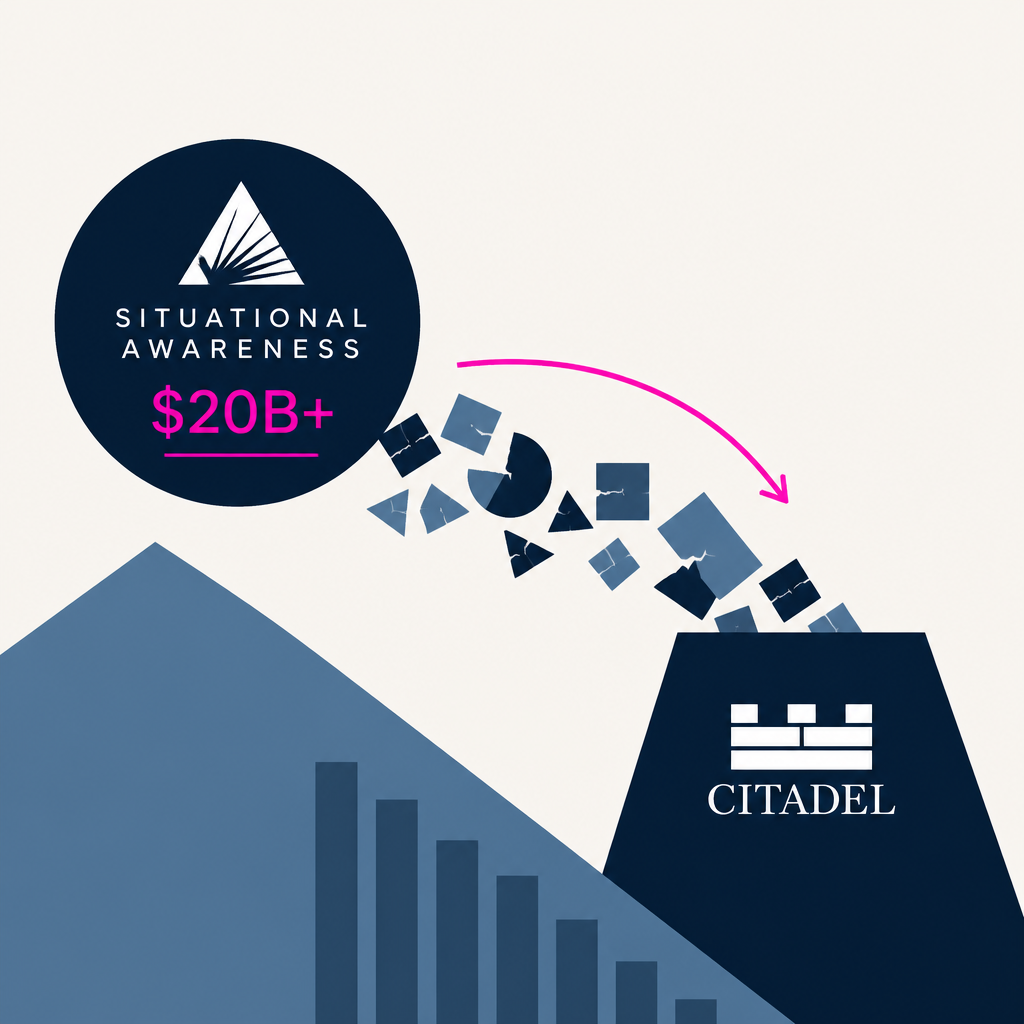
Leopold Aschenbrenner's AI infrastructure fund Situational Awareness liquidated its leveraged stock holdings to cover margin calls after AI stock prices declined. The fund had grown to over $20 billion in assets before the forced sales. The fund must now operate without the diversified equity exposure that previously supplemented its core AI infrastructure investments.
European startups are developing AI chips and infrastructure to address the continent's electricity constraints and reduce dependence on US technology for artificial intelligence applications. Key players include companies funded between €2.2 billion and €9.1 billion, with funding rounds occurring from 2023 onwards, though the article is largely unreadable due to encryption. These efforts aim to enable Europe to build domestically sovereign AI capabilities and reduce reliance on imported chips and data center infrastructure.
Nscale Global Holdings is acquiring Anyscale, a startup that provides Ray software for optimizing large-scale AI clusters, for a reported $1.65 billion. The acquisition price represents a significant discount from Anyscale's last funding round in March, when the company raised $2 billion. Nscale plans to integrate Anyscale's managed Ray service with its own data center infrastructure and optimization tools to offer customers a vertically integrated AI cloud platform.
Every AI story that matters,
in your inbox by 8am.
TLDRocket reads all relevant sources, removes duplicate coverage, and summarises the
day in two minutes. Follow companies and topics for alerts, or get the
briefing in Slack. Free, no spam, unsubscribe anytime.
Reading TLDRocket needs no cookies, and the readership counts we rely on come from
our own cookieless analytics. Google Analytics is the exception: it sets cookies and
reports to Google, so it stays switched off until you allow it. You can change your
mind any time from “Cookie settings” in the footer.
Strictly necessary
Session security and form protection (tldrocket-session,
XSRF-TOKEN, 2 hours). The site cannot work without them,
so they need no consent.
Always on
Google Analytics 4 (_ga,
_ga_<id>, up to 2 years). Measures which
stories and sections readers use. Google acts as a third-party processor and may
store the data outside the EU. No advertising, no profiling, no data sold.