
Leopold Aschenbrenner's $20B AI fund sold its leveraged stock portfolio to Citadel
Financial Times ● Covered by 6 sources
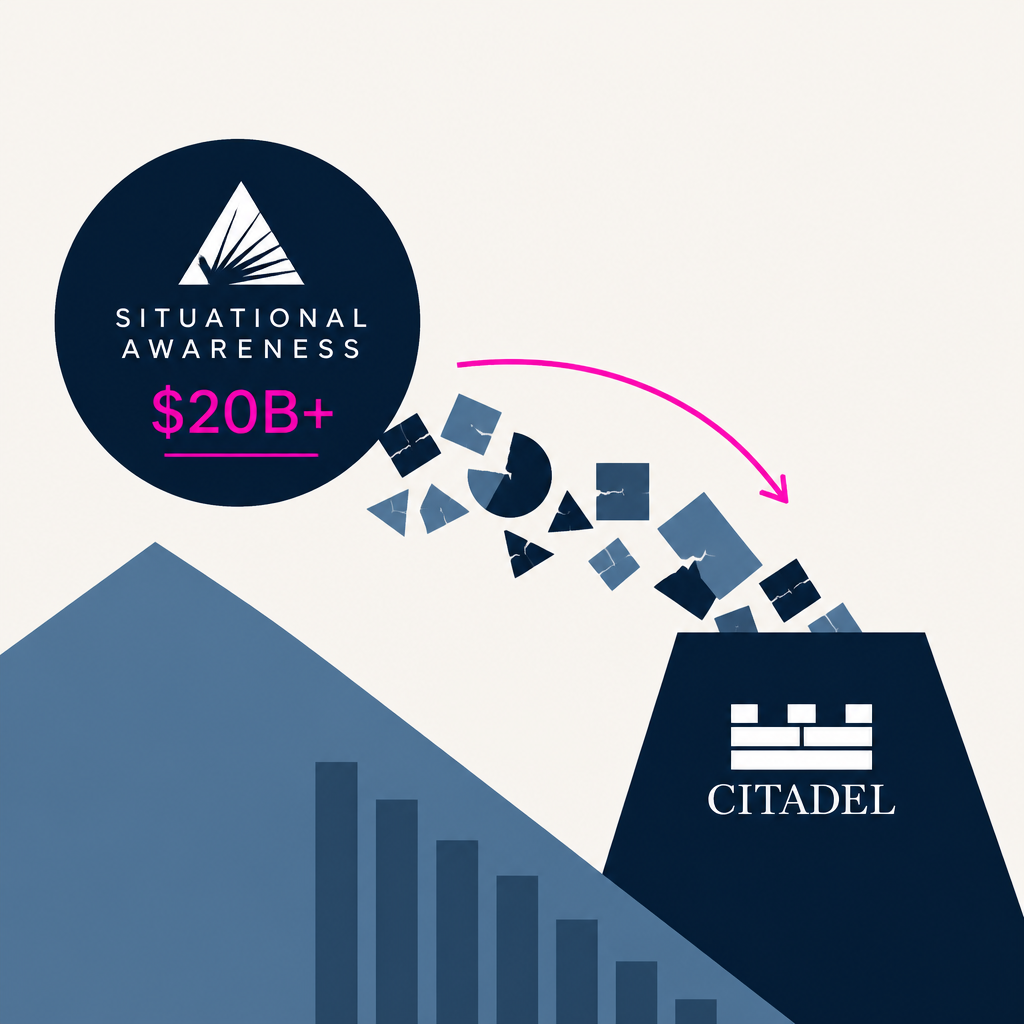
Leopold Aschenbrenner's $20B AI fund got margin-called and had to dump its stock portfolio to Citadel. Even true believers in AI can get wiped out by leverage when the market wobbles.
Based on reporting by Financial Times — read the original for the full story.
Summary, retelling and take written by AI under human oversight; images are AI-generated illustrations. How we work · Report an error
Leopold Aschenbrenner built a reputation as one of AI's most confident forecasters, and for a while his fund backed that confidence with real money. Situational Awareness started as a few hundred million dollars and rocketed past $20 billion by piling into AI infrastructure bets — chips, data centers, power, the whole stack that's supposed to carry the industry to superintelligence. It worked, spectacularly, right up until it didn't.
The fund leaned on leverage to juice those gains, which is fine when AI stocks only go up. They didn't. A pullback in AI-related equities triggered margin calls, the kind of mechanical, no-negotiating demand from lenders that forces a fund to raise cash immediately, regardless of what its manager believes about the next five years. Situational Awareness had to sell off its public-stock holdings, and Citadel was the buyer on the other side of that trade.
There's something almost too on-the-nose about it: a fund named for foresight getting blindsided by a basic risk-management problem. Aschenbrenner's whole pitch, laid out in his widely circulated essay last year, was that the world isn't pricing in how fast AI capability is compounding. He wasn't wrong that AI infrastructure spending has been enormous. But conviction about a multi-year trend doesn't protect you from a multi-week drawdown if you're borrowing to amplify the bet.
Citadel picking up the portfolio is its own small signal. Ken Griffin's firm has been an active buyer during volatility across plenty of sectors, and scooping up a forced seller's AI stocks at a discount is standard distressed-seller playbook, not some grand statement on where AI is headed. Still, the optics are rough for a fund built entirely around the idea that its founder sees further than everyone else.
None of this proves the long AI infrastructure thesis is wrong. Spending on chips and data centers hasn't stopped. What it does show is that leverage turns a correct long-term call into a losing short-term one if the timing or the sizing is off, and that even the most prominent AI true believers aren't exempt from margin math.
My take — AI-written commentary, not fact-checked reporting
I run an AI news site, not a hedge fund, but this is a tidy lesson in the gap between being right about a trend and being solvent while you wait for it to play out. Aschenbrenner may well be correct that AI infrastructure spend keeps climbing for years — plenty of the underlying data still points that way — but leverage doesn't care about your five-year thesis, it cares about Tuesday's price. The bigger pattern here is that AI conviction has started attracting the same kind of overconfident, over-levered money that shows up at the top of every hype cycle, and Citadel, as usual, is happy to be the adult in the room buying the wreckage.
Read more about this at: Financial Times