Real-time AI deployments struggle in production when data pipeline and infrastructure bottlenecks—not model logic—drive issues like latency spikes and accuracy drops. Tim’s financial trading app reached about 740K operations per second when P99 latency rose to 3 seconds. To avoid the resulting doom loop, teams should monitor freshness and index health, separate workloads and vector indexing, and plan for retraining with controlled rollouts.
Stripe agreed to acquire OpenRouter, a gateway that routes AI requests across hundreds of models from many providers. The deal is reported at roughly $7.5B. This shifts AI inference from fixed-provider setups toward model routing as an enterprise primitive, tightening connections between infrastructure, token metering, and cost allocation.
FreeToken was introduced as an edge-native Mixture-of-Experts serving engine that runs open-weight frontier models on a single workstation instead of requiring a datacenter GPU cluster. It reports GLM-5.2 at 753B parameters running at 14.9 tokens per second on a single RTX PRO 6000. The release adds Apache-2.0 code and deploy targets (including an OpenAI-/Anthropic-compatible endpoint and one-click desktop app), making local, air-gapped inference for solo developers and small teams more practical.
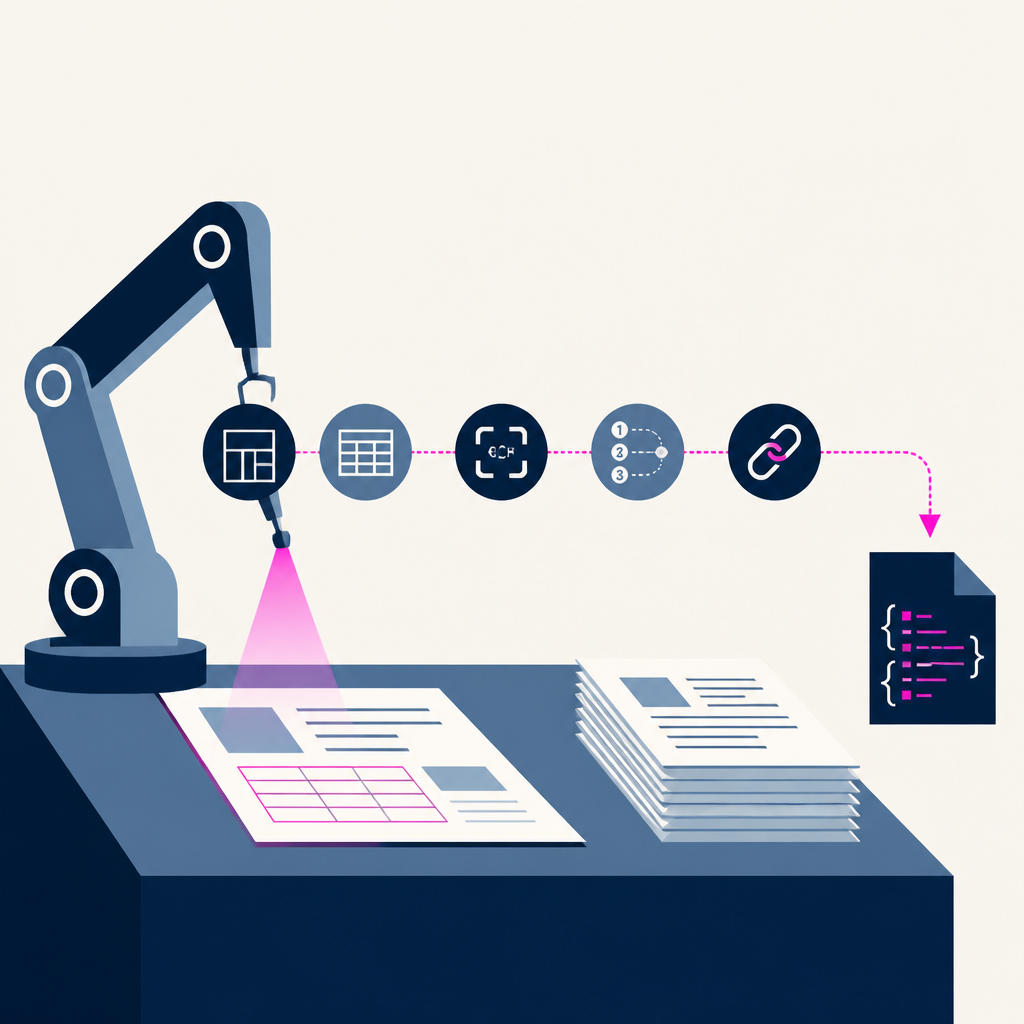
deepDoctection was used to build an end-to-end document intelligence pipeline that runs layout detection, table structure recognition, OCR, reading-order reconstruction, annotation linking, and structured JSONL export in one workflow. The tutorial targets deepDoctection version 1.2.x. It changes the output by producing Page objects plus page-level custom summaries (money mentions, date mentions, and a document “flavour” based on table coverage) that are then serialized for downstream retrieval/RAG use.
Every AI story that matters,
in your inbox by 8am.
TLDRocket reads all relevant sources, removes duplicate coverage, and summarises the
day in two minutes. Follow companies and topics for alerts, or get the
briefing in Slack. Free, no spam, unsubscribe anytime.
Reading TLDRocket needs no cookies, and the readership counts we rely on come from
our own cookieless analytics. Google Analytics is the exception: it sets cookies and
reports to Google, so it stays switched off until you allow it. You can change your
mind any time from “Cookie settings” in the footer.
Strictly necessary
Session security and form protection (tldrocket-session,
XSRF-TOKEN, 2 hours). The site cannot work without them,
so they need no consent.
Always on
Google Analytics 4 (_ga,
_ga_<id>, up to 2 years). Measures which
stories and sections readers use. Google acts as a third-party processor and may
store the data outside the EU. No advertising, no profiling, no data sold.