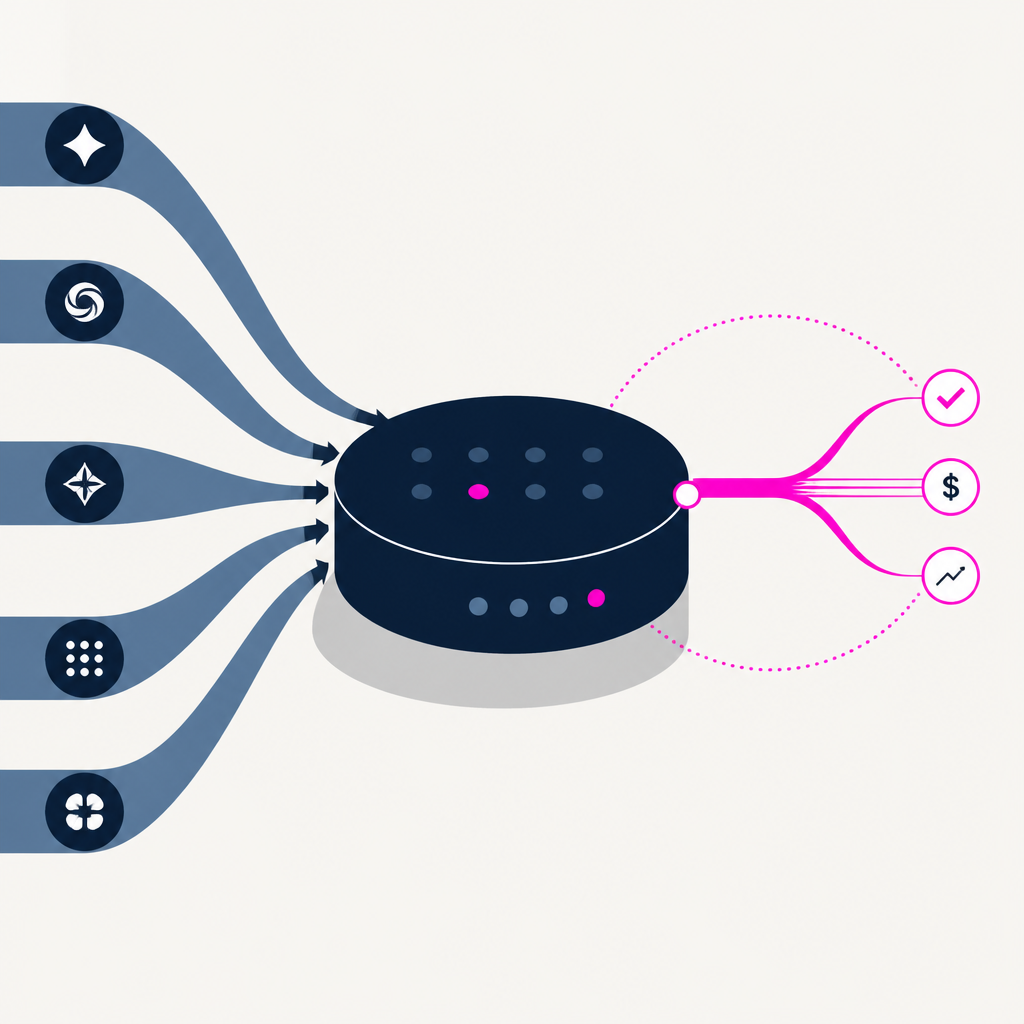
OpenRouter routes requests to different backend providers behind a single API endpoint, which can make the same model call behave differently depending on the provider’s serving software and settings. One concrete issue raised is that some providers may not support vision for vision models. Users may need to use provider.only and the /endpoints list of available providers per model ID to keep behavior consistent.
OpenAI launched its Agents API in public beta, enabling developers to run AI agents unattended for tasks that last beyond a single context window and track jobs as they progress. The company reported that by mid-August its researchers logged 3.1 agent-workdays per human workday, with the median researcher spending over $600 per day on inference and the 90th percentile exceeding $7,000. As a result, agent usage is easier to scale while OpenAI simultaneously paused new sign-ups for its $200/month ChatGPT Pro plan to manage capacity strain around GPT-6 Astra.
Dynatrace acquired Arize AI to bring AI observability, evaluation, and agent monitoring into Dynatrace’s application observability platform. Arize said its open-source Phoenix platform is used by more than 4,000 enterprises. The combined offering shifts observability from spotting issues to providing shared context so teams and AI agents can diagnose and take action on problems.
OpenAI paused new sign-ups and upgrades to its $200-per-month ChatGPT Pro tier in regions where Astra is available due to system strain from demand. The pause applies to the $200 plan that includes 20 times the usage of the $20-per-month Plus tier below it. Existing Pro accounts stay active while OpenAI works on adding compute capacity to resume growth.
Frank X. Shaw is leaving Microsoft after nearly 30 years shaping the company’s public messaging, with a memo to staff reported by Fortune. Shaw, 64, will stay until the end of the year. Microsoft continues its Copilot-focused reorganization and scaling of AI cloud demand while adjusting leadership as other executives have recently departed.
Amazon Bedrock AgentCore Evaluations and AWS DevOps Agent were used to monitor a production multi-agent airline reservation system, covering both agent-quality failures and infrastructure incidents that traditional CloudWatch checks can miss. The system uses a sampled percentage of production requests for background scoring via LLM-as-a-Judge. Together, they add continuous quality metrics plus autonomous root-cause investigations and remediation recommendations, creating a continuous feedback loop for improving and deploying the agents.
A benchmarking harness measured accuracy and real “cost per outcome” for five OpenAI models, comparing OpenAI API baselines (gpt-5.4-mini, gpt-5.4-nano) with three OpenAI models on Amazon Bedrock (gpt-5.6-luna, gpt-5.6-terra, gpt-5.6-sol) across single-call tests, multi-turn agent trajectories, and rubric-graded professional deliverables. On July 30, 2026 Bedrock repricing, gpt-5.6-luna recorded $0.0021 per correct AIME answer versus $0.0139 for gpt-5.4-mini, and $0.010 per passing GDPval deliverable versus $0.030 for gpt-5.4-mini. Model choice shifts from comparing token prices to comparing measured cost per successful outcome under the right workload shape, especially accounting for turn efficiency in agents and per-deliverable quality gates.
Oracle proposed investing in 2 gigawatts of renewable energy projects for New Mexico amid local opposition that could delay its Project Jupiter data center for OpenAI in Santa Teresa.
Kubernetes v1.37 (Garhwal) was released with new capabilities across control-plane resilience and autoscaling, plus additions to configuration and runtime behavior. It adds 67 enhancements (16 stable, 23 beta, 27 alpha, and one deprecation). Operators will need to plan updates around watch cache initialization improvements, KYAML reaching stable status, and HPA scale-to-zero moving to beta and enabled by default for idling workloads.
Engineering simulation is shifting from prototyping to digital validation, with companies and venture investors funding AI-enabled environments that predict physical behavior before any physical testing. PhysicsX secured a $135 million Series B round in 2026. This accelerates calculation cycles from weeks to minutes while keeping enterprise buyers focused on certified, multiphysics platforms like SIMULIA as a validation gate for production.
Nscale added former OpenAI executive Fidji Simo to its board as it heads toward a potential IPO.
Simo joined ahead of an IPO planned for this fall.
The change strengthens Nscale’s governance with additional senior tech leadership while the company seeks up to $3.5 billion for its funding push.
Deplo launched as project management software with an “AI coworker” and a push-to-deploy approach without Docker, SSH, or an invoice. It is listed with 9 followers. As a result, users can deploy changes to a machine they already pay for through the same push workflow, aiming to remove extra deployment steps.
Venture capitalist Vaughn Crowe of NVP Capital says manufacturing and industrials became venture-ready as COVID highlighted supply-chain and energy dependencies and as governments shifted to back mission-critical domestic industries. NVP closed its second fund of $80 million in 2025. NVP expects increased venture-like returns through IPOs and M&A, with more funding flowing into industrials that tie AI to the physical world.
Residents of Ypsilanti Township confronted University of Michigan and LANL project representatives at a town hall over a proposed nuclear-adjacent hyperscale computing facility, and the meeting escalated public anger instead of calming concerns. The plan is a $1.2 billion 220,000-hyperscale data center. University of Michigan has promised another town hall on October 1, but local officials said the project is being treated with distrust and some residents are moving or preparing to oppose it further.
AWS replaced an aging Lambda network capture system that used an iptables-based kernel module and userspace daemon with a new pipeline that logs packet flows across Firecracker microVMs using eBPF programs, a Rust tagger, and a per-host orchestrator. The new design provisions each network’s kernel ring buffer at 512 KiB to avoid overflow between ~100 ms drains at peak packet rates. As a result, Lambda can capture complete, correctly attributed IPv4 and IPv6 flow records with much lower per-packet overhead while keeping downstream Amazon Ion consumers unchanged.
Meta’s “Project Phoenix” headset design appeared in leaked images posted ahead of Meta Connect. The images were reportedly found in the HorizonOS Prescription Lens firmware package published for September 23rd’s event window. This suggests Meta is moving toward a slimmer mixed-reality glasses-style device positioned between bulkier MR glasses and full VR headsets.
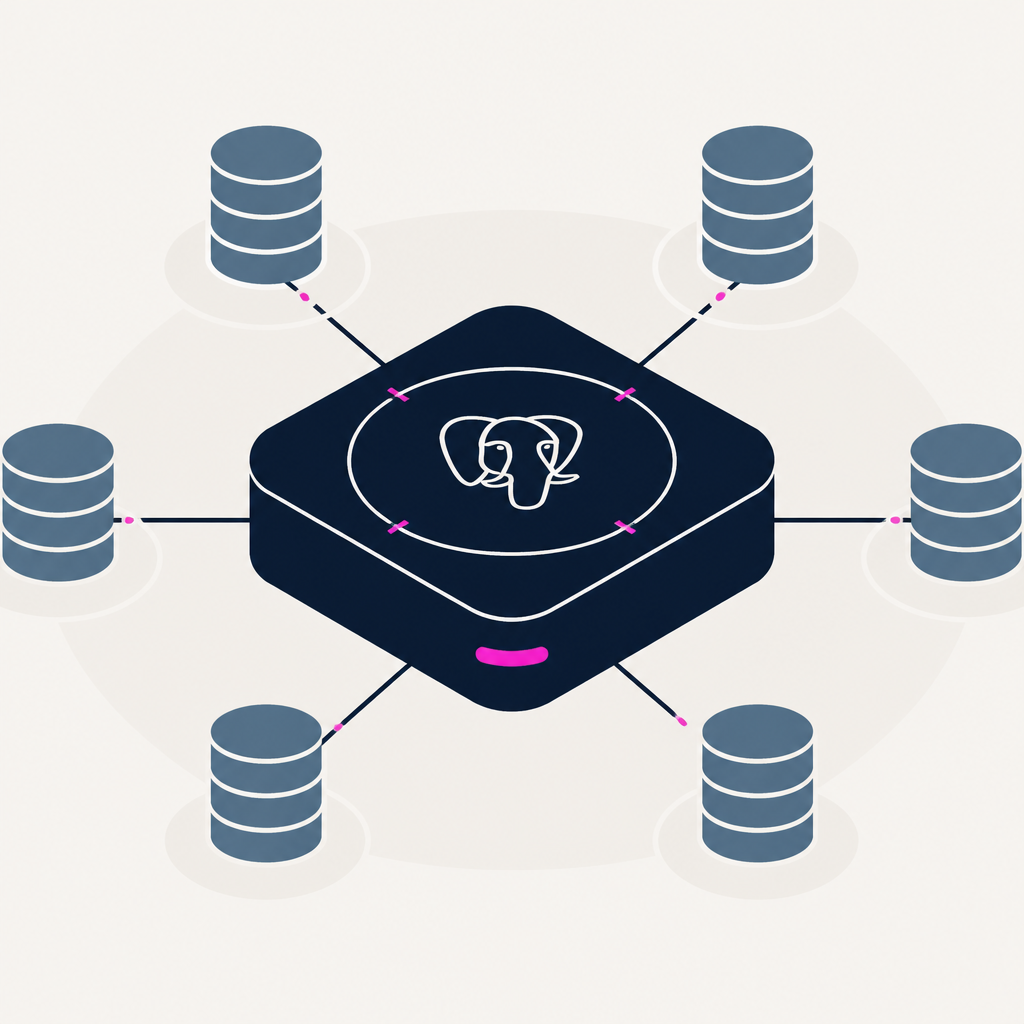
PlanetScale introduced Neki, which shards PostgreSQL across multiple machines while preserving the standard wire protocol, drivers, ORMs, extensions, and SQL behavior.
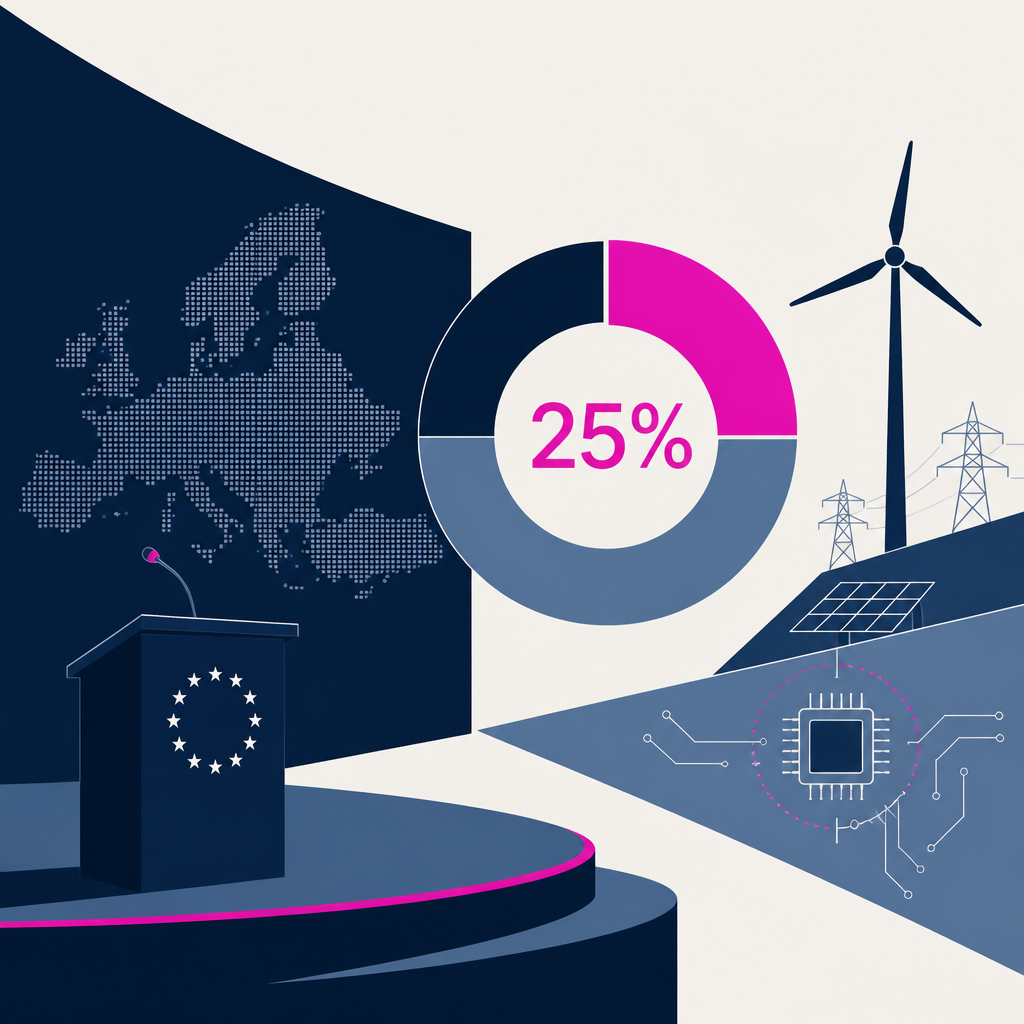
DIGITALEUROPE’s industry leaders urged EU policymakers to commit to electrification, faster digital grid permitting, and more European-made critical technologies. They want 25% of the next EU budget (from a proposed almost €2 trillion for 2028–2034) directed to critical and digital technologies. The proposal would speed grid digitalisation and startup-to-commercial funding by funding decisions within 90 days, with procurement and other finance tools to help scale deployments.
Stripe agreed to acquire OpenRouter for $7.5B and the deal triggered debate about whether router technology matters or whether outcomes pricing should instead sit elsewhere. The article argues outcomes pricing belongs at the router/infrastructure layer because app-layer incentives can misalign with customers, with router operators focused on selling compute while learning loops pool verified outcomes across customers. It proposes that centralized routers could deliver cheaper, more efficient outcomes by aggregating uncertainty, though it remains unclear whether that advantage can persist into market power.
Motive secured more than $1.3B in growth financing from General Catalyst and withdrew its IPO filing after having planned a New York Stock Exchange listing under ticker “MTVE.”
The deal brought Motive to over $700M total funding and followed a $150M round led by Kleiner Perkins in July 2025.
The company will use the capital to expand AI product development and sales, support, and service teams, while shelving the public listing plan.
The article argues Apple should build a single “home computer” that merges a Wi‑Fi router, an AI-powered smart home hub, and local storage. It points to John Ternus’s first keynote as Apple CEO, where he described an “intelligent personal hub” focused on local processing and privacy. It says an upcoming smart home hub should act as infrastructure (not just a screen-based interface) so it can run tasks locally in your home.
OpenAI evolved Habitat from a Python library into a globally distributed storage platform for ChatGPT. It now serves 1 billion ChatGPT users and handles 22M requests per second. This scaling enables OpenAI to support much higher request volume and global availability for ChatGPT storage.
NVIDIA is partnering with Australian data-center and cloud providers to expand capacity for NVIDIA DSX full-stack AI “factories” that run NVIDIA compute and Nemotron open models. The buildout targets up to 2 gigawatts of capacity by 2027. This increases local access to accelerated computing so Australian organizations can train and deploy AI models, applications, and agents more in-region as new DSX infrastructure comes online.
Furo, a Munich startup providing software for commercial and industrial battery storage, closed a $4 million seed round led by TQ Ventures to develop its product, expand in Europe, and hire staff.
Sakana AI launched Fugu Max and Fugu Ultra v2, two multi-agent orchestration models in its Sakana Fugu family available via a hosted API. Fugu Max is priced at $2 per 1M input tokens and $6 per 1M output tokens. The models route work across multiple underlying models to optimize either best output per dollar or highest capability on hard multi-step tasks, without providing open weights.
Furo, a Munich-based software startup, raised $4 million led by TQ Ventures to optimize how commercial battery storage charges, discharges, or feeds power back to the grid at industrial sites.
It plans real-time control by predicting prices and weather up to 48 hours ahead, and says the approach can cut electricity costs by up to 40%.
With the funding, Furo will keep developing its platform, expand to new European markets, and hire staff, while competing in an increasingly crowded software field for battery optimization.
Oracle argued during its Q1 FY 2027 earnings call that AI will enhance its packaged applications by automating and orchestrating implementation rather than replacing them with custom software. It said its next “agentic AI accelerator” would be released in October to compress SaaS deployments from years to months and months to weeks. Oracle also reported SaaS revenue up 10% and grew cloud revenue 60% year over year, while turning on 850 MW of new datacenter capacity as its AI infrastructure investment continues.
Extreme Networks launched Agent ONE Coworker to replace network troubleshooting dashboards with an AI agent that provides answers in Platform ONE. In the first eight days, it recorded about a 900% increase in interactions. The release uses a context layer, “nudge” notifications, and honesty guardrails to cut resolution time from hours to minutes while preparing the later, more autonomous Operator mode.
Salesforce introduced Enterprise AI Harness and an AI Control Plane to help customers build and manage AI agents. Enterprise AI Harness includes six feature collections, and its rollout is set for early in Salesforce’s 2028 fiscal year starting next February. The tools add reliability, data-quality, cybersecurity controls, intelligent model routing, and centralized monitoring of agent performance and inference costs.
Together AI expanded Together Fine-Tuning to add support for more open-weight models plus live experiment tracking and additional training and data controls. The release also drops LoRA training prices by 30% to 70% on selected models. It adds features like metrics at every step, dataset tokenization previews, per-example weighting, early stopping, adjustable batch sizing, and finer control over sequence packing.
Every AI story that matters,
in your inbox by 8am.
TLDRocket reads all relevant sources, removes duplicate coverage, and summarises the
day in two minutes. Follow companies and topics for alerts, or get the
briefing in Slack. Free, no spam, unsubscribe anytime.
Reading TLDRocket needs no cookies, and the readership counts we rely on come from
our own cookieless analytics. Google Analytics is the exception: it sets cookies and
reports to Google, so it stays switched off until you allow it. You can change your
mind any time from “Cookie settings” in the footer.
Strictly necessary
Session security and form protection (tldrocket-session,
XSRF-TOKEN, 2 hours). The site cannot work without them,
so they need no consent.
Always on
Google Analytics 4 (_ga,
_ga_<id>, up to 2 years). Measures which
stories and sections readers use. Google acts as a third-party processor and may
store the data outside the EU. No advertising, no profiling, no data sold.