Google launched Gemini 3.8 Flash, claiming it performs more reasoning steps and uses iterative tool calls compared with Gemini 3.7 Flash. Pricing starts at $0.75 per million input tokens and $3.75 per million output tokens, but Google warns it may use more tokens at higher effort levels. Developers can stay on Gemini 3.7 Flash to minimize token usage.
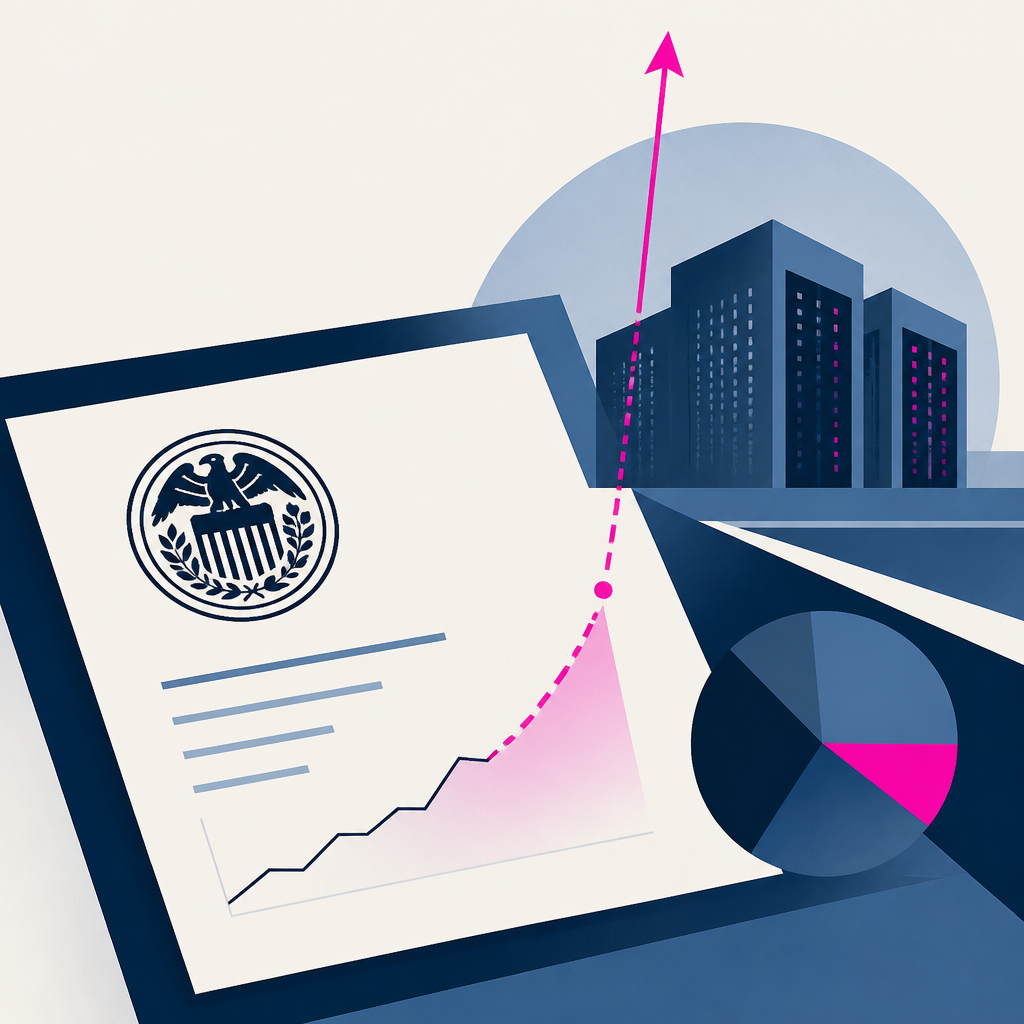
Federal Reserve Bank of Chicago CEO Austan Goolsbee warned that AI-driven data center expansion could soon contribute to “aggregate overheating” by crowding out spending and inputs from other parts of the economy. He said he’s “not far” from that outcome turning into aggregate overheating, with AI-related capex growth expected to peak in Q4 2026. As a result, AI is becoming a larger political and economic wedge issue around resource costs and hiring, even as AI-linked investment continues to boost GDP and certain stock sectors.
Anthropic updated its Claude Fable 5 agent model (Fable 5.1) by cutting repeated-context costs and easing some safety interrupts. Cache reads now cost $0.25 per million tokens after a 75% reduction. As a result, long-running coding and agent workflows are cheaper and experience fewer safeguard interruptions, with partner reports citing large task-completion gains.
Loudoun County, Virginia, built its economic recovery strategy around attracting data centers after earlier tech booms left behind vacant infrastructure, and it has since become highly visible as “Data Center Alley.” In 2024, data center tax revenue exceeded the county’s operational budget by $35 million. As generative-AI demand expands the US buildout from existing 3,000 operating centers and 1,500 under development, Loudoun and other communities are seeing louder opposition and more political pushback against further expansion.
Every AI story that matters,
in your inbox by 8am.
TLDRocket reads all relevant sources, removes duplicate coverage, and summarises the
day in two minutes. Follow companies and topics for alerts, or get the
briefing in Slack. Free, no spam, unsubscribe anytime.
Reading TLDRocket needs no cookies, and the readership counts we rely on come from
our own cookieless analytics. Google Analytics is the exception: it sets cookies and
reports to Google, so it stays switched off until you allow it. You can change your
mind any time from “Cookie settings” in the footer.
Strictly necessary
Session security and form protection (tldrocket-session,
XSRF-TOKEN, 2 hours). The site cannot work without them,
so they need no consent.
Always on
Google Analytics 4 (_ga,
_ga_<id>, up to 2 years). Measures which
stories and sections readers use. Google acts as a third-party processor and may
store the data outside the EU. No advertising, no profiling, no data sold.