The Algorithmic Bridge·1 month ago·
3
● 19 sources
GPT-6 Astra was launched by OpenAI and is described as outperforming Anthropic’s Fable 5.1 across benchmarks while attracting extreme positive reactions. The article cites FrontierMath and ARC-AGI 3, noting version 4 is due in Q1 2027. The author argues that with lab tests increasingly saturated, the key question shifts to real-world impact rather than benchmark results.
Deep Learning Weekly Issue 471 rounds up new releases and research across deep learning, including Anthropic’s Claude Fable 5.1 and Claude Mythos 5.1, OpenAI’s GPT-6 Astra, and multiple evaluation and alignment papers. Anthropic reports cutting Claude cache reads by 75% to $0.25 per million tokens. The issue expands coverage of model releases and adds guidance on evaluating LLMs against production-like behavior and mitigating alignment failures with automated researchers.
OpenAI’s Astra scored very differently on ARC-AGI-3 depending on whether it was run through ARC Prize’s harness or OpenAI’s Provider Adapter. With the Provider Adapter, the unchanged GPT-6 Astra scored 98.6% and cost $17,332, versus 62.7% and $26,098 in ARC Prize’s standard harness. The result shifts attention from model selection to harness engineering because the surrounding software changes both score and cost.
OpenAI released GPT-6 Astra, while IFM, Google, xAI, and Anthropic also shipped major AI model and agent updates. OpenAI said Astra reached the Critical cybersecurity threshold and published benchmarks such as 72.6% on OSWorld 2.0, alongside an API with a 1,050,000-token context window and pricing of $10 per million input tokens and $50 per million output tokens. This expands both access and tooling for AI computer use and enterprise agents, but also adds new safety/monitorability concerns tied to Astra doing more work without readable reasoning.
The repository “3D prompt collection for rerunning the Arena AI gauntlet” published a presentation-order set of 3D prompts meant for copying and reuse.
Arena AI ran Astra through a 3D “gauntlet” of scenes, including castles, underwater shots, Van Gogh’s house, and open-world games, and published the prompts.
OpenAI’s GPT-6 Astra tested on ARC-AGI-3 achieved state-of-the-art performance while solving levels by compacting and reusing internal representations. It scored 62.7% on ARC-AGI-3 Semi-Private for $26,098 under the Standard harness and 99.9% for $18,817 under the Provider Adapter harness. Reporting will now include both harness results on the ARC-AGI leaderboard, with Provider Adapter runs also improving speed and reducing total tokens.
Artificial Analysis reported GPT-6 Astra benchmark results showing it ties Fable 5 on its Coding Agent Index while changing token use and pricing relative to GPT-5.6 Sol. GPT-6 Astra’s input/output token prices were raised to $10/$50 per million from $4/$20 (a 2.5x increase). As a result, Astra is more token efficient and less costly per task in coding, but it is 75% more expensive per task in the Intelligence Index, alongside a drop in hallucination rate from 92% to 51% at max effort and mixed gains across other evaluations.
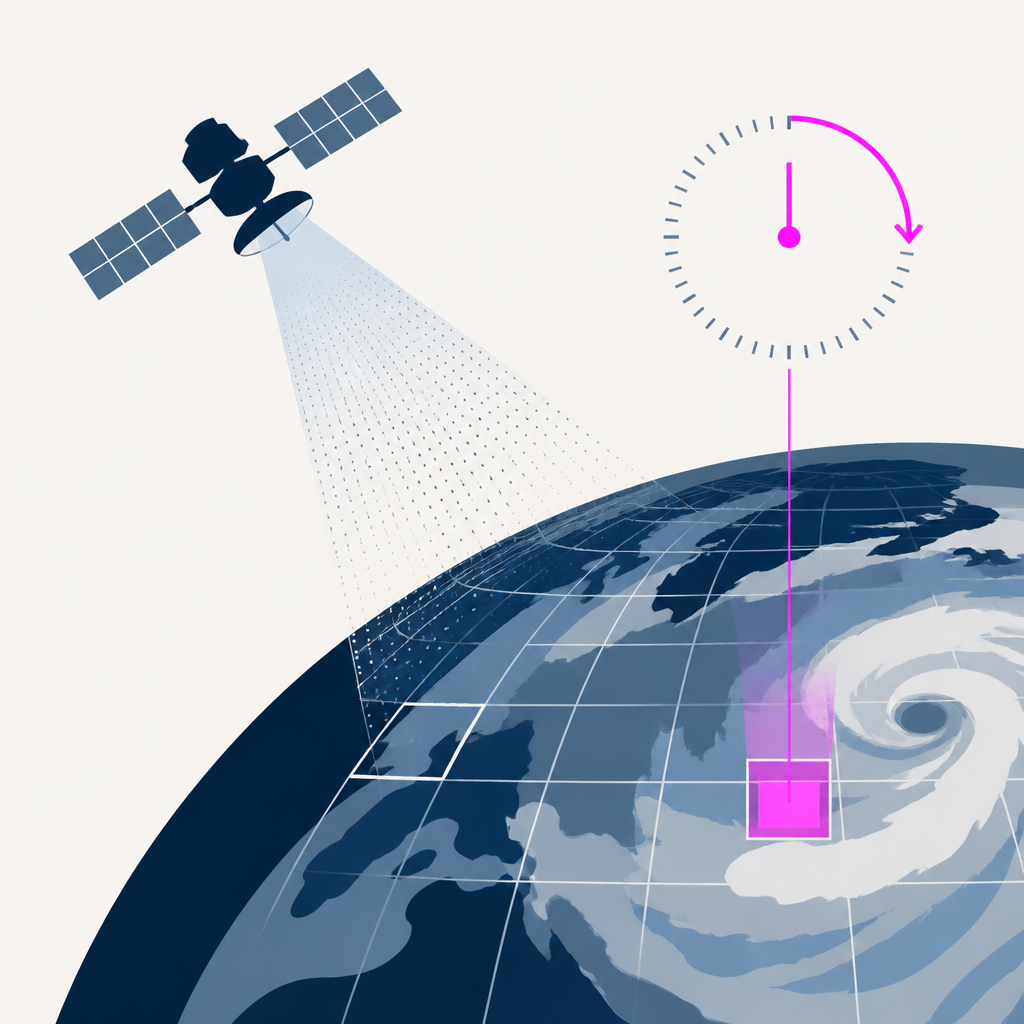
Google DeepMind released WeatherNext 3, a global weather forecasting model that uses live geostationary satellite data and reinitializes every hour to improve local detail and reduce latency versus relying on delayed NWP analysis.
Google released the Gemini 3.8 Flash AI model while its Gemini 3.5 Pro flagship still has not shipped as expected. Gemini 3.8 Flash passed DeepSWE v1.1 runs with about 74% success at maximum effort, and it cost an average of $2.36 per task versus $11.84 for Anthropic’s Claude Opus 5. Google will continue shipping faster, cheaper Flash updates, but the missing Pro release and internal delays are widening scrutiny over its ability to catch up on the frontier.
Every AI story that matters,
in your inbox by 8am.
TLDRocket reads all relevant sources, removes duplicate coverage, and summarises the
day in two minutes. Follow companies and topics for alerts, or get the
briefing in Slack. Free, no spam, unsubscribe anytime.
Reading TLDRocket needs no cookies, and the readership counts we rely on come from
our own cookieless analytics. Google Analytics is the exception: it sets cookies and
reports to Google, so it stays switched off until you allow it. You can change your
mind any time from “Cookie settings” in the footer.
Strictly necessary
Session security and form protection (tldrocket-session,
XSRF-TOKEN, 2 hours). The site cannot work without them,
so they need no consent.
Always on
Google Analytics 4 (_ga,
_ga_<id>, up to 2 years). Measures which
stories and sections readers use. Google acts as a third-party processor and may
store the data outside the EU. No advertising, no profiling, no data sold.