The term "agent readiness" has become a industry buzzword bundling together two separate problems—discovery (whether AI apps like ChatGPT recommend your site) and usability (whether agents can actually perform tasks on your site)—yet most readiness scores conflate them into single numbers. Ahrefs found that llms.txt, promoted as essential, is ignored 97% of the time, and meaningful AI traffic comes almost entirely from four platforms: ChatGPT, Gemini, Claude, and Perplexity. Websites should optimize for what these dominant platforms actually measure and support rather than chasing abstract standards and weekly protocol updates.
A team built a persistent memory system for AI agents using Elasticsearch with three separate indices for episodic (timestamped events), semantic (stable facts), and procedural (step-by-step playbooks) memories, combined with hybrid retrieval using BM25 and dense vectors plus a cross-encoder reranker. The system achieved 0.89 recall@10 on a 168-question evaluation with zero cross-tenant data leaks, using per-user document-level security to isolate each user's memories. The architecture consolidates short-lived episode logs into durable facts and playbooks every turn, handles contradictions through supersession rather than deletion, and applies time-decay so recent information ranks above older facts.
Clear is a programming language that combines specification and implementation in a single file to eliminate documentation drift, designed for both AI agents and human developers to understand and execute.
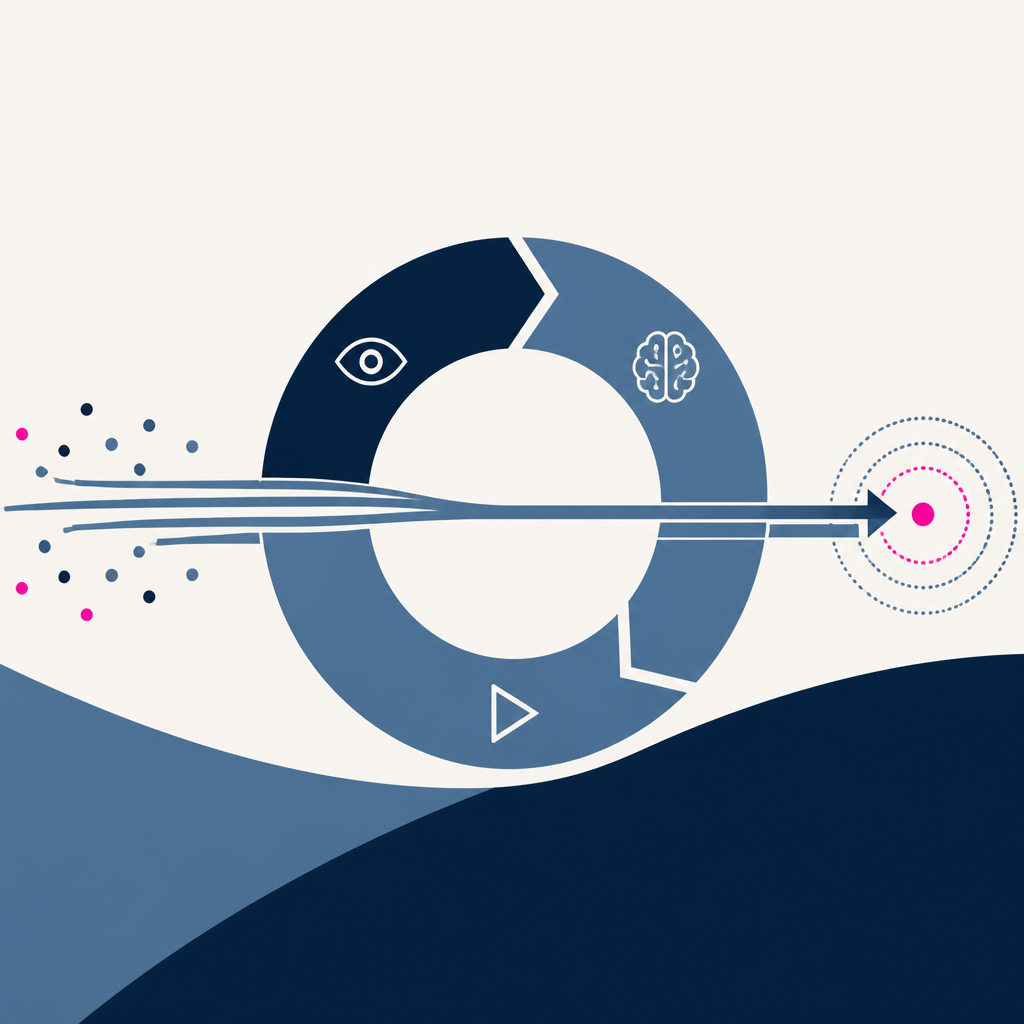
An article explains the agent loop architecture, a framework for autonomous AI agents where loops handle perception, reasoning, and action cycles. The piece identifies common failure points in these loops and discusses how agents can develop their own skills through iterative processes. Durable orchestration emerges as a critical requirement for maintaining reliable agent loops over time.
Every AI story that matters,
in your inbox by 8am.
TLDRocket reads all relevant sources, removes duplicate coverage, and summarises the
day in two minutes. Follow companies and topics for alerts, or get the
briefing in Slack. Free, no spam, unsubscribe anytime.
Reading TLDRocket needs no cookies, and the readership counts we rely on come from
our own cookieless analytics. Google Analytics is the exception: it sets cookies and
reports to Google, so it stays switched off until you allow it. You can change your
mind any time from “Cookie settings” in the footer.
Strictly necessary
Session security and form protection (tldrocket-session,
XSRF-TOKEN, 2 hours). The site cannot work without them,
so they need no consent.
Always on
Google Analytics 4 (_ga,
_ga_<id>, up to 2 years). Measures which
stories and sections readers use. Google acts as a third-party processor and may
store the data outside the EU. No advertising, no profiling, no data sold.