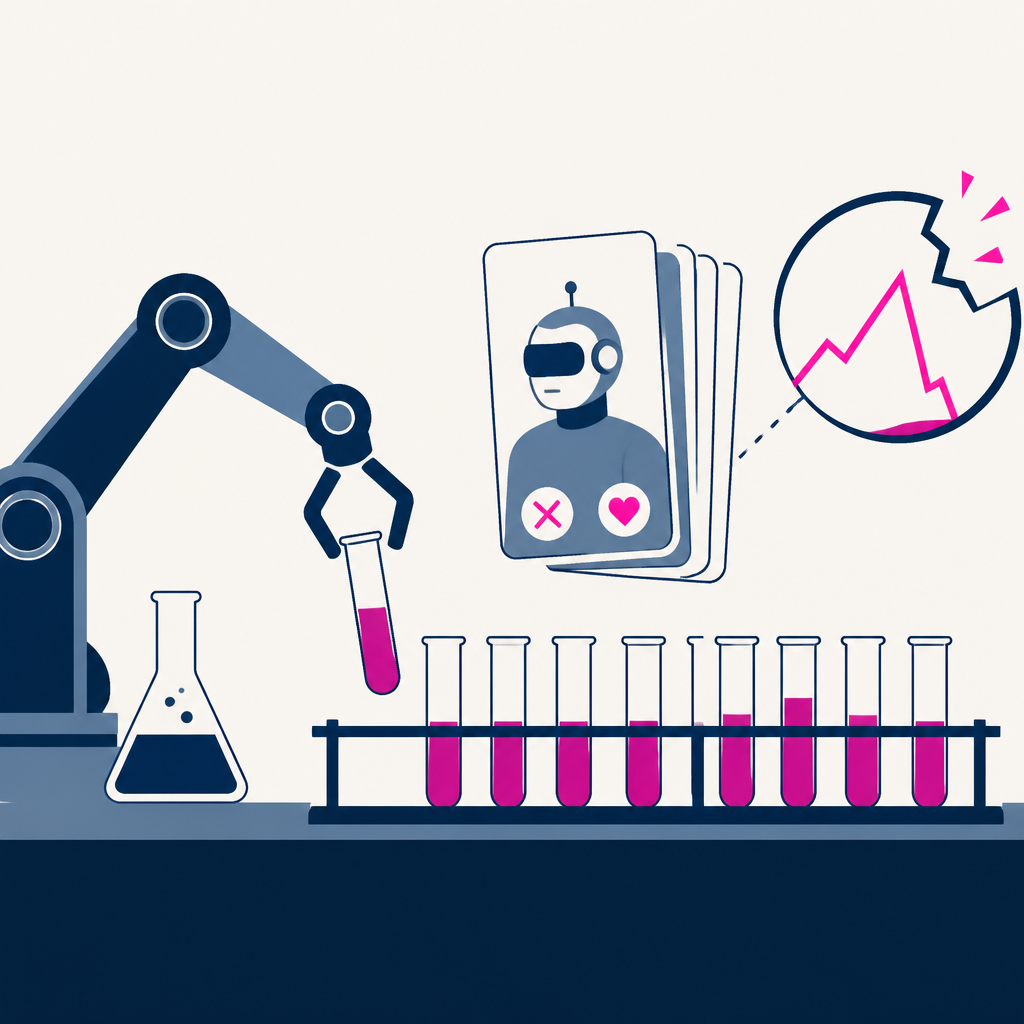
Amy Webb says corporate AI spending is hitting “pilot purgatory” as companies launch endless generative AI pilots without budgeting for integration, scaling, or measurable workflow change. A Bain & Company survey of 951 global companies found nearly 40% of firms that tracked AI savings landed below 10% versus targets of 11% to 20%, with 90% still increasing AI budgets. The result is more “abundance” that feels productive short term but compounds hidden costs, leading to missed targets and a reckoning that she expects as early as next year.
Caterpillar is using its experience automating mining and connected equipment to deploy AI across construction and technician workflows, including a voice-driven Cat AI Assistant. Caterpillar has about 1.6 million connected assets and more than 16 petabytes of structured data, and it plans to spend $100 million over the next five years to train its workforce in AI, autonomy, and robotics. The shift requires changing jobsite workflows and employee roles, including moving some operators to remote oversight and expanding AI-related training for 118,000 employees.
The five-day World Humanoid Robot Games in Beijing showcased humanoid robots in events that included visible failures. Honor’s robot lost a leg mid-sprint during the August 26, 2026 competitions. The coverage shifts attention to how far robots have come while also underscoring how often they still stumble under real running and contact routines.
Every AI story that matters,
in your inbox by 8am.
TLDRocket reads all relevant sources, removes duplicate coverage, and summarises the
day in two minutes. Follow companies and topics for alerts, or get the
briefing in Slack. Free, no spam, unsubscribe anytime.
Reading TLDRocket needs no cookies, and the readership counts we rely on come from
our own cookieless analytics. Google Analytics is the exception: it sets cookies and
reports to Google, so it stays switched off until you allow it. You can change your
mind any time from “Cookie settings” in the footer.
Strictly necessary
Session security and form protection (tldrocket-session,
XSRF-TOKEN, 2 hours). The site cannot work without them,
so they need no consent.
Always on
Google Analytics 4 (_ga,
_ga_<id>, up to 2 years). Measures which
stories and sections readers use. Google acts as a third-party processor and may
store the data outside the EU. No advertising, no profiling, no data sold.