Why the AI economy is like a bad dating app — drowning in decks, pilot purgatory — and it's playing out like the dotcom bubble, except worse
Fortune Nick Lichtenberg
CEOs are pouring money into AI pilots, but the bills keep growing. Amy Webb says the real trap is endless experiments that never turn into working products.
Based on reporting by Fortune, Nick Lichtenberg — read the original for the full story.
Summary, retelling and take written by AI under human oversight; images are AI-generated illustrations. How we work · Report an error
Amy Webb thinks corporate AI is headed for a reckoning, and not the neat, market-chart kind. The founder of Future Today Strategy Group says executives are buying the promise of abundance while ignoring what it costs to turn that promise into something usable inside a company. AI, in her view, makes production cheaper and everything around it more expensive. That’s the uncomfortable part.
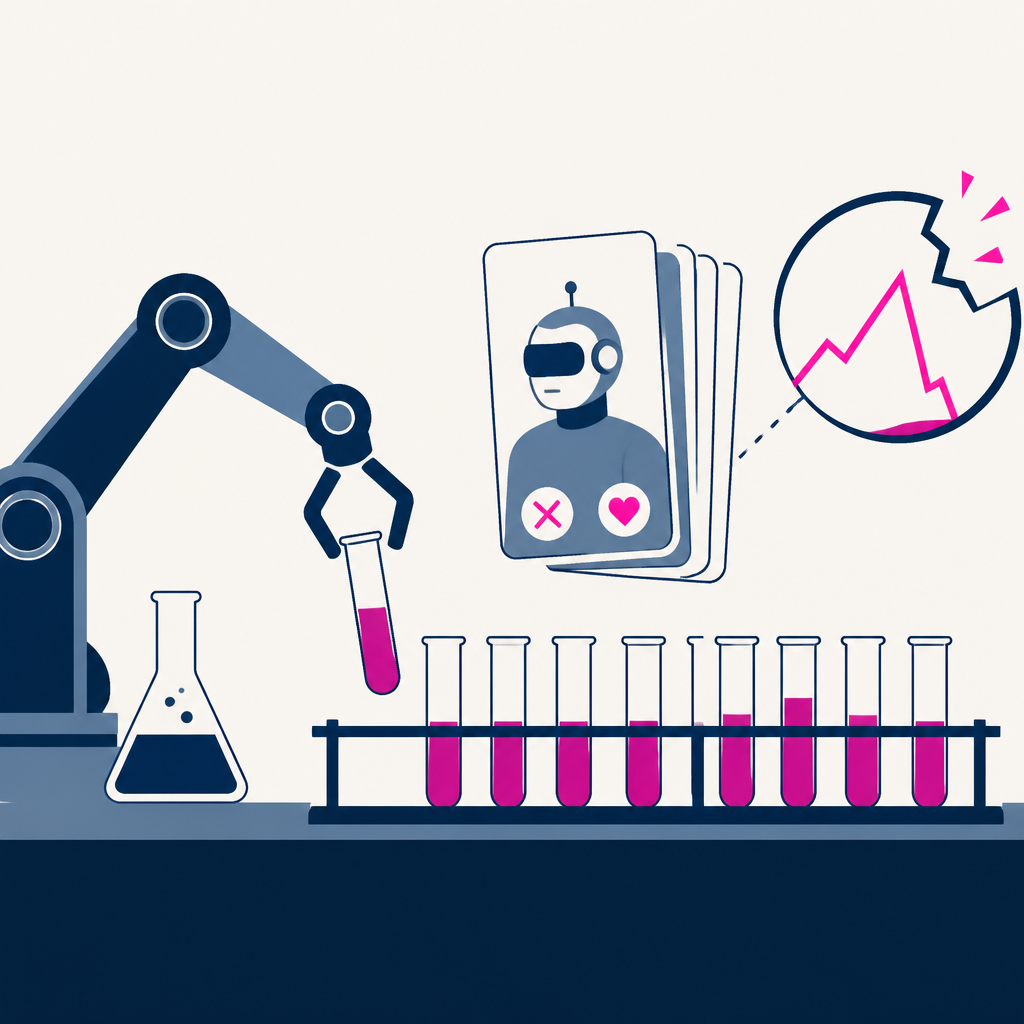
Webb, who talks to 100 to 150 CEOs a year, keeps hearing the same story: endless pilots, lots of excitement, not much to show for it. She calls it “pilot purgatory.” One client, she said, ran 14 or 15 generative AI and agent pilots since the start of the year, using the two-pizza rule for small teams, and none of them scaled. The problem is familiar enough to anyone who has watched a company reboot the same experiment over and over: the pilots don’t get wired into legal, IT, or the company’s core systems, so every attempt starts from scratch.
The numbers line up with the mood. A Bain & Company survey of 951 global companies, published in June, found that nearly 40% of firms that tracked AI savings came in below 10%, even though they had aimed for returns of 11% to 20%. And yet 90% said they were increasing AI budgets anyway. That is the whole weirdness of the moment: spending rises even when the savings disappoint.
Webb also says companies are drowning in the byproducts of all this machine help. Executives tell her their direct reports are stuck in decision paralysis because they are buried in analysis. Others complain about “insta-decks,” where presentations that once took a week now take a day, only for five times as many to show up. Claude, she added, has a verbosity problem. So the output grows, the thinking doesn’t, and nobody seems to be the person assigned to harvest the gains.
She expects the first cracks as early as next year, when Wall Street starts asking where the measurable results are. But she doesn’t think this is just a repeat of the dotcom bust. Her point is harsher: AI isn’t only inflating a bubble, it may also be pushing companies into strange choices they don’t really understand.
My take — AI-written commentary, not fact-checked reporting
This is the part of the AI boom that deserves less applause and more accounting. Companies are mistaking activity for progress, which is a very expensive hobby. The real tell is that the people ordering the tools are still waiting for someone else to explain what to do with the time they supposedly saved.
Read more about this at: Fortune