Mycel launched as an AI workflow automation product for service businesses that handles client deliverables, approvals, invoices, and related work. Pricing starts at $299/mo, with a self-host option that is free. It works in disposable sandboxes and restricts client-facing output until you approve it.
Apple’s CEO transition moved leadership from Tim Cook to John Ternus, after Cook stepped down this week. His first memo promised a “huge launch next week,” likely before he has settled in. As Executive Chairman, Cook will focus on policy relationships, while the podcast argues Ternus may prioritize software progress more than hardware in the AI era.
Enterprise AI adoption is lagging behind industry hype as organizations struggle with infrastructure modernization, cost control, and picking suitable AI use cases. Most agentic applications David Linthicum sees do not need an agent-based architecture, estimating that 95% don’t. As a result, companies are shifting from early experiments to more controlled deployments while exercising restraint on autonomous agents and focusing on readiness rather than broader rollout.
European tech funding slowed in August, with companies raising €3.2 billion across 165 deals. Deal volume dropped from 267 rounds in July to 165 in August. As a result, total funding fell about 63% and deal count fell about 38%, even while AI led sector funding and UK led fundraising.
1st Formations analysed 108,851 UK company incorporations from 2024 to 2025 and found entrepreneurs are shifting toward industrial and specialist sectors despite a 7% year-on-year drop in total incorporations in 2025. Company names containing “AI” rose from 153 in 2024 to 301 in 2025, reflecting more AI-focused branding. Overall company formation becomes more concentrated in areas like advanced manufacturing and technology, with founders aligning new ventures to long-term structural demand and policy growth support.
Workers’ share of U.S. income has fallen to its lowest level on record even before an anticipated AI productivity boom starts. Labor’s share dropped to 52.8% and margins reached a record 14.9% of GDP. Analysts say productivity gains have protected corporate margins rather than labor income, so labor’s share may keep falling as AI-related capital spending concentrates benefits.
Hong Kong-based Votee AI and other regions are building “sovereign AI” systems to avoid reliance on U.S.- or China-based AI and to cover local languages and needs.
EY-Parthenon economist Gregory Daco warned that AI-driven productivity gains will likely lead to a winner-takes-all economy where firms capture the benefits rather than workers. He pointed to margins reaching 14.9% of GDP alongside a labor share of 52.8%, the lowest since 1947. As a result, productivity is expected to support profits while income and labor’s share come under pressure, with concentration increasing rather than gains spreading broadly.
Apple replaced Tim Cook as CEO with John Ternus at a time when the company is under pressure to define its artificial-intelligence strategy amid slowing growth and other operational challenges. The transition is scheduled to play out at Apple’s Sept. 9 product event. With Ternus in charge, Apple’s leadership and product direction are expected to shift toward more investment and more prescriptive device and user-interface design to better compete in the AI era.
A frontend developer argues that AI coding agents are reducing demand for traditional frontend education and shifting focus from web fundamentals toward agent-friendly outcomes like performance and “here are these emerging capabilities.” The piece singles out Chrome DevTools’ “Selector Stats” feature as a key measurement step for high “Recalculate Style” trace costs. As a result, frontend training priorities may move from developer-experience topics to teaching how to optimize traces, build sites that work with agents, and cover new capabilities rather than evergreen syntax.
The article argues that AI will not simply make everyone a tool-builder because software creation does not translate directly into personal empowerment.
It says the key challenge is choosing the right tool for a specific task and defining what it should do.
As a result, the focus shifts from expecting widespread DIY tool-building to improving how tasks are matched with well-specified tools.
Meta’s Project OT planned to reorganize the company around AI work, including major layoffs and shifting engineers into AI training tasks. The plan would have reduced existing teams by 60% but Zuckerberg canceled the November cuts at the last minute after a 10% layoff. As a result, some teams still saw 30-40% reductions and engineers were reassigned to AI labeling, contributing to lower morale and execution problems.
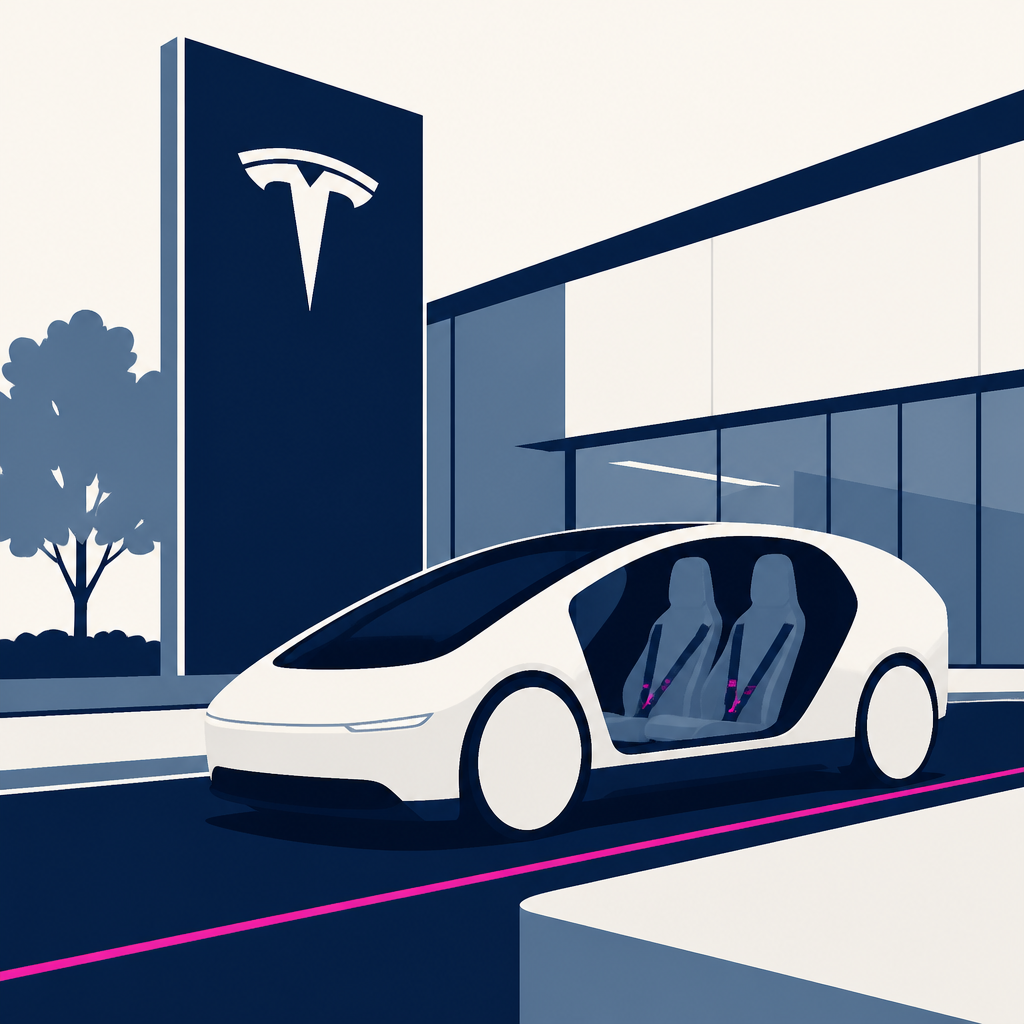
OpenAI has started offering rides in its Cybercab robotaxis, a two-seat vehicle with no steering wheel and no direct human intervention. Tesla is authorized to operate 314 vehicles in Texas for paid rides. Paid passenger service begins under this authorization for the steering-wheel-free robotaxi.
Chinese banks, cafes, and telecom operators are rolling out free or discounted AI tokens to attract customers, extending tokenized AI usage beyond tech apps. Daily token consumption in China jumped to 500 trillion in mid-2026 from 100 billion in early 2024. Token access is shifting into consumer products such as credit-card rewards, mobile-data-style plans, free restaurant/cafe “computing” vouchers, and even token-based loan sizing by banks.
Food brands are using AI-generated images to promote menu items, producing surreal and often unappetizing visuals (including clearly weird dishes). One notable concrete detail is the repeated mention of “holes” in the described burger image. As a result, the marketing imagery shifts from recognizable food photos to distorted, uncanny illustrations that can undermine audience trust and appetites, which the article treats as trivial but notable.
Ugreen launched its HomeAgent smart home platform at IFA to combine local storage, on-device AI, and smart home control in one hub. The system is offered in three hub configurations. This adds a local-first AI brain and the Uliya voice assistant for natural-language control of your devices and camera storage.
Every AI story that matters,
in your inbox by 8am.
TLDRocket reads all relevant sources, removes duplicate coverage, and summarises the
day in two minutes. Follow companies and topics for alerts, or get the
briefing in Slack. Free, no spam, unsubscribe anytime.
Reading TLDRocket needs no cookies, and the readership counts we rely on come from
our own cookieless analytics. Google Analytics is the exception: it sets cookies and
reports to Google, so it stays switched off until you allow it. You can change your
mind any time from “Cookie settings” in the footer.
Strictly necessary
Session security and form protection (tldrocket-session,
XSRF-TOKEN, 2 hours). The site cannot work without them,
so they need no consent.
Always on
Google Analytics 4 (_ga,
_ga_<id>, up to 2 years). Measures which
stories and sections readers use. Google acts as a third-party processor and may
store the data outside the EU. No advertising, no profiling, no data sold.