Anthropic released research mapping three scenarios for how AI could affect the U.S. economy, alongside an interactive model for testing assumptions about adoption and worker displacement. One scenario projects GDP growth of 15% a year, which would double the economy every 4.5 years. The work frames AI’s economic outcome as uncertain and shifts focus to adoption speed and demand, while critics argue the dramatic growth math requires multiple unlikely conditions to go right.
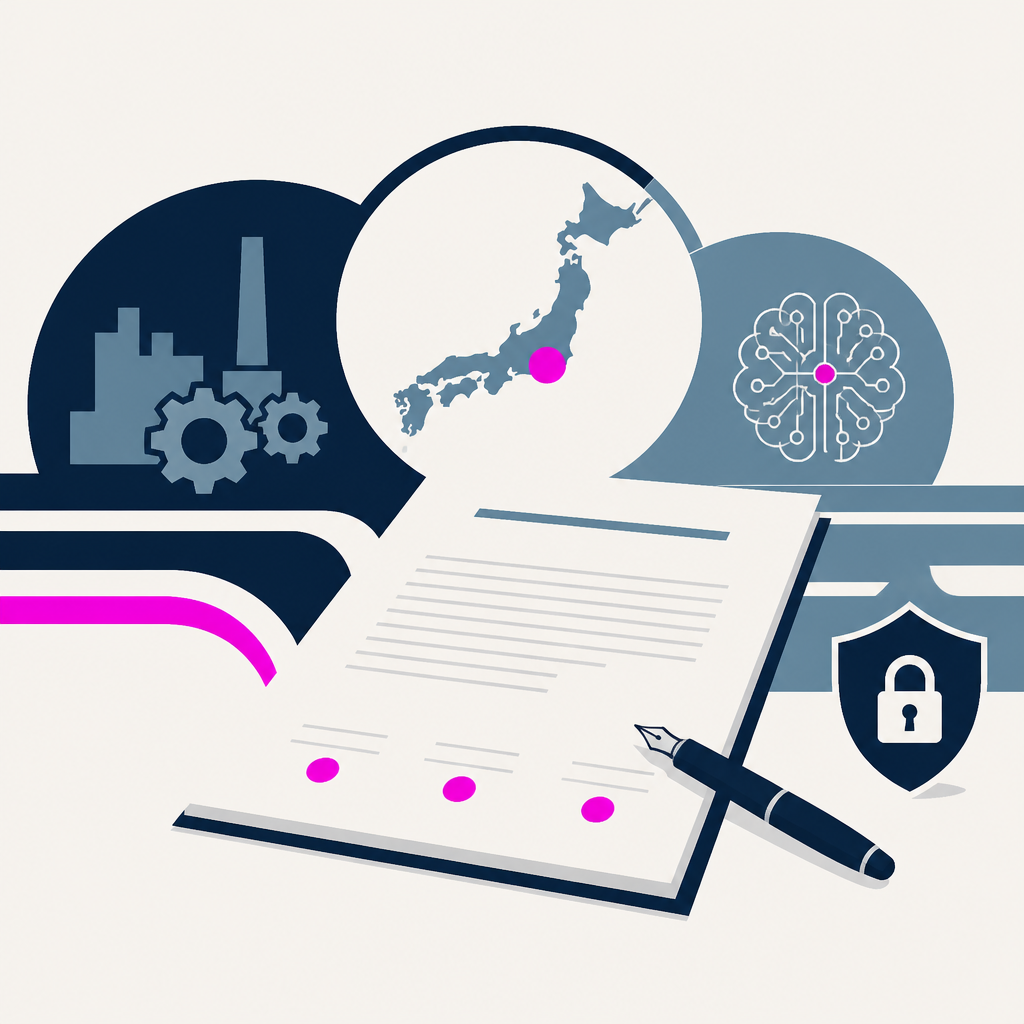
Sakana AI, SC SK, and Sumitomo Corporation agreed to a comprehensive business partnership to support Japanese industrial transformation and solve social issues via AI use. The partnership will start with real enterprise cases that require strict reliability, quality, and information security, covering AI application PoCs and production-ready design, implementation, and operations. The three companies will jointly push customers from problem definition through technical evaluation, real-world deployment, impact verification, and continuous improvement, and will also explore an AI-orchestration-model-based service for vulnerability diagnosis to fixes in cybersecurity.
Tech companies have pushed into classrooms with their own coding-and-AI learning pitches, extending influence over school curricula rather than just providing optional resources. The New York Times reporter Natasha Singer traces this strategy back 15 years in her book, Coding Kids. As a result, schools are increasingly shaped by industry-backed “catch up” programs on how students should learn to use these tools.
Sage reported that Midlands SMEs are growing faster than the rest of the UK on profitability based on anonymised SME accounting data. East Midlands businesses saw profit growth of 18.8% in the year to Q2 2026, versus a 5.3% national average. The focus shifts to which regions and firms are sustaining stronger performance, alongside continued uptake of digital tools including AI.
The article argues that today’s debate over AI-assisted writing mirrors ancient Greek arguments about writing as both memory aid and forgetfulness. It points out that Associated Press automation in 2014 grew formulaic corporate earnings coverage from about 300 companies per quarter to 4,400. The change it describes is that newsrooms and other institutions now need to decide what they will give up—human judgment and disclosure—when they adopt generative AI tools.
Virgil Miller, president of Aflac, argues that people should use AI to support healthcare decisions but not replace physician care or in-person screening. The article cites a study that found 76% of Gen Z and 63% of millennials use AI as their first source for primary healthcare before seeing a doctor. It shifts the message from getting medical information from AI toward taking action with doctors, screenings, and trusted encouragement to close the gap in delayed care.
Andela analyzed 47,000 engineering job postings from Fortune 500 companies to identify emerging engineering roles shaped by AI adoption. More than 2,000 skills were mapped into 23 new job titles, with 53% of 1,832 AI/ML engineer postings combining skills from at least two established roles. Companies respond by replacing generic AI/ML titles with more specific, outcome-focused role descriptions tied to delivering AI through the software lifecycle.
Spain’s top-funded tech companies raised about €1.7 billion in H1 2026, with fundraising concentrated in a small set of leading firms. The ten biggest rounds together made up about 68% of the total funding. The mix of industries receiving the most capital included space (~€354.3M), travel (~€266.1M), medical/healthcare (~€195.1M), and artificial intelligence (~€150.9M), alongside funding across early and later stages and debt financing (~19%).
Universal Music Group is launching an AI-powered platform that lets users create remixes, mashups, and new takes using music from its licensed catalog. The rollout is being developed under a multiyear licensing agreement with ElevenLabs. Artists will be able to opt in or not, and UMG’s existing AI platform work with other partners will add another AI music pipeline.
Caijing Magazine published a profile of Unitree Robotics CEO Wang Xingxing describing strict cost control, tight management, and how the company handled its Spring Festival Gala appearances and IPO transition. Unitree requires expense reimbursements over 100 yuan to get Wang’s approval. The article depicts the result as high workplace pressure alongside product and marketing spending decisions that directly shaped output scale and public visibility as Unitree expanded sales and investment scrutiny after listing.
sizeless creates 3D documentation from a smartphone video of an open trench instead of relying on a traditional months-long survey process. The workflow that normally takes months is completed in hours. This changes legal documentation production by replacing surveys with video-to-3D outputs like a 3D model and CAD/BIM plans.
IVEX raised a €5M Series A to bring its car safety-testing AI platform to the US and Asia. The platform cuts a single batch footage review from 400 hours to eight hours, with engineers supervising each result. As a result, IVEX plans to expand coverage of NCAP protocols and build regulatory and commercial presence in North America and Asia.
Anthropic’s Economics team released an AI-driven scenario explorer that models how different AI capability and adoption paths could affect US GDP, unemployment, and wages by 2030.
Volvo is bringing back the plug-in hybrid XC40 with a major facelift after discontinuing the prior version about three years ago. It arrives at dealerships in early next year and adds a larger infotainment screen plus Google’s Gemini AI in the interior. The result is a new PHEV XC40 that updates styling, hardware, and safety software to serve buyers not ready to switch fully to EVs.
Apple launched its first foldable iPhone, the iPhone Duo, and showed it as a book-like device with an exterior and internal display. It goes on sale October 23 at a starting price of $1,999. The phone will shift iPhone sales into the foldable market for iOS users, with pre-orders beginning October 16.
Every AI story that matters,
in your inbox by 8am.
TLDRocket reads all relevant sources, removes duplicate coverage, and summarises the
day in two minutes. Follow companies and topics for alerts, or get the
briefing in Slack. Free, no spam, unsubscribe anytime.
Reading TLDRocket needs no cookies, and the readership counts we rely on come from
our own cookieless analytics. Google Analytics is the exception: it sets cookies and
reports to Google, so it stays switched off until you allow it. You can change your
mind any time from “Cookie settings” in the footer.
Strictly necessary
Session security and form protection (tldrocket-session,
XSRF-TOKEN, 2 hours). The site cannot work without them,
so they need no consent.
Always on
Google Analytics 4 (_ga,
_ga_<id>, up to 2 years). Measures which
stories and sections readers use. Google acts as a third-party processor and may
store the data outside the EU. No advertising, no profiling, no data sold.