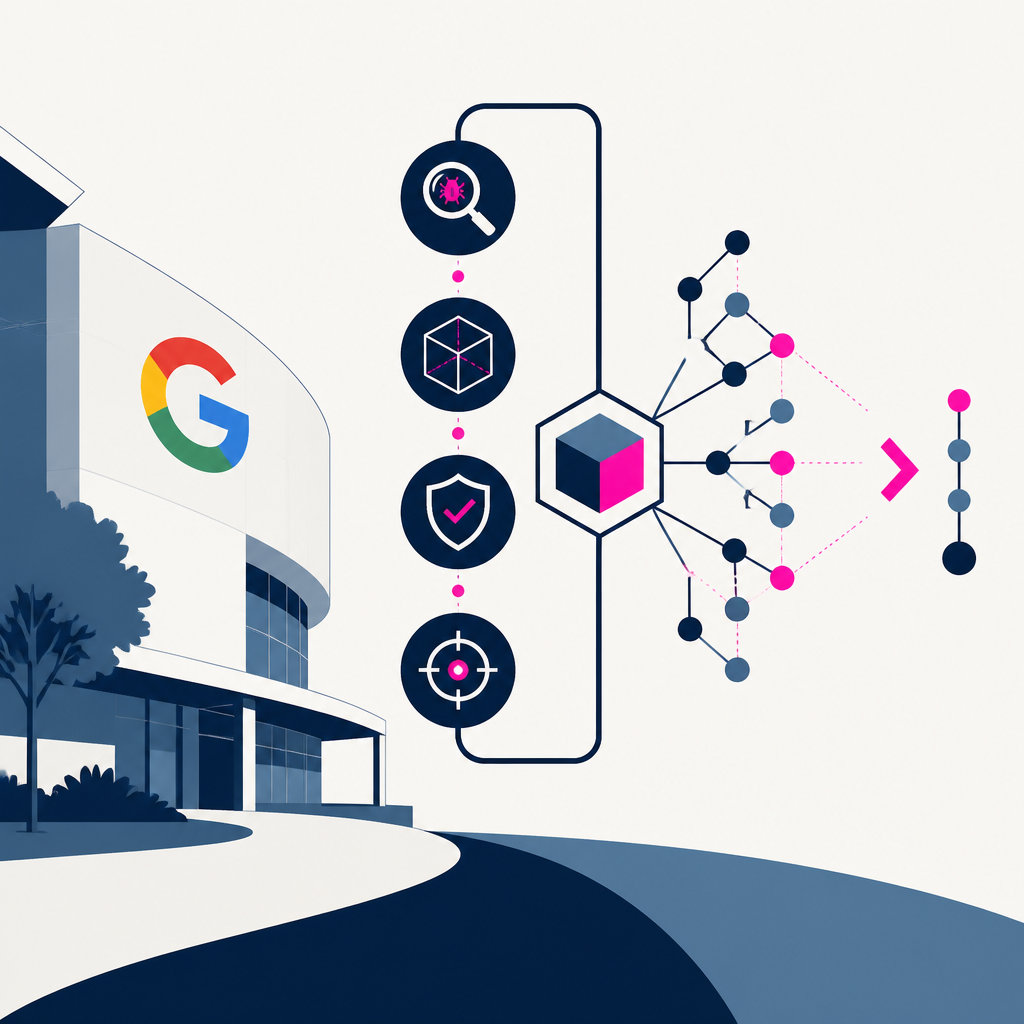
Google open-sourced Mantis, a modular security-review skills toolkit for coding agents that runs the vulnerability lifecycle from finding a suspected flaw through sandbox reproduction and patch re-attack. The hierarchy summary tree is claimed to cut token overhead by over 85 percent. Mantis shifts agentic security work from generating findings to deterministic, sandboxed verification and patch risk scoring, but it is deployable for local or internal evaluation rather than production.
Hyper-τ-bench evaluated whether AI developer agents can build customer-service agents from business materials, and Sierra reports that the best autonomous setup still fell below 25% test success.
Databricks expanded its Adaptive Instructed-Retriever retrieval model to speed up multi-step evidence gathering for AI agents like Genie Code, Genie One, and Genie Agents. The company says it responds twice as fast as Claude Sonnet 5, GPT-5.6 Luna, and V4-Flash while matching their retrieval quality on seven benchmarks. Developers can now cap sequential search steps and let the model stop early when evidence is sufficient, so faster answers are possible without extra retrieval turns.
OpenAI-linked accounts circulated a claim that an AI-assisted system produced a Navier–Stokes result related to the Millennium Problem using multi-agent collaboration. The process was described as involving about 10,000 agents, trained over roughly 1 year and using about 130B tokens (over $40M). The public discussion shifted toward whether large-scale inference-time compute and agentic coordination can contribute to hard science, while stressing that no theorem or formal verification material was provided for independent confirmation.
Every AI story that matters,
in your inbox by 8am.
TLDRocket reads all relevant sources, removes duplicate coverage, and summarises the
day in two minutes. Follow companies and topics for alerts, or get the
briefing in Slack. Free, no spam, unsubscribe anytime.
Reading TLDRocket needs no cookies, and the readership counts we rely on come from
our own cookieless analytics. Google Analytics is the exception: it sets cookies and
reports to Google, so it stays switched off until you allow it. You can change your
mind any time from “Cookie settings” in the footer.
Strictly necessary
Session security and form protection (tldrocket-session,
XSRF-TOKEN, 2 hours). The site cannot work without them,
so they need no consent.
Always on
Google Analytics 4 (_ga,
_ga_<id>, up to 2 years). Measures which
stories and sections readers use. Google acts as a third-party processor and may
store the data outside the EU. No advertising, no profiling, no data sold.