Senior Iranian official threatens to attack cables, data centers, and AI facilities in the region if the war escalates sharply again
Fortune The Associated Press
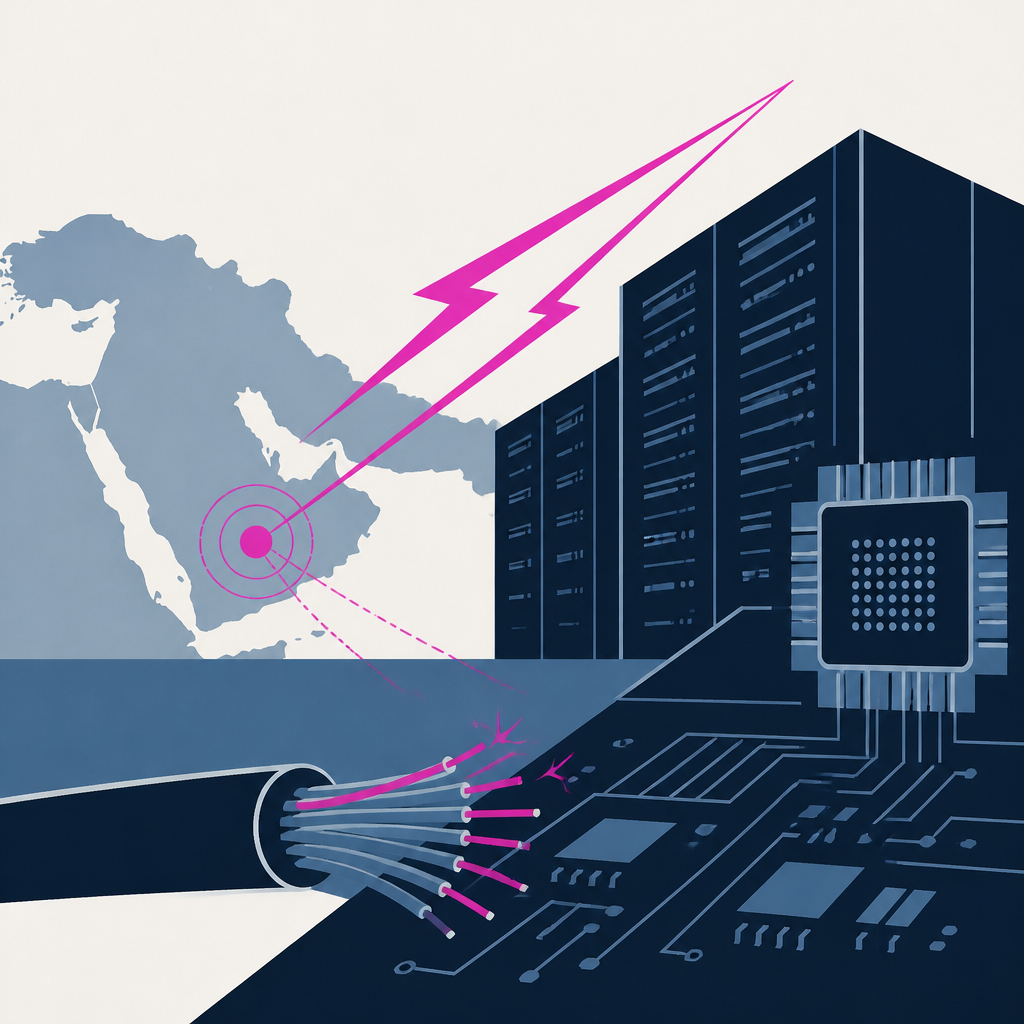
Iran says the U.S. offer to end the war isn’t enough and warns it could hit cables, data centers and AI sites if fighting spikes again. The threat is now reaching the region’s digital nerves, not just ships and borders.
Based on reporting by Fortune, The Associated Press — read the original for the full story.
Summary, retelling and take written by AI under human oversight; images are AI-generated illustrations. How we work · Report an error
Tehran is signaling that the next round of escalation could move beyond missiles and sea lanes. Mohsen Rezaei, who heads Iran’s Supreme National Security Council, said the latest U.S. reply to talks aimed at ending the war was “insufficient,” and added that Iran may target “cables, data centers, AI facilities and other sites in the region” if the fighting sharpens again. He also said Iran is no longer responding to Washington and wants the U.S. to clarify unanswered points in the proposal.
The warning lands while negotiations are still technically alive, if barely. Iran’s delegation had put forward a sped-up deal at last month’s U.N. gathering, echoing an earlier memorandum of understanding that fell apart just days after it was signed in June. That new proposal was rejected, but the two sides have stayed in touch through mediators. At the same time, Iran’s naval guard said any ship in the Strait of Hormuz that shuts off navigation and identification systems will be treated as hostile.
That maritime pressure is already showing up in the water. Attacks on ships passing through the strait have increased since Iran’s latest proposal was turned down, and one attack was reported Sunday. Meanwhile, Saudi Arabia is dealing with its own escalation after Houthi rebels claimed responsibility for repeated strikes on King Khalid International Airport in Riyadh, including one that hit the same passenger terminal twice. Saudi officials said the latest strike caused injuries after a previous attack killed 12 people.
Elsewhere in the region, the war’s legal and political fallout kept spreading. Israel’s former attorney general, Avichai Mandelblit, testified in Benjamin Netanyahu’s corruption trial, while the prime minister asked for an investigation into the documentary “NAZA,” which portrays Israeli military insiders describing civilian deaths in Gaza. In Gaza, residents returned to wrecked homes after fresh evacuation warnings, and in Lebanon, the army said a retired officer was killed by Israeli shelling while checking his property in the south.
My take — AI-written commentary, not fact-checked reporting
This is what modern escalation looks like: not just ports and pipelines, but the boring stuff that keeps a region running. Threatening cables and data centers is a neat way to say everyone’s infrastructure is now part of the battlefield, which is as comforting as it sounds. The real surprise is that so many leaders still act shocked when the bill arrives in the form of broken networks and panicked airports.
Read more about this at: Fortune