Google turns the infrastructure behind Gemini’s agents into a cloud service
The New Stack Frederic Lardinois ● Covered by 5 sources
Google is selling the infra behind Gemini’s agents as a cloud preview. It’s the latest sign agent sandboxes are moving from niche tool to core plumbing.
Based on reporting by The New Stack, Frederic Lardinois — read the original for the full story.
Summary, retelling and take written by AI under human oversight; images are AI-generated illustrations. How we work · Report an error
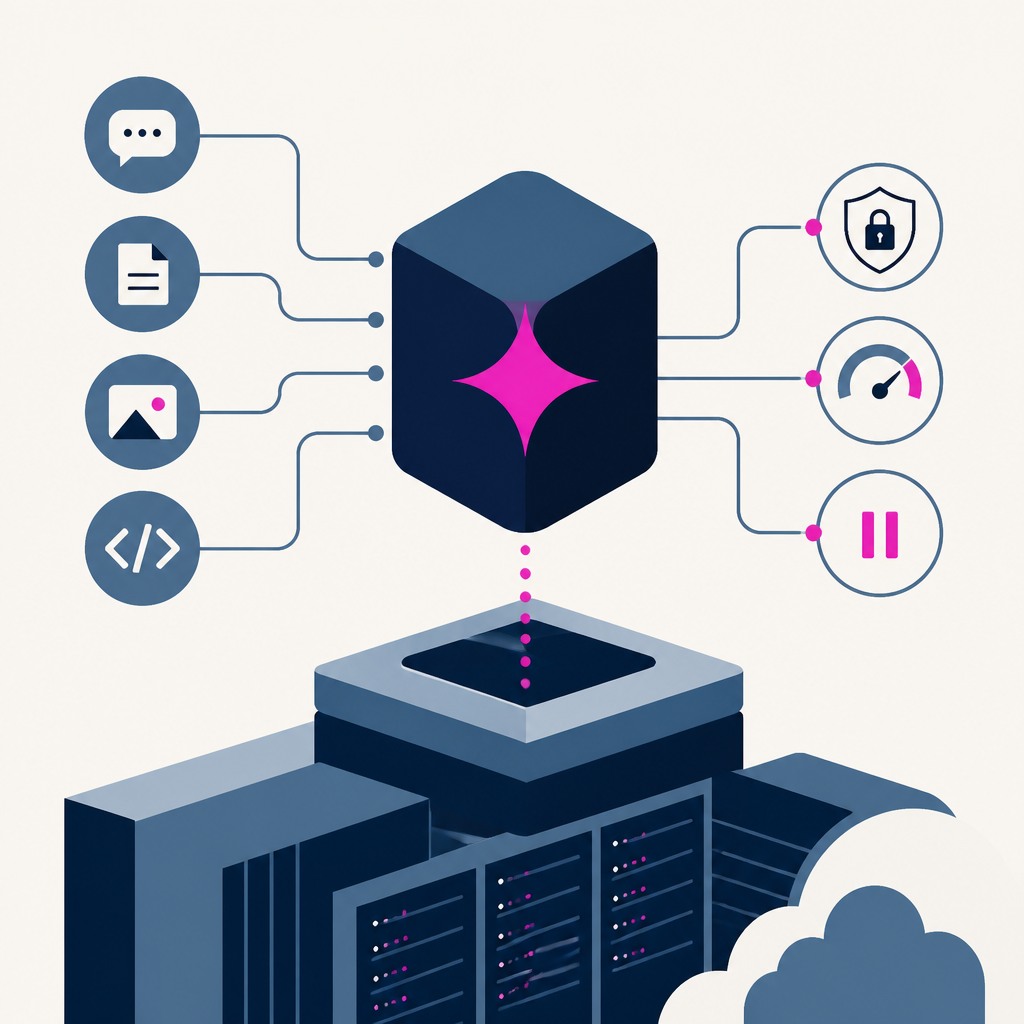
Google is turning the infrastructure behind Gemini’s agents into a cloud product. Agent Compute Engine will reach Google Cloud users in preview later this year, after being announced Thursday at the Linux Foundation’s AGNTCon+MCPCon in San Jose.
The pitch is simple: every agent gets its own hardware-isolated microVM, so it gets the speed of containers with the isolation of a sandbox. That puts Google in a crowded field. E2B and Daytona already sell agent sandboxes to developers, AWS offers one through Bedrock AgentCore, and Google itself already has managed sandboxes in GKE plus code-execution and computer-use sandboxes in Gemini Enterprise Agent Platform.
What’s new here is where this came from. Google says Agent Compute Engine began as internal infrastructure for Gemini, Antigravity, and its own model training pipelines. The company says agentic workloads have become one of the fastest-growing consumers of compute and storage across its fleet, and that the old mix of VMs and containers wasn’t enough for agents that start, stop, and resume constantly while still needing kernel- and root-level control.
So Google built around the assumption that the sandbox can’t be trusted. Each session runs in a single-tenant, memory-safe microVM with no secrets in memory or on disk, traffic goes through an external proxy, credentials are attached outside the sandbox through Agent Gateway, and the host is treated like a stateless appliance with read-only storage. The microVMs run on Cloud Hypervisor and sit on top of Google’s Titan and Titanium IPU security platform.
There’s also a second route for teams that don’t want a managed Google service. Agent Substrate, first announced in May, brings the same general idea to Kubernetes with a lightweight control plane, support for millions of short-lived tool calls, and snapshots for idle agents. Google says that setup can hit up to 10 times the density of traditional compute, handled 500 activations per second in a 200,000-agent benchmark, and resumed agents in under half a second.
My take — AI-written commentary, not fact-checked reporting
This is Google doing what big infrastructure companies always do: productizing the thing they needed for themselves. The interesting part isn’t the branding, it’s the admission that agent systems need their own compute model, not just another wrapper around containers. Once the sandbox becomes the product, the hype starts to look a lot more like plumbing.
Read more about this at: The New Stack