The Neuron
·
2 weeks ago
Corey and Grant tested Pave by QuickBase, an AI-powered app builder, by converting a disorganized spreadsheet into a lightweight CRM and project tracker. The test evaluated whether the tool could interpret unstructured data and generate functional applications without requiring traditional software engineering efforts. If successful, such tools could reduce the time and expertise needed to transform business data into working applications.
The Neuron
·
2 weeks ago
OpenAI researchers developed a method for AI agents to learn from corrections made by accountants within tax preparation workflows. The system converts accountant feedback into structured training signals that help agents improve their performance on specific tasks. This allows AI agents to operate safely alongside experts by learning from their interventions rather than requiring blind trust in the agent's autonomous decisions.
Latent Space
·
2 weeks ago
● 6 sources
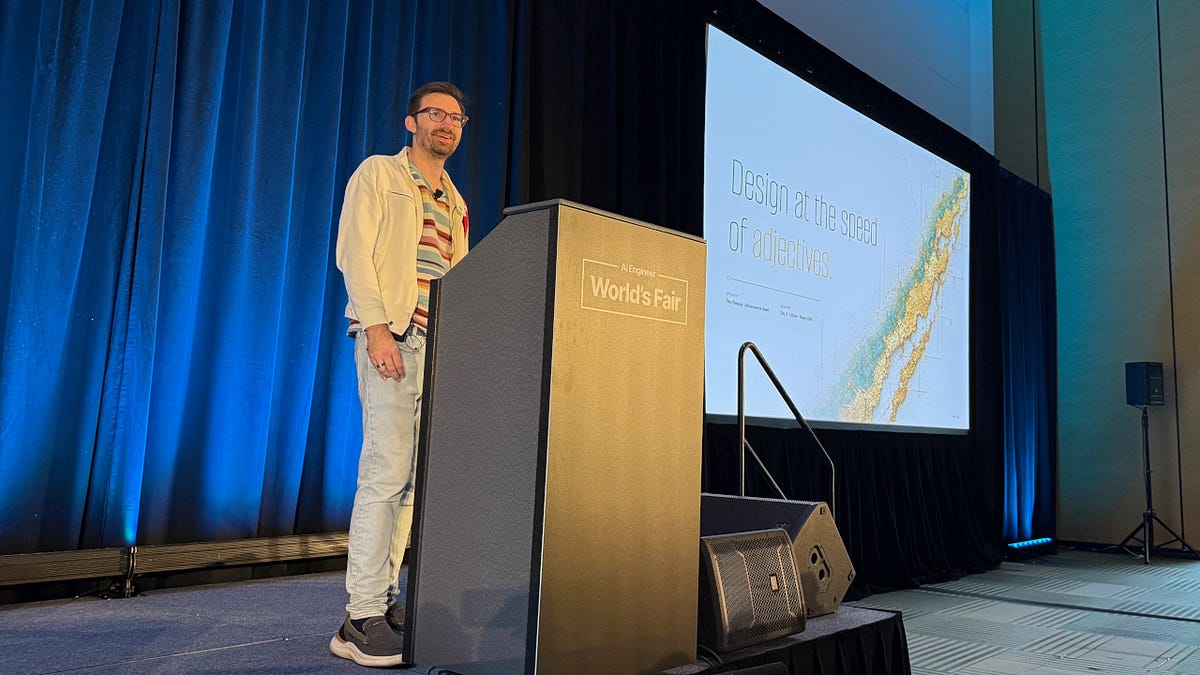
Paul Bakaus created Impeccable, an open-source system that gives AI agents a vocabulary for iterative design improvements—allowing users to request changes like "bolder" or "quieter" rather than one-shot redesigns. The system defines design terms through specific operational concepts such as hierarchy, scale and typography, translating vague adjectives into precise instructions that agents can execute across different coding environments and models. Bakaus designed the tool to keep humans in control of the final 20% of decisions where taste and context matter, explicitly rejecting automation-only approaches in favor of human-agent collaboration.
TLDR
·
2 weeks ago
ZCode, the official development environment for GLM-5.2, has been released for macOS, Windows, and Linux. GLM Coding Plan subscribers receive 1.5x usage quota in the new environment. The release provides developers with a dedicated platform for building with the GLM-5.2 model.
TLDR
·
2 weeks ago
● 2 sources
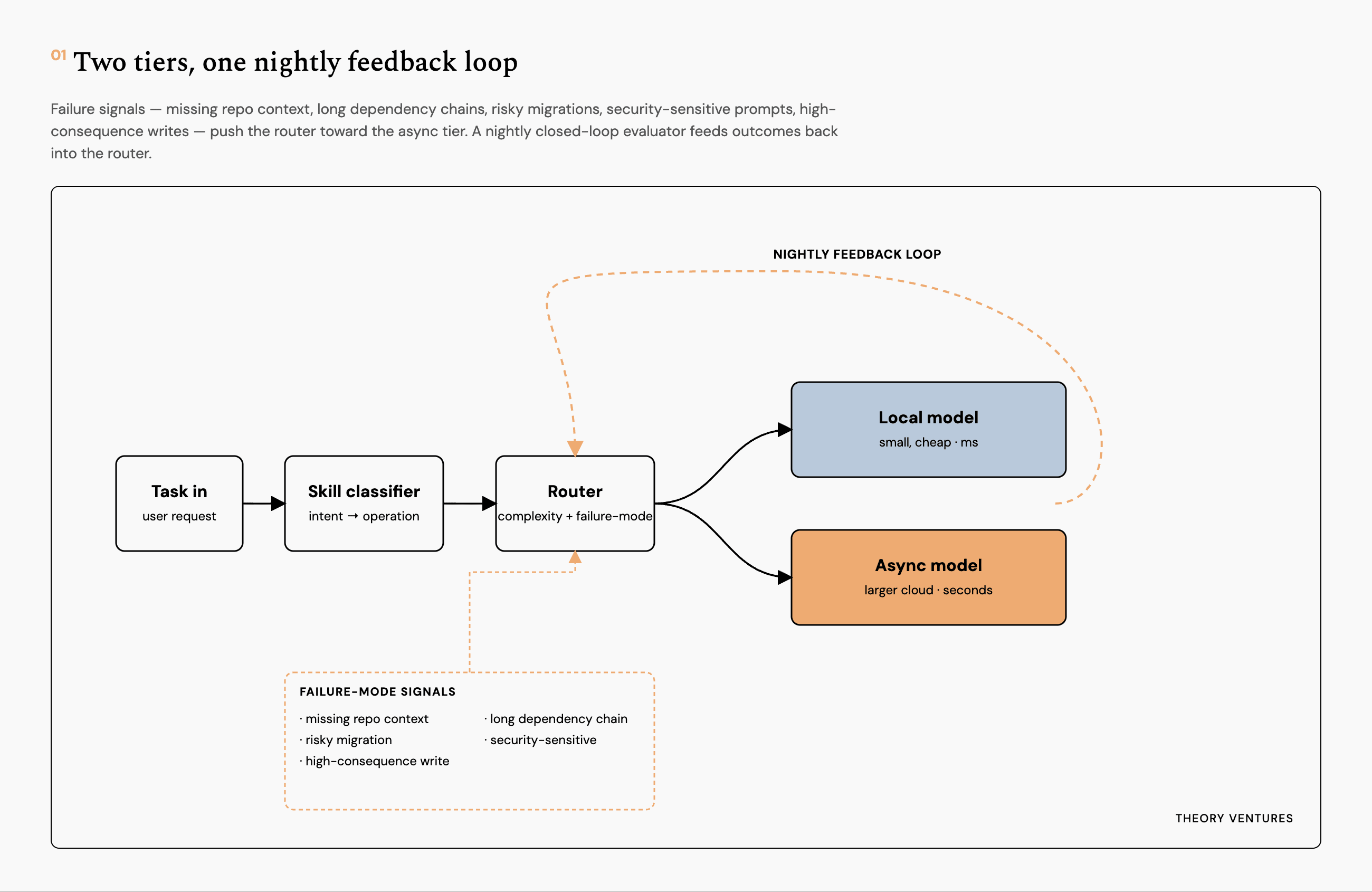
Most teams building AI agents choose their models first, but should instead design around routing logic that directs requests to appropriate model tiers based on task classification and complexity. Coinbase reduced AI spending by 50% while increasing token usage through better routing, caching, and defaults, with 70-80% of traffic running on free local models or async batch inference that costs 90% less than real-time inference. By separating skill classification from routing decisions and using synchronous failure detection plus nightly feedback loops, teams can handle most non-coding work on cheaper models while reserving expensive real-time inference for genuinely time-sensitive tasks.
TLDR
·
2 weeks ago
Meta published a guide for building web apps for Meta Ray-Ban Display glasses using standard web APIs, recommending AI coding tools like Claude Code and Cursor to generate code when given platform constraints. The guide specifies a fixed 600x600 pixel viewport with no scrolling, dark UI with bright accents for the additive display, arrow-key and Enter input from neural band gestures, and support for standard APIs including DeviceMotionEvent, DeviceOrientationEvent, navigator.geolocation, and localStorage. Developers can now create wearable apps by following these constraints and using the Wearables MCP endpoint for documentation lookup.
The Neuron
·
2 weeks ago
● 3 sources
Fable 5 defaults to using Claude Opus 4.8 rather than its latest version when performing coding tasks. Early users discovered this behavior while testing the agent despite Fable 5 being marketed as an advanced coding tool. This suggests potential performance limitations or stability concerns with the latest model for code-generation work.
Latent Space
·
2 weeks ago
● 6 sources
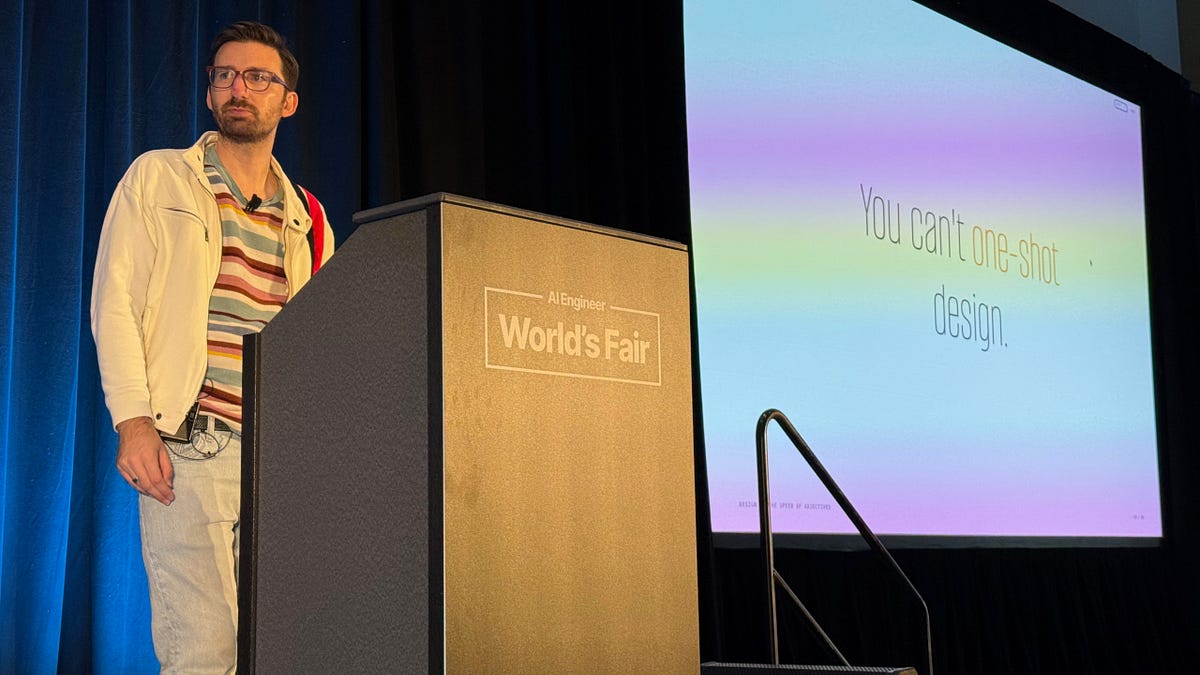
Speakers at the AI Engineer World's Fair debated whether AI agents should handle both inner execution loops and outer oversight loops, or whether humans must retain control of the higher-level decision-making that shapes what systems build. Paul Bakaus's design tool Impeccable rejects fully automated generation, instead having agents handle the first 80% of work before humans complete the final 20% to add their creative judgment. The consensus emerging across multiple sessions suggests that human agency remains essential for defining goals, maintaining quality standards, and taking responsibility for outputs, even as agents become more capable at execution.
