Latent Space
·
2 weeks ago
● 2 sources
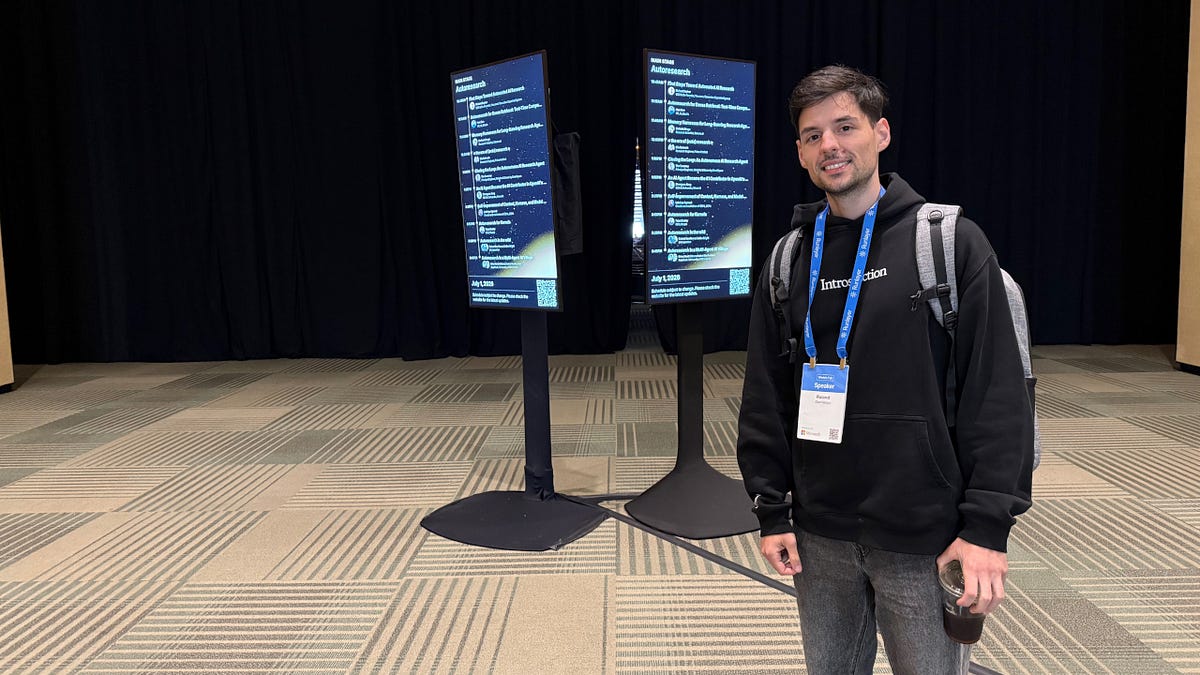
Introspection, a startup founded by former xAI employees, is building infrastructure for "autoresearch" systems where agents maintain and improve themselves through feedback loops rather than requiring constant human intervention. The company proposes three patterns: treating the feedback loop itself as the product, using "agent recipes" to capture how systems evolve over time, and optimizing for systems that become both better and cheaper as they operate. Companies deploying these self-improving agents will need to establish reliable feedback signals, control costs, and gradually shift human involvement from direct decisions to providing training data and oversight.
The Register
·
2 weeks ago
The Godot game engine team announced a new contribution policy that prohibits almost all AI-generated code submissions, citing an overwhelming volume of low-quality pull requests from contributors who don't understand their code. New contributors will need explicit maintainer permission for significant changes, and any autonomous agent-authored code will result in automatic bans, with AI use limited only to menial tasks like code completion. The stricter policy aims to reduce wasted time reviewing poor-quality submissions and ensure contributors understand the codebase well enough to maintain it responsibly.

Latent Space
·
3 weeks ago
● 6 sources
Warp, originally a command-line tool, is pivoting toward a software factory platform called Oz that automates the entire software development lifecycle through coordinated AI agents rather than individual interactive coding. CEO Zach Lloyd expects most significant software projects to operate some form of automated factory within the next year, with companies gradually increasing automation from lower-risk repositories toward 60% or more of pull requests merged without human review. As underlying AI improves, developers will shift from writing code directly to a new discipline of "meta-engineering" — configuring and optimizing the systems that build software.
TLDR
·
3 weeks ago
A programmer argues that AI systems currently generate high-quality local code but struggle with global program understanding, suggesting programming languages might again offer solutions—he illustrates this through Rust's approach to multi-threading, where local reasoning about ownership and Send/Sync traits enforces a global data-race-free property. Rust's compiler catches data races as static errors at compile time, which the author experienced when rewriting his website builder to use multi-threading in under 5 minutes with zero debugging required. This demonstrates that thoughtful language design can allow developers to reason locally about code while guaranteeing surprising global properties, a model potentially applicable to addressing AI's current limitations in generating globally coherent software.
Latent Space
·
3 weeks ago
● 6 sources
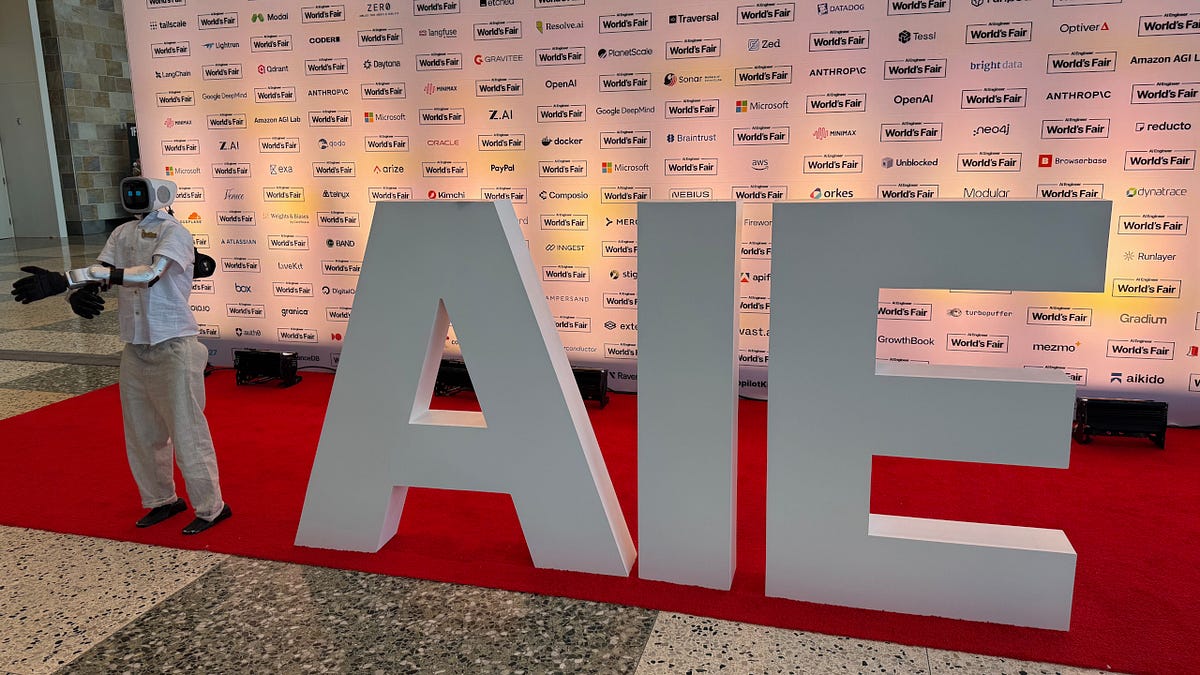
At the AI Engineer World's Fair, attendees focused heavily on "loops"—repeating cycles where agents autonomously complete tasks and restart against the same specifications—as the foundation for building software factories that automate the entire development lifecycle. Microsoft's Foundry, OpenAI's Codex, and platforms like Warp are positioning agents to handle coding, code review, and deployment with minimal human intervention, with the shift expected to create a new discipline called "software factory engineering." A new role of Forward Deployed Engineer is emerging to help organizations orchestrate these agent-based systems, shifting integration work from model development to orchestration layers.

Hugging Face Blog
·
3 weeks ago
Hugging Face and Cerebras demonstrated a real-time speech-to-speech AI system using Google DeepMind's Gemma 4 language model paired with Cerebras inference acceleration to reduce response latency in voice conversations. The system achieves predictable performance at the P95 latency percentile by combining open-source components including Nvidia's Parakeet for speech recognition and Alibaba's Qwen3TTS for text-to-speech conversion. The modular architecture enables developers to deploy responsive voice AI for robots, assistants, and embodied AI applications where conversational naturalness depends on minimizing delays between user input and system response.
