
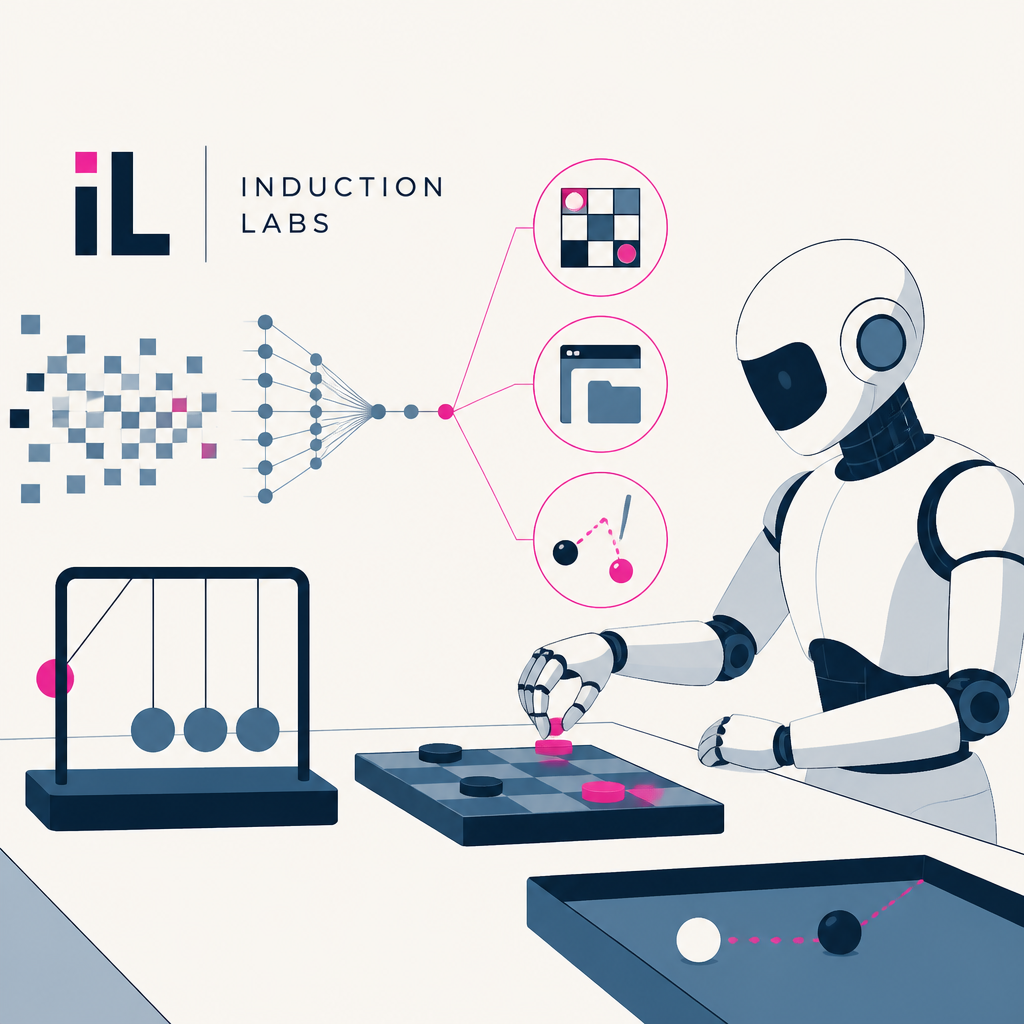
Induction Labs Photon-1 Simulates Desktops, Plays Checkers, and Models Billiard Physics From One Pretraining Run
MarkTechPost 2 months ago 55
Induction Labs released Photon-1, a 106B-parameter vision model trained on 18 years of unlabeled computer screen recordings using next-latent-token prediction instead of action labels. The model used approximately 30,000 H200 GPU-hours for pretraining and achieves lower inference costs than Gemini 3.1 Flash-Lite on an internal computer use benchmark. After finetuning on tasks outside its pretraining domain, Photon-1 demonstrated improved performance on checkers and billiard physics simulation compared to LLM and vision encoder baselines.