Simulation has become essential for training physical AI systems and robots, enabling developers to generate large amounts of training data cost-effectively rather than relying solely on real-world interaction. Multiple GPU-accelerated simulation engines now exist for different use cases, including MuJoCo, Isaac Sim, Isaac Lab, and Newton, each optimized for specific robotics tasks like reinforcement learning, synthetic data generation, or photorealistic rendering. This shift has created a layered infrastructure ecosystem where different tools specialize and interoperate, making high-quality simulated robot experience foundational to modern embodied AI development.
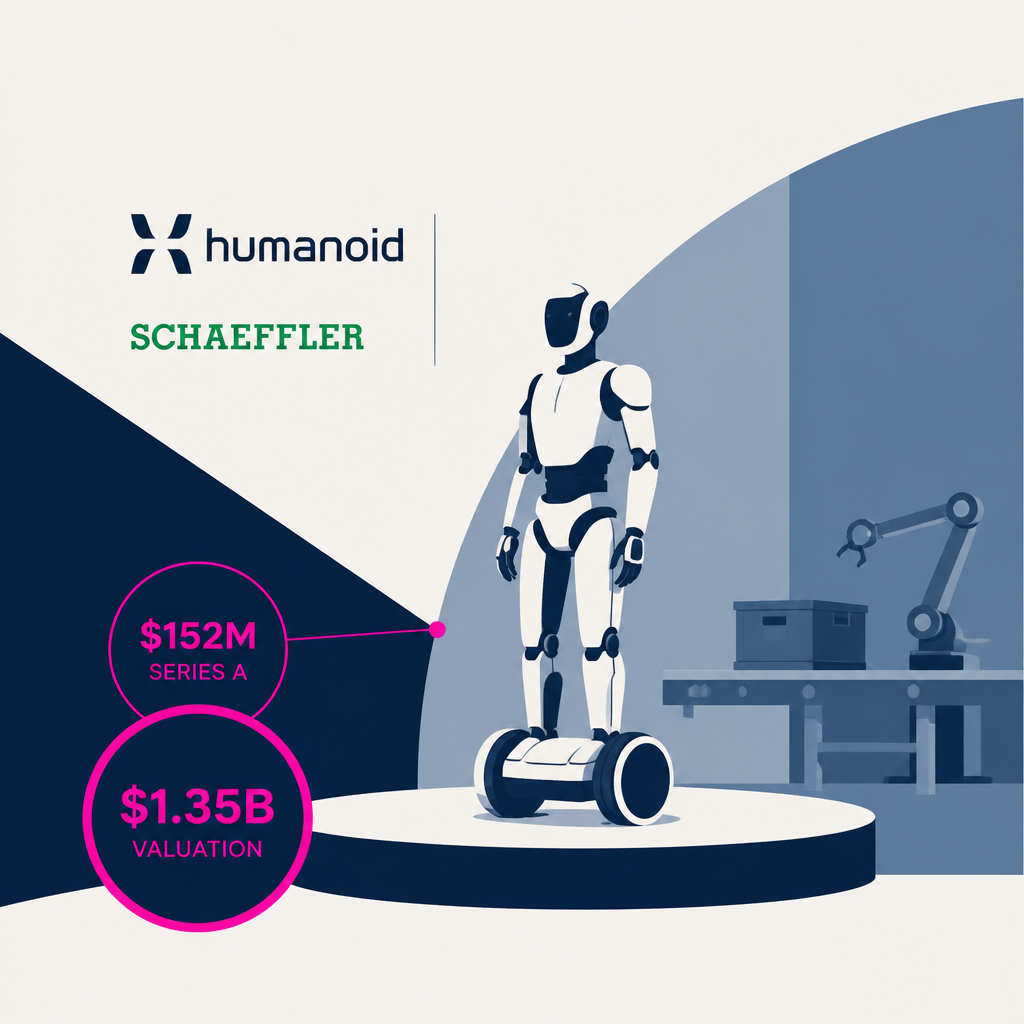
Humanoid, a UK robotics startup, raised $152 million in Series A funding at a $1.35 billion valuation to develop wheeled humanoid robots for manufacturing and logistics. The company plans to deploy thousands of robots starting in Q4 2026 under a major agreement with industrial supplier Schaeffler. This funding accelerates Humanoid's move toward commercial deployment of its proprietary robots across industrial sectors to address labor shortages.
BrainCo demonstrated a brain-computer interface platform that lets users control robots through neural signals decoded by AI algorithms in under 200 milliseconds. The system was showcased at the 2026 World Artificial Intelligence Conference in Shanghai, where a person wearing an EEG headset directed a robotic arm to grasp objects with precision. BrainCo also introduced a data-collection system combining brain signals, human demonstrations, and robot execution to address the shortage of high-quality training data for teaching robots complex physical tasks.
Gritt, a robotics startup founded by Carnegie Mellon engineers, exited stealth with $34 million in total funding to deploy AI-controlled systems for solar panel installation. The company's robots increased installation capacity from 800 to 3,000-4,000 panels per day for a typical eight-person crew, and Gritt is contracted to help install 2.8 gigawatts of solar panels over the next 18 months. The startup plans to expand its AI systems to other construction tasks like fastening panels, drilling posts, and rebar tying, leveraging recent advances in large AI models to generalize across different labor-intensive jobs.
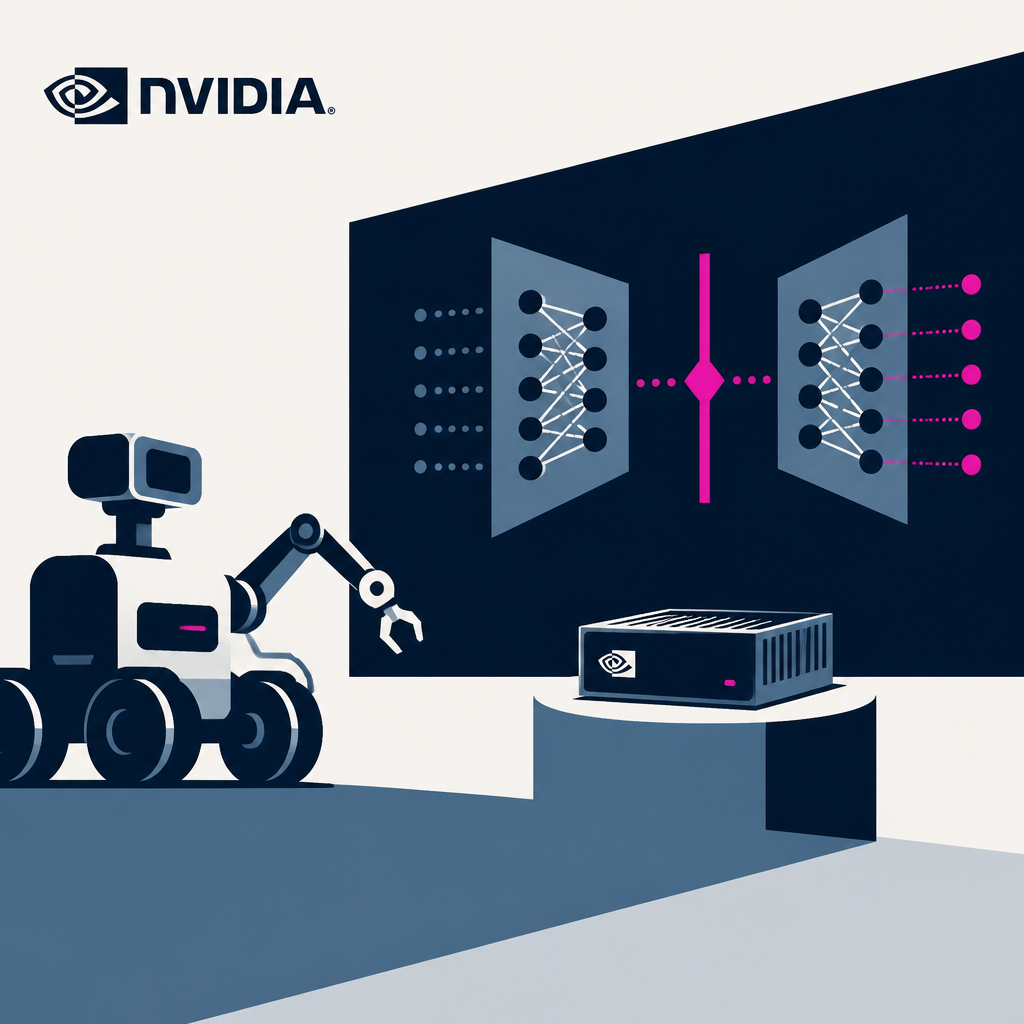
NVIDIA released Cosmos 3 Edge, a 4-billion-parameter world model designed to run on edge devices like robots and vision agents. The model uses a Mixture-of-Transformers architecture with separate reasoning and generation towers, achieving 15 Hz real-time control at 640×360 resolution on NVIDIA Jetson Thor hardware. This enables robots to understand their environment, reason about actions, and generate control outputs locally without relying on data centers.
Pollen Robotics released Grabette, an open-source handheld gripper system that records robot manipulation demonstrations using a handheld device with cameras and IMU sensors. The hardware costs approximately €490 for the recording device (Grabette) and €120 for the robotic gripper counterpart (Gripette), with all components sourced from standard off-the-shelf parts. The system aims to democratize robot learning data collection by enabling anyone to record manipulation tasks and contribute to a shared open dataset on Hugging Face, removing the need for expensive teleoperation rigs or dedicated robotics labs.
Every AI story that matters,
in your inbox by 8am.
TLDRocket reads all relevant sources, removes duplicate coverage, and summarises the
day in two minutes. Follow companies and topics for alerts, or get the
briefing in Slack. Free, no spam, unsubscribe anytime.
Reading TLDRocket needs no cookies, and the readership counts we rely on come from
our own cookieless analytics. Google Analytics is the exception: it sets cookies and
reports to Google, so it stays switched off until you allow it. You can change your
mind any time from “Cookie settings” in the footer.
Strictly necessary
Session security and form protection (tldrocket-session,
XSRF-TOKEN, 2 hours). The site cannot work without them,
so they need no consent.
Always on
Google Analytics 4 (_ga,
_ga_<id>, up to 2 years). Measures which
stories and sections readers use. Google acts as a third-party processor and may
store the data outside the EU. No advertising, no profiling, no data sold.