BrainCo demonstrates brain-controlled robot AI platform
The Robot Report
BrainCo showed off a robot arm controlled just by thinking, using an EEG headset to read brain signals. It reacted in under 200 milliseconds, which is wild for a mind-reading machine.
Based on reporting by The Robot Report — read the original for the full story.
Summary, retelling and take written by AI under human oversight; images are AI-generated illustrations. How we work · Report an error
At the World Artificial Intelligence Conference in Shanghai this week, BrainCo pulled off something that still sounds like science fiction until you see it work: someone put on a lightweight EEG headset, thought about grabbing a cap, and a robotic arm did it. No joystick, no voice command, just intent turned into motion in under 200 milliseconds.
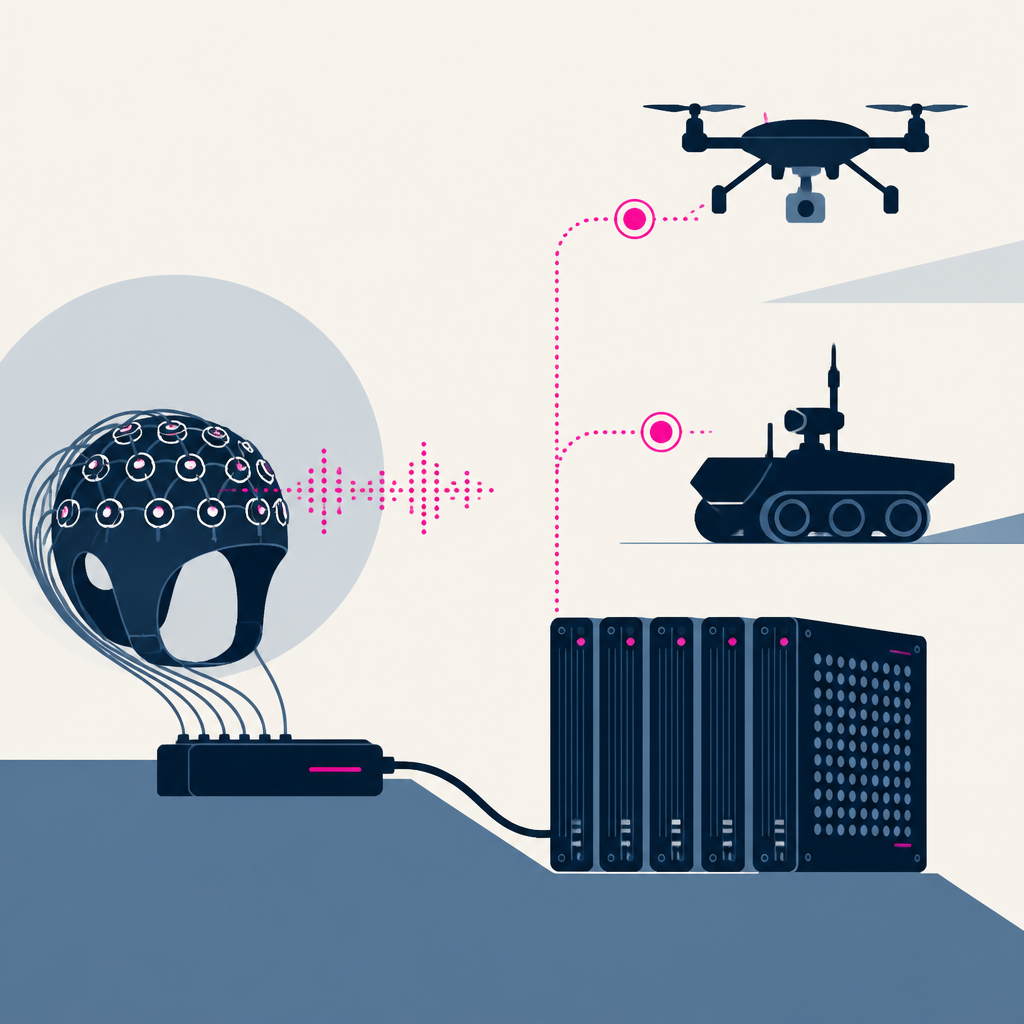
The mechanics behind the trick are less mysterious than the result suggests. The headset picks up brain signals, AI algorithms decode those signals into motor intent, and that intent gets translated into commands the robot can execute. BrainCo calls the whole stack "neuro-embodied-AI," and during the Shanghai demo it wasn't just party tricks — the arm grasped a cup and picked up an apple, tasks that demand real precision, not just crude gripping.
What makes this more than a lab curiosity is that BrainCo built the platform to work across commercially available robots, from humanoids to robotic arms to legged machines. That's a deliberate choice. It means research teams can plug BrainCo's BCI layer into whatever hardware they already have instead of being locked into proprietary robots, which tends to matter a lot more to labs and companies than flashy demos do.
The company also used WAIC to introduce something arguably more consequential long-term: an Embodied AI Data Collection Solution aimed at the industry's nagging data problem. Teaching robots to fold laundry or handle fragile objects requires huge volumes of high-quality training data, and BrainCo says gathering that data has been one of robotics' most stubborn bottlenecks. Its answer involves a dual-arm wheeled platform and a high-precision glove that captures robot execution, human demonstration, and simulation data all at once — and, notably, it also records the operator's EEG signals. So the system isn't just logging what hands do, it's logging what the brain told the hands to do.
BrainCo isn't a newcomer chasing a trend. Founded in 2015, the Massachusetts-based company already sells a 21-degree-of-freedom dexterous hand, a five-fingered bionic prosthetic, and a bionic knee joint, built on what it describes as a decade of BCI and rehabilitation research. That history is why the mind-controlled arm demo reads less like a stunt and more like an incremental step from a company that's been quietly working this exact problem for years.
My take — AI-written commentary, not fact-checked reporting
The mind-control demo is the flashy headline, but the real bet here is the data collection platform — because everyone in robotics keeps running into the same wall of not having enough good training data, and whoever solves that quietly wins more than whoever nails a viral stage trick. Recording brain signals alongside hand movements is a clever way to capture intent, not just motion, and that distinction could matter a lot once robots start handling messier, less scripted tasks. Still, a controlled demo in Shanghai with a cup and an apple is a long way from proving this scales outside a conference hall.'
Read more about this at: The Robot Report