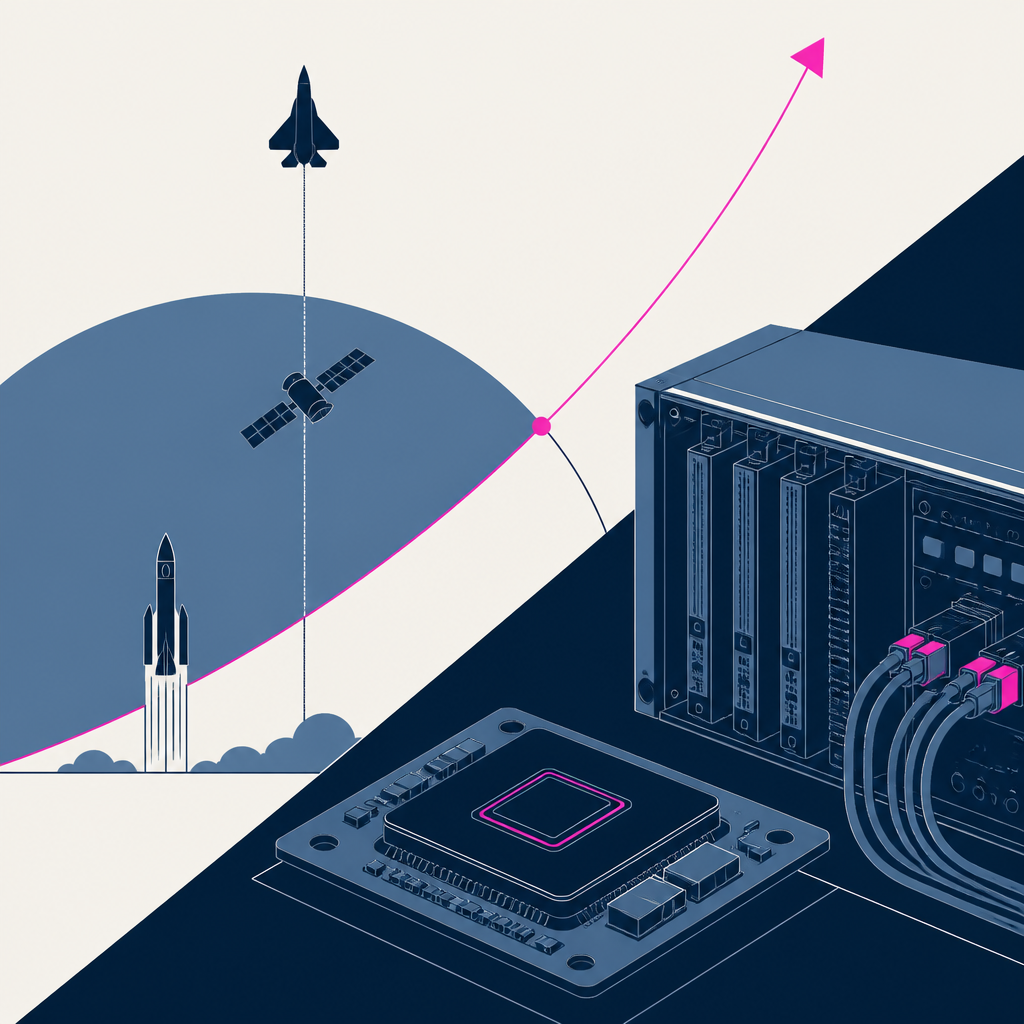
Tony Robbins and Christopher Zook argue that private markets are becoming accessible to everyday investors while a new wave of founder-led defense companies is accelerating space and defense innovation. They cite a drop in space launch cost from $10,000 per kg to about $700 and project global military spending rising from $2.63 trillion in 2025 to $6.4 trillion by 2035. The implication is a shift away from slow, consolidated, cost-plus defense contracting toward faster software-defined and autonomous, dual-use capabilities backed by investors and longer-term government contracts.
Toyota has started having workers train ELEY humanoid robots in its factories to support an eventual large-scale rollout of factory robots. Toyota’s plan includes investing $6.42 billion per year starting in 2028 and deploying 400,000 robots, with 150,000 in its own plants. The change is that humanoid robots will be trained for precise hand-movement tasks while Toyota says this effort is intended to augment operations rather than directly replace workers.
AstroForge is developing an autonomous spacecraft control stack, “Solo,” to reduce reliance on Earth-based flight controllers. The company plans to fly its first autonomous spacecraft in 2027 with its launch partner Stoke Space. It is combining traditional control algorithms with transformer models trained on test data and sensor inputs, aiming for onboard anomaly resolution while also limiting early missions (e.g., “shadow mode” and no radios for Autonomy-1).
TechCrunch Disrupt 2026 announced five AI-safety sessions focused on deploying AI agents, enterprise AI, and real-world autonomous systems safely and securely. The event runs October 13–15 at Moscone West in San Francisco, with a pass discount deadline of September 25 at 11:59 p.m. PT. The agenda shifts founder focus toward safety, security, governance, testing, and robotics data pipelines rather than demos alone.
Hello Robot will demo its home-assistance robot Stretch 4 onstage at TechCrunch Disrupt 2026 to show how physical AI can perform everyday tasks for people with severe mobility impairments. Stretch 4 launched in May, and its first production run was sold out in June. The event will shift attention from humanoid-focused robotics toward a compact wheeled, telescoping-arm robot and highlight its use, safety, and accessibility goals alongside a live audience.
Agility Robotics is going public via a merger with Churchill Capital XI, with the company filing an S-4 and disclosing early audited results for its Digit humanoid robot business. It reported $1.8 million in 2025 revenue alongside a $140 million operating loss and about $103 million cash at year-end. The disclosed plan shifts the business from selling a small number of robots toward a Robots-as-a-Service model for Digit v5 deployments and revenue recognized on recurring monthly contracts.
Waymo is partnering with Visa to offer transit discounts for rides that connect with public bus or train service. The program gives riders a $2.85 account credit when they use a Visa credit card for a Waymo trip and public transit within 2 hours. The discount is rolling out first in the San Francisco Bay Area, replacing earlier discount efforts with a Visa-linked offer.
Every AI story that matters,
in your inbox by 8am.
TLDRocket reads all relevant sources, removes duplicate coverage, and summarises the
day in two minutes. Follow companies and topics for alerts, or get the
briefing in Slack. Free, no spam, unsubscribe anytime.
Reading TLDRocket needs no cookies, and the readership counts we rely on come from
our own cookieless analytics. Google Analytics is the exception: it sets cookies and
reports to Google, so it stays switched off until you allow it. You can change your
mind any time from “Cookie settings” in the footer.
Strictly necessary
Session security and form protection (tldrocket-session,
XSRF-TOKEN, 2 hours). The site cannot work without them,
so they need no consent.
Always on
Google Analytics 4 (_ga,
_ga_<id>, up to 2 years). Measures which
stories and sections readers use. Google acts as a third-party processor and may
store the data outside the EU. No advertising, no profiling, no data sold.