
Tony Robbins and Christopher Zook on 'the holy grail of investing' and the game-changing era of defense tech
Fortune Christopher Zook
Opinion — commentary, not a factual news event.
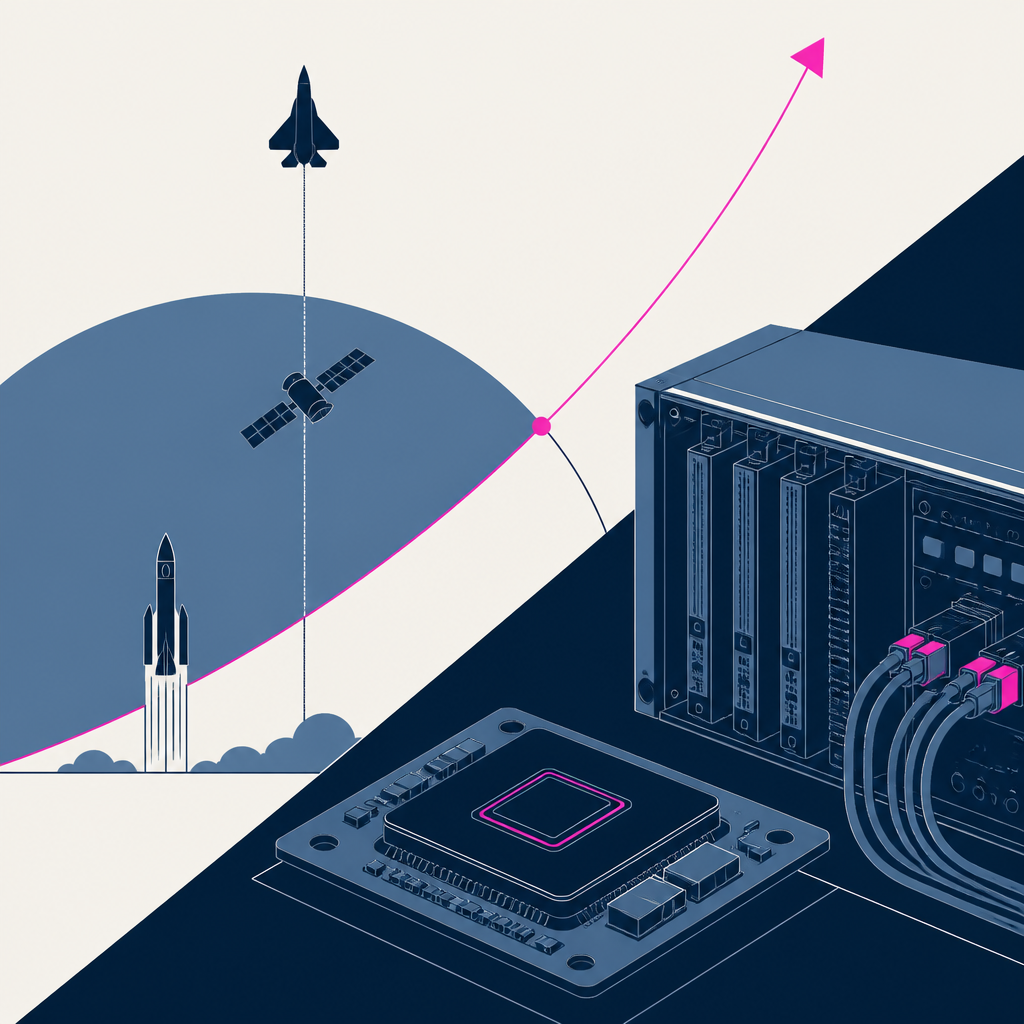
Tony Robbins and Christopher Zook say defense tech is getting a reset, from cheap drones to reusable rockets. They think private markets are opening up just as war and space tech are changing fast.
Based on reporting by Fortune, Christopher Zook — read the original for the full story.
Summary, retelling and take written by AI under human oversight; images are AI-generated illustrations. How we work · Report an error
Tony Robbins and Christopher Zook are making a simple bet in their new book: the next big investing story may come from defense and space, two fields that used to feel locked away from ordinary investors and now look overdue for a shake-up. Their argument is that private markets are widening, and that founder-led companies are moving faster than the old defense establishment can handle.
The clearest proof, they say, comes from the war in Ukraine. Expensive air-defense missiles have been used to knock down swarms of small drones that cost less than $30,000 each, can carry 200 pounds of explosives, and can operate autonomously for hundreds of miles. That mismatch has become a slogan of its own: “We can’t keep throwing Ferraris at frisbees.” It is hard to imagine a cleaner summary of the problem.
The pressure is not just on the battlefield. Ukraine has also run short of munitions, and the U.S. and its allies have struggled to make enough fast enough. Robbins and Zook link that to a deeper industrial problem: supply chain bottlenecks, weak manufacturing capacity, and a defense system built around large incumbents that grew after the Pentagon’s 1993 “Last Supper” consolidation. Between 1993 and 2000, the number of major prime contractors fell from 51 to 5.
They argue that a new crop of “neo-prime” companies is trying to break that pattern. These firms are software-first, iterate in 12 to 18 months, use commercial supply chains, and sell both military and civilian products. Anduril is their showpiece example. The company says it took Fury, its autonomous fighter jet, from a blank page to first flight in 553 days. Fury is about half the size of a typical fighter jet, can reach 50,000 feet, and is designed so a major car manufacturer could build it if needed.
The money side is just as important in their telling. They point to global military spending of $2.63 trillion in 2025, a Spherical Insights estimate of $6.4 trillion by 2035, and NATO allies agreeing to spend 5% of GDP on defense. Throw in reusable rockets, which they say have cut launch costs from $10,000 per kilogram to about $700, and the pitch becomes clear: defense is no longer just a budget line. It is becoming a tech market.
My take — AI-written commentary, not fact-checked reporting
This is the rare defense-tech pitch that actually understands the old system is the bug, not the feature. The Pentagon spent decades rewarding delay, and then acted surprised when startups showed up with faster, cheaper hardware. That was never going to end well for the incumbents, which is a polite way of saying the era of expensive nonsense is finally getting audited.
Read more about this at: Fortune
Related stories
 AI's new millionaires want to disrupt philanthropy. They should fund what already exists
Fortune ·
49
AI's new millionaires want to disrupt philanthropy. They should fund what already exists
Fortune ·
49