Campfire launched as a shared workspace for humans and AI coding agents to work together by combining their sessions, context, decisions, and progress. The page describes the tool as open source and harness-independent. As a result, users can run coding agents they already use and collaborate in one unified place.
Featherless released Simple Jev, an open-source library that turns open AI models into zero-shot classification engines that output category labels or binary decisions instead of generating text. Production pricing starts at $0.03 per million input tokens, with output tokens free. The approach shifts inference from conversational LLM generation to stopping at decision scores for lower latency and compute use, and it also adds hosted endpoints with image context for instant classification.
OpenCompanion starts and manages multiple AI coding agent command-line sessions across folders, showing them in one screen so you can see when one is waiting for permission. The page lists 12 followers for the launch. It changes the workflow by letting you respond from your desktop or your phone on the same Wi‑Fi without an account, cloud server, or telemetry.
Pheebs, an open-source AI telemetry tool by Eversynced, was launched as an AI coding-agent hook that captures lightweight session-shape signals without storing contents. It launched on a page showing it had 8 followers. As a result, teams can measure how they work with AI coding agents using telemetry from tools like Claude Code, Cursor, and Codex.
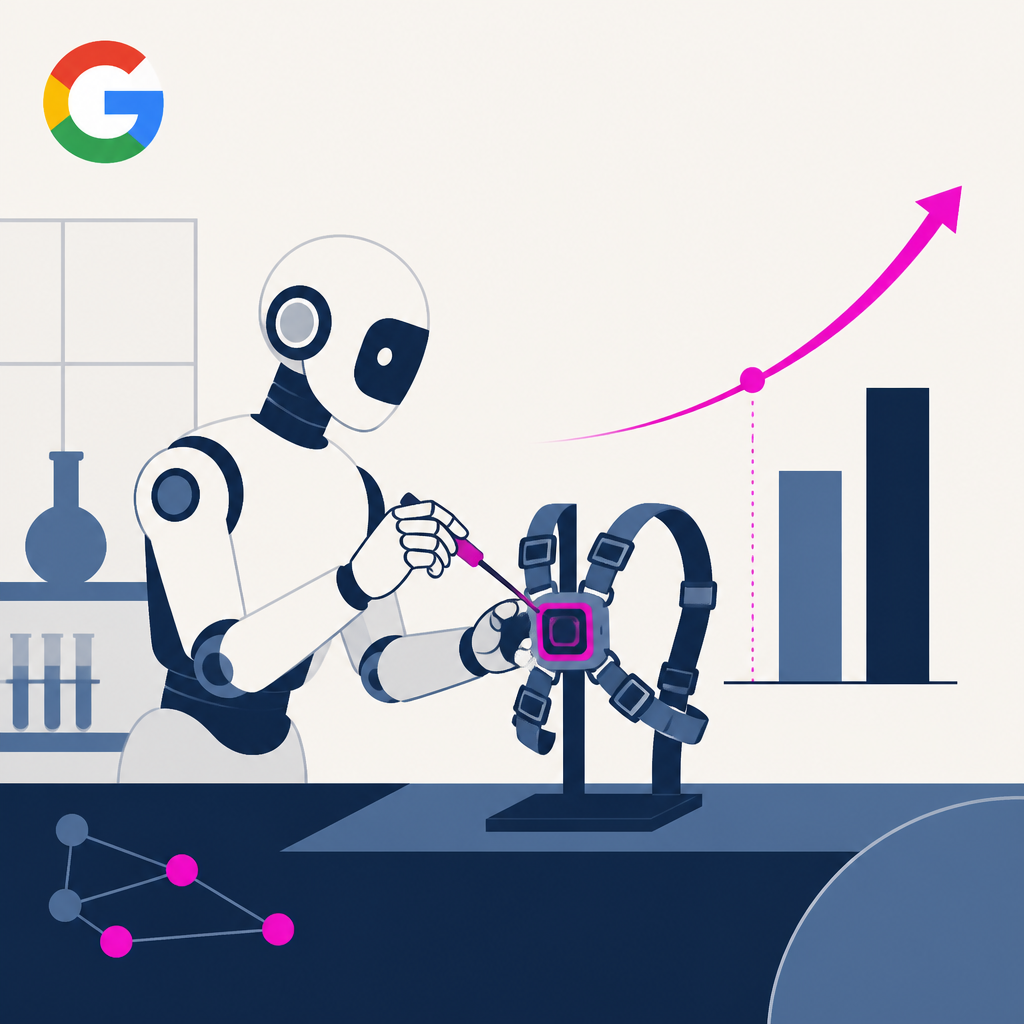
Google Research and university partners released RRSI (Regularized Recursive Self-Improvement), a framework that lets an LLM agent rewrite its own harness while keeping model weights frozen. On Terminal-Bench 2.1 (evolve split), performance rose from 74.2% to 80.2%. Because RRSI regularizes the self-improvement loop with leakage checks, noise-adjusted acceptance, and a token cost rule, improvements transfer to benchmarks the agent never optimized against and the harness evolution uses fewer tokens per trial.
Every AI story that matters,
in your inbox by 8am.
TLDRocket reads all relevant sources, removes duplicate coverage, and summarises the
day in two minutes. Follow companies and topics for alerts, or get the
briefing in Slack. Free, no spam, unsubscribe anytime.
Reading TLDRocket needs no cookies, and the readership counts we rely on come from
our own cookieless analytics. Google Analytics is the exception: it sets cookies and
reports to Google, so it stays switched off until you allow it. You can change your
mind any time from “Cookie settings” in the footer.
Strictly necessary
Session security and form protection (tldrocket-session,
XSRF-TOKEN, 2 hours). The site cannot work without them,
so they need no consent.
Always on
Google Analytics 4 (_ga,
_ga_<id>, up to 2 years). Measures which
stories and sections readers use. Google acts as a third-party processor and may
store the data outside the EU. No advertising, no profiling, no data sold.